Fine Art Images from the American Southwest

Search Results for: ute – Page 5

Days Before Spring. 03-18-2026

Greetings from San Cristobal, NM. This week, some images taken in the days before spring.

Spring appears ready to make its grand entrance this week, and I couldn’t be happier. Spring brings the promise of warmer days that fill me with anticipation, as I look forward to many hikes and walks with the dogs and seeing the landscape transform into a lush, vibrant green, moisture permitting.

Aspen Trees.

Aspen trees, known for their striking white bark and vibrant foliage, are a prominent feature of many North American landscapes, particularly in the Rocky Mountains and other high-altitude regions. These deciduous trees are part of the Populus genus and are renowned for their ability to form large clonal colonies, where all the trees are interconnected through a shared root system. This unique growth pattern allows aspens to regenerate quickly after disturbances such as fires, making them a vital component of forest ecosystems. In the fall, aspen leaves turn a brilliant shade of yellow, creating breathtaking displays of color that attract nature enthusiasts and photographers alike. Beyond their aesthetic appeal, aspens play a crucial ecological role by providing habitat and food for a variety of wildlife, including deer, elk, and numerous bird species. Their presence also contributes to soil stabilization and water retention in their native habitats, underscoring their importance in maintaining ecological balance.
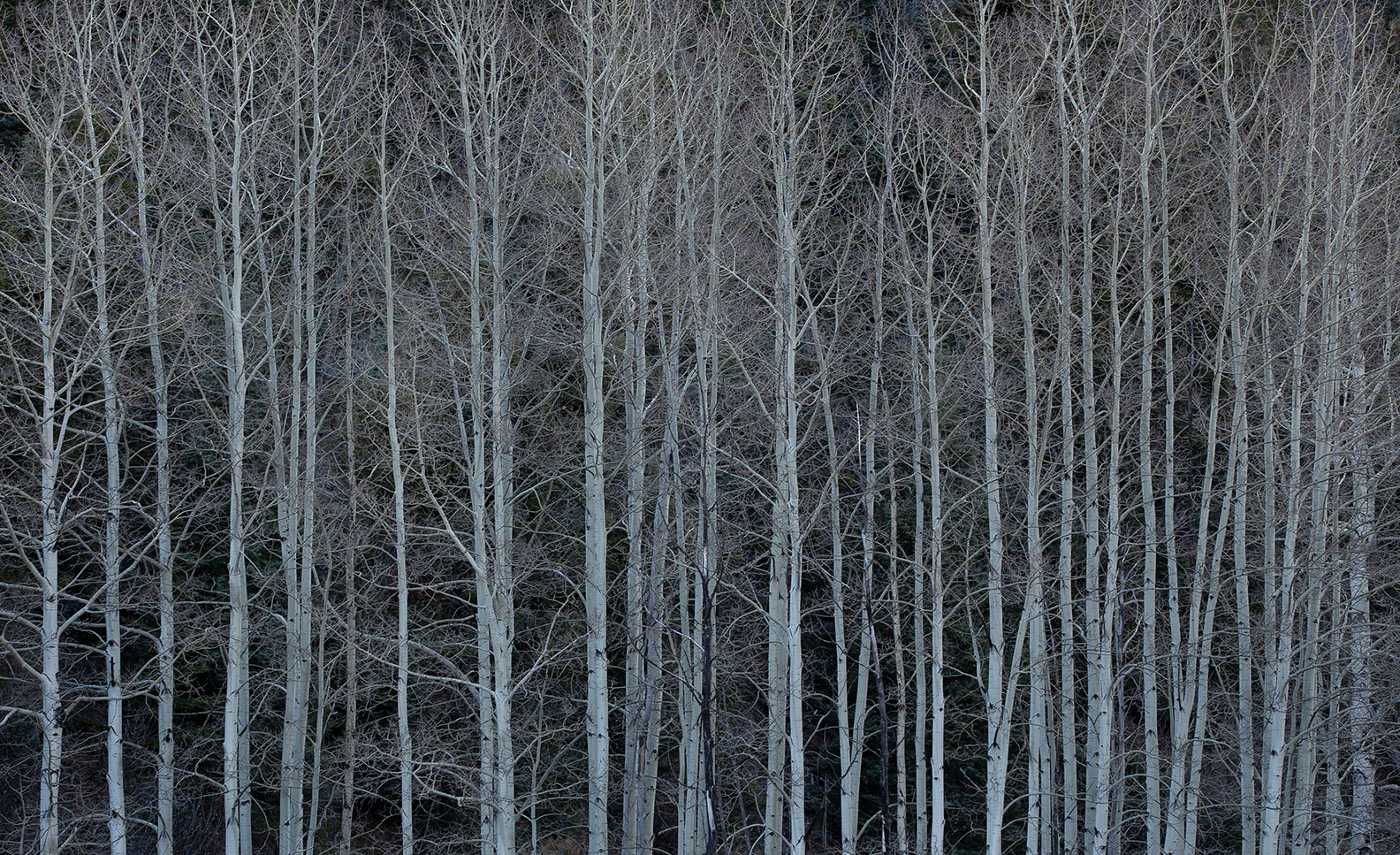
Bare aspen trees, Spring on Bobcat Pass, NM
Bare aspen trees, spring on Bobcat Pass, NM.

American Crow in an old cottonwood tree.

The American Crow (Corvus brachyrhynchos) is a highly adaptable and intelligent bird found throughout North America. Recognizable by its all-black plumage, stout bill, and distinctive cawing call, the American Crow is a familiar sight in a variety of habitats, including forests, fields, urban areas, and coastal regions. Known for their remarkable problem-solving abilities and complex social structures, crows often live in family groups and exhibit behaviors such as cooperative breeding and communal roosting. These birds are omnivorous, with a diet that includes insects, seeds, fruits, small animals, and carrion, as well as human food scraps, which contributes to their success in diverse environments. American Crows are also known for their tool use and ability to recognize individual human faces, highlighting their cognitive prowess. Despite being common and widespread, they play an important ecological role by controlling pest populations and cleaning up carrion, making them a vital component of their ecosystems.
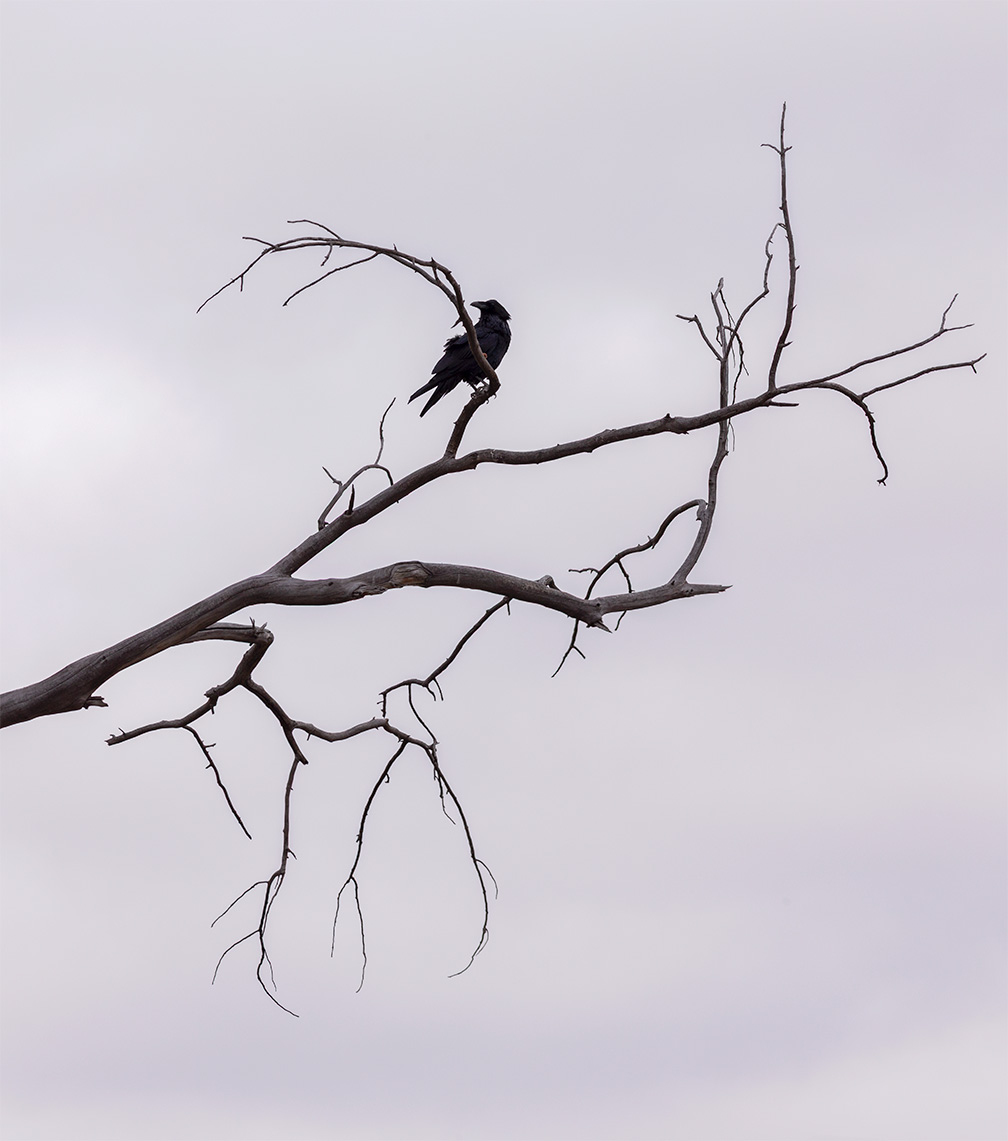
Crow in a bare tree
American Crow in a bare/dead cottonwood tree.

Valles Caldera.

The Valles Caldera, located in the Jemez Mountains of northern New Mexico, is a breathtaking geological feature formed approximately 1.25 million years ago following a massive volcanic eruption. This 13.7-mile-wide caldera is one of the best-preserved examples of its kind in the world, offering a unique glimpse into the Earth’s volcanic past. The landscape is characterized by vast grasslands, lush forests, and diverse wildlife, making it a haven for outdoor enthusiasts and nature lovers. The area is now protected as the Valles Caldera National Preserve, providing opportunities for hiking, fishing, and wildlife viewing. Its rich geothermal activity and stunning vistas also make it a popular site for scientific research and photography. The caldera’s unique ecosystem and cultural significance, with evidence of human habitation dating back thousands of years, add to its allure as a natural and historical treasure.
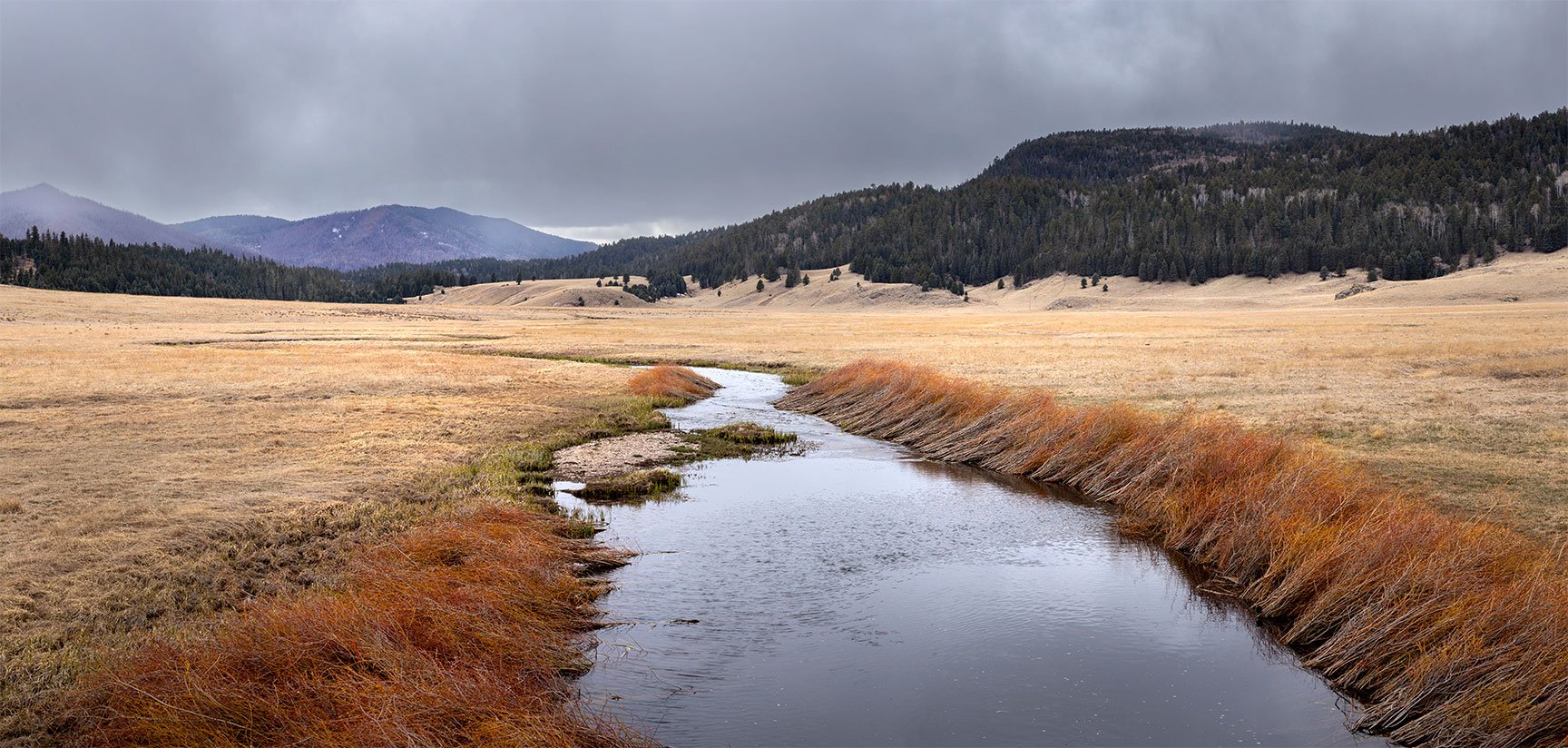
Spring in the Valle Caldera, NM.
Before Spring in the Valle Caldera, NM.

Picuris Pueblo.

Picuris Pueblo is a small, historic Native American community located in northern New Mexico, nestled in the scenic Sangre de Cristo Mountains. As one of the Eight Northern Pueblos, Picuris has a rich cultural heritage that dates back over a thousand years. The pueblo is known for its traditional adobe architecture, which reflects the community’s deep connection to its ancestral roots. Picuris Pueblo is renowned for its vibrant cultural traditions, including pottery, weaving, and ceremonial dances, which are integral to the community’s identity and are celebrated during various feast days and events. The pueblo’s location offers stunning natural beauty, with opportunities for outdoor activities such as hiking and birdwatching. Despite its small size, Picuris Pueblo plays a significant role in preserving the cultural and historical legacy of the Pueblo peoples in the American Southwest.

Picuris Pueblo, San Lorenzo Church during reconstruction.
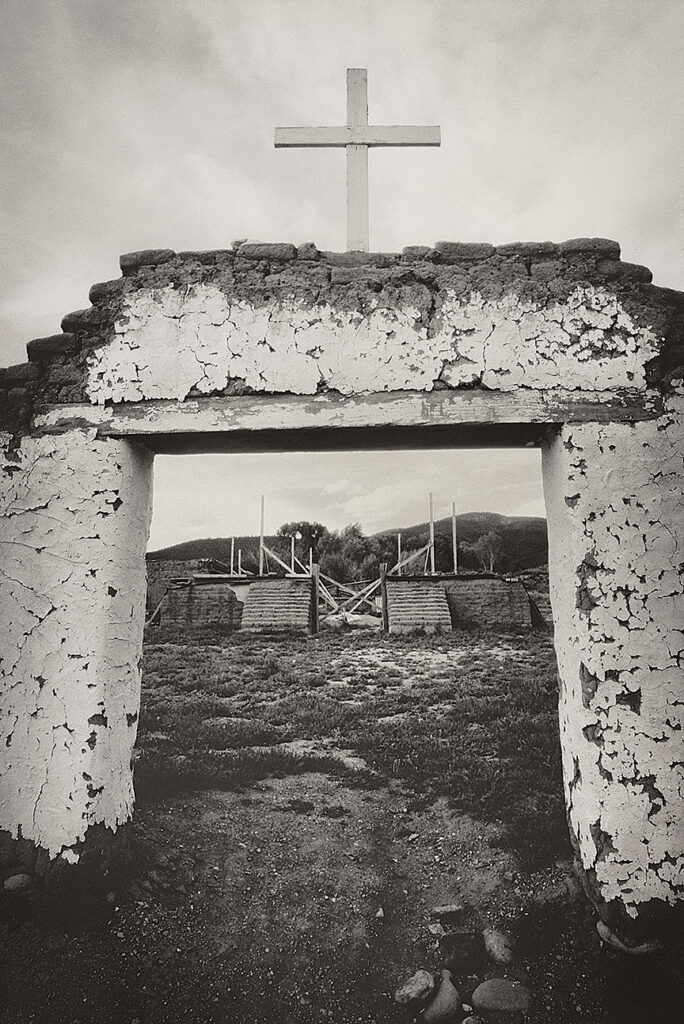
Restoration, Church, Picuris Pueblo
Restoration, Picuris Pueblo Church, NM.

As always, thanks for looking and visiting. Have a great week, and I’ll see you on the other side of the Spring Equinox. G
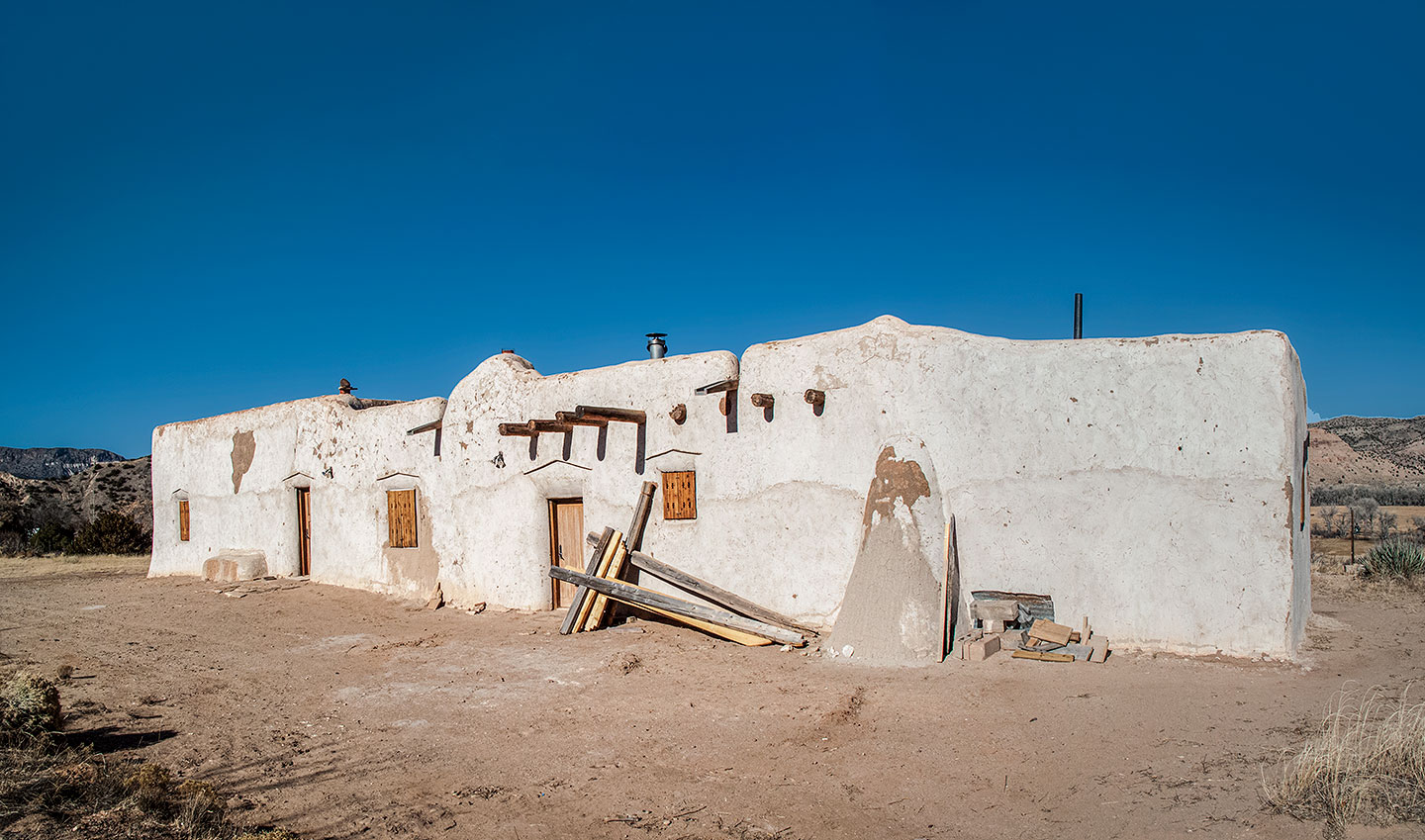
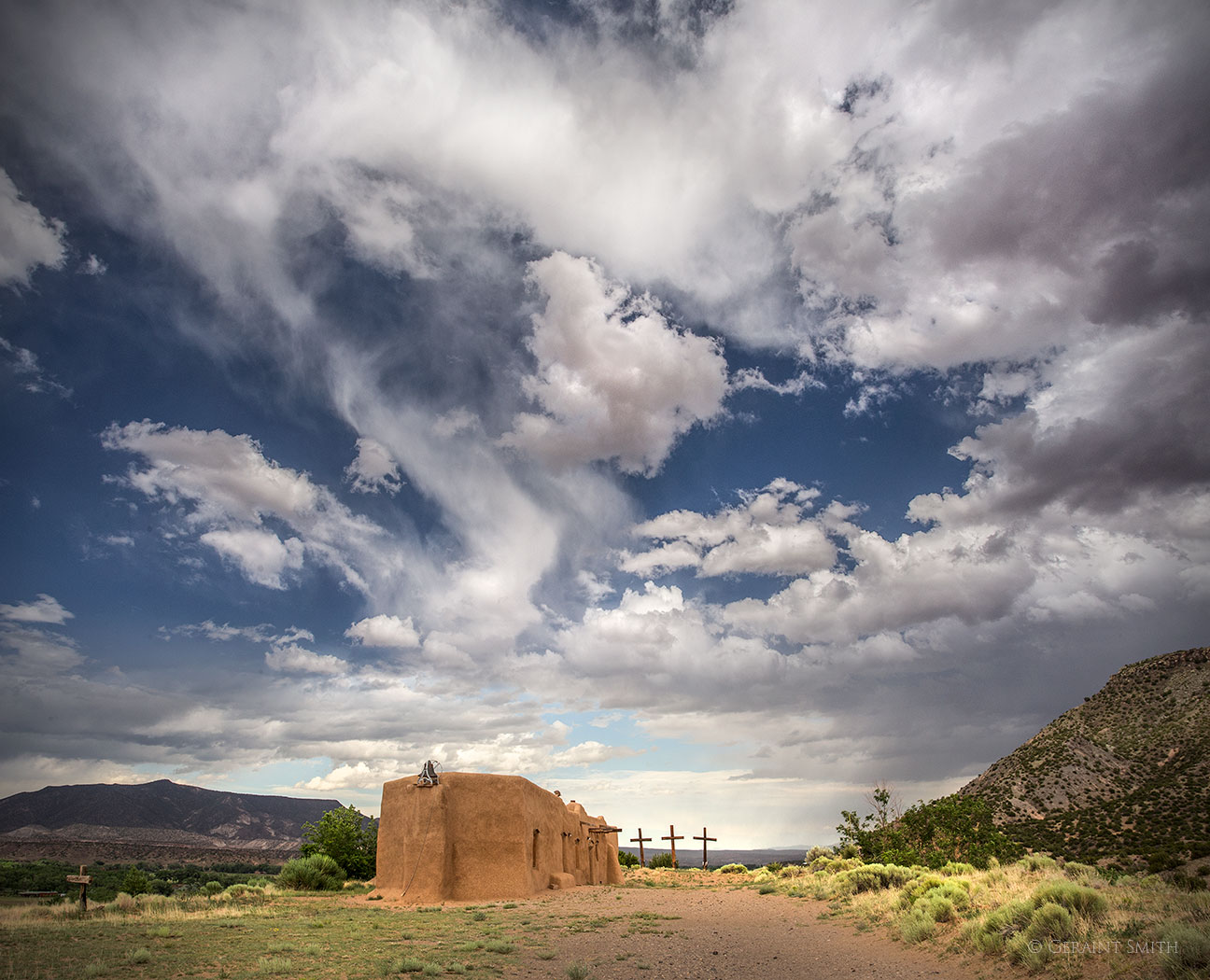
Penitente Morada, Abiquiu. 03-11-26

Greetings from San Cristobal, NM. This week, some favorite images from the Penitente Morada in Abiquiu, New Mexico.

The penitents of Northern New Mexico, particularly in areas like Abiquiú, are part of a religious brotherhood known as Los Hermanos Penitentes. This lay Catholic fraternity has deep roots in the region, tracing back to the early Spanish settlers who brought their faith and traditions to the remote and rugged landscapes of New Mexico. The Penitentes emerged in the 19th century as a response to the isolation and lack of clergy in the area, providing spiritual guidance and community cohesion through their devout practices.

Morada, Abiquiu
Penitente Morada, Abiquiu, NM.

In Abiquiú, a small village known for its stunning landscapes and rich cultural history, the Penitentes have played a significant role in maintaining religious and cultural traditions. The brotherhood is known for its emphasis on penance, prayer, and acts of charity. Their practices are particularly visible during Lent and Holy Week, when they engage in rituals that include processions, reenactments of the Passion of Christ, and acts of self-flagellation. These rituals are deeply symbolic, reflecting themes of sacrifice, redemption, and communal solidarity.

Penitente Morada, Abiquiu
Penitente Morada, and three crosses.

The Penitentes have historically been a subject of intrigue and misunderstanding, often shrouded in secrecy due to their private nature and the intense personal devotion of their practices. However, they are also respected for their commitment to preserving cultural heritage and providing social support within their communities. In Abiquiú, the brotherhood has contributed to the village’s identity, blending indigenous, Spanish, and Catholic influences into a unique cultural tapestry.

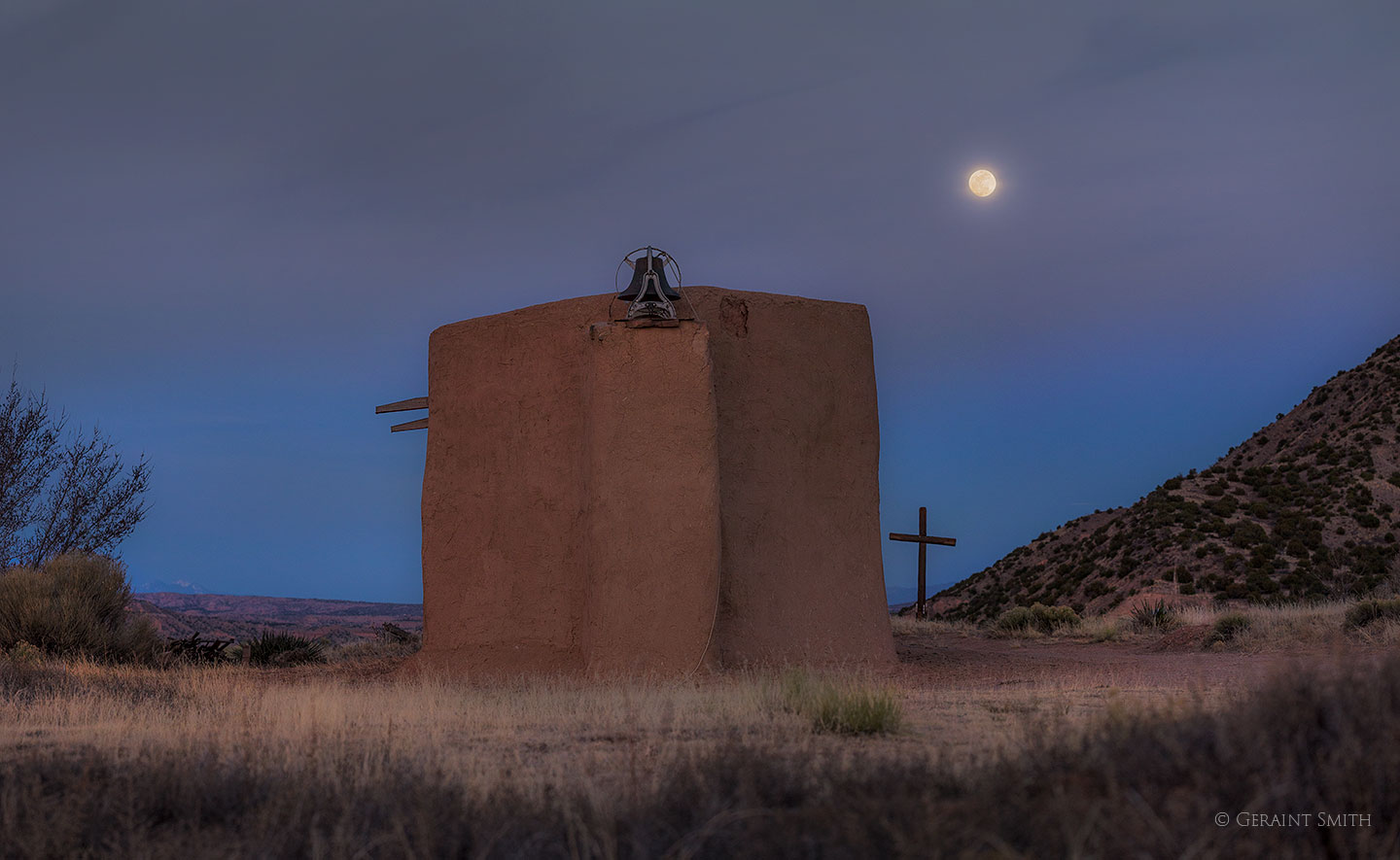
Moonrise Penitente Morada, Abiquiu
Moonrise, Penitente Morada, and one cross.

Today, the Penitentes continue to be a vital part of Northern New Mexico’s spiritual landscape. While their numbers have dwindled, and some of their practices have evolved over time, they remain a testament to the enduring power of faith and community in the face of change and adversity. Their presence in Abiquiú and the surrounding areas serves as a reminder of the region’s rich history and the resilience of its people.

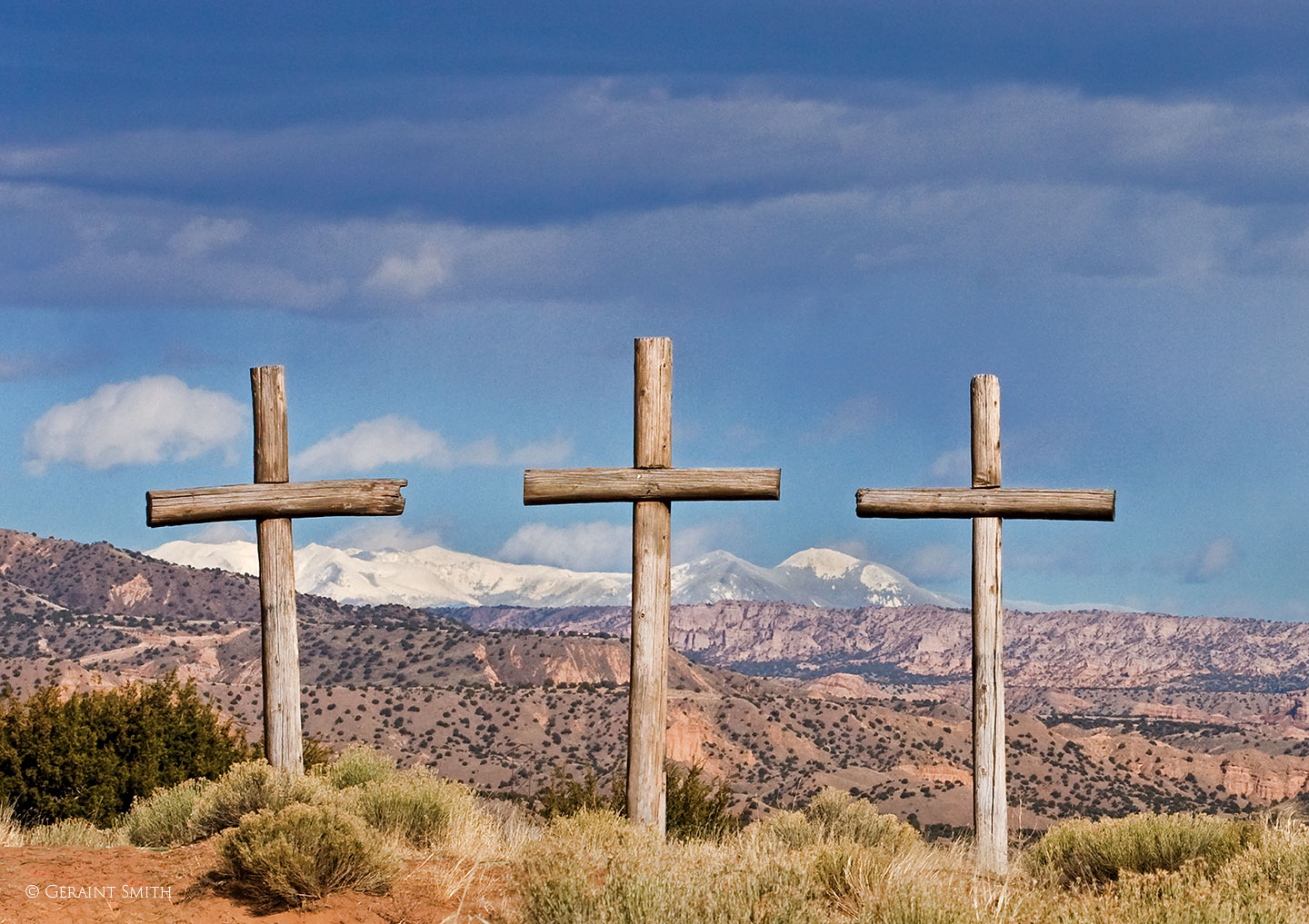
Three crosses, Abiquiu
Three crosses with a view of the Taos Mountains.

You can now find my greeting cards at the Mabel Dodge Luhan House. The cards feature images of the house, its architecture, and the surrounding landscapes.

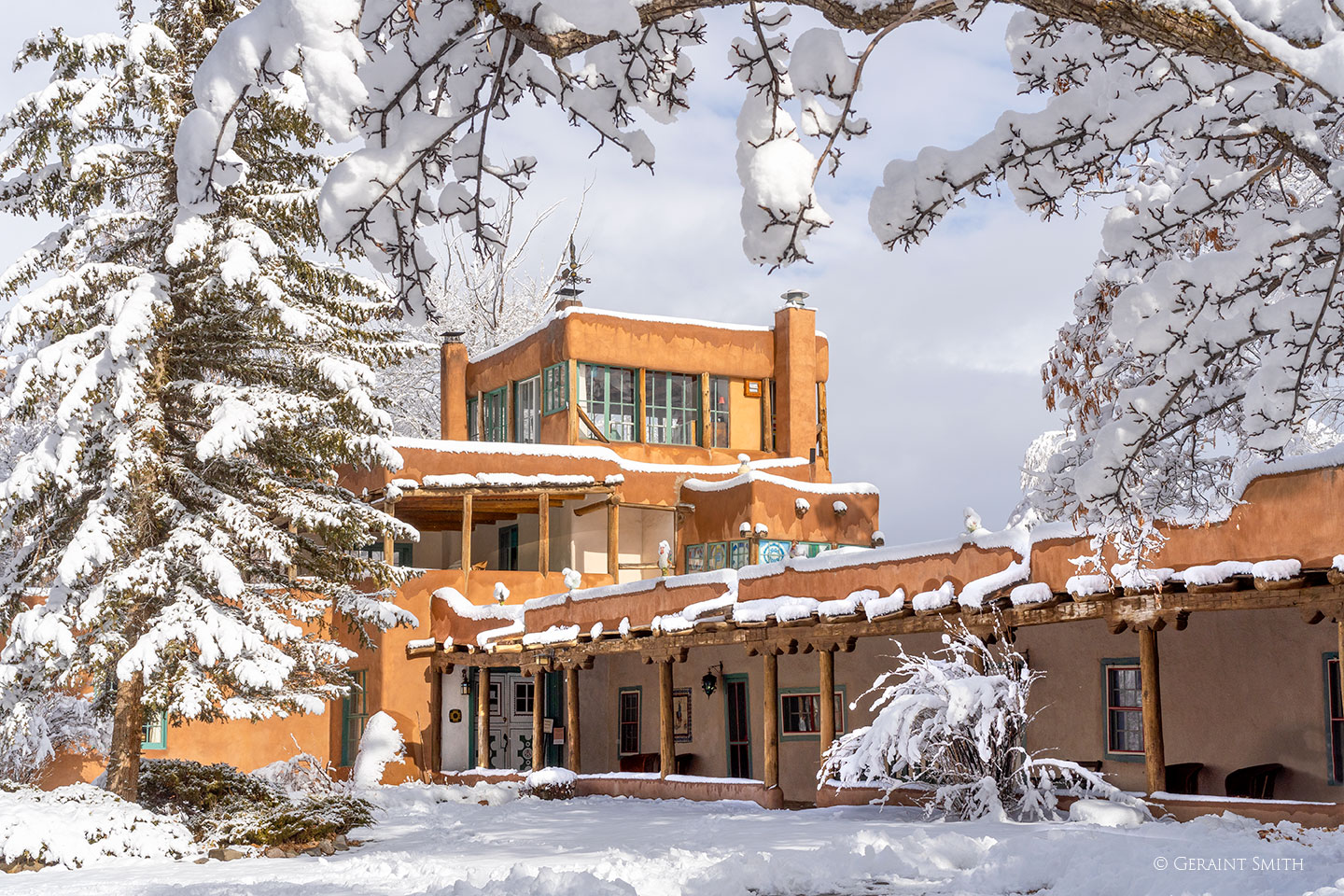
Mabel Dodge Luhan
Mabel Dodge Luhan House, Taos.
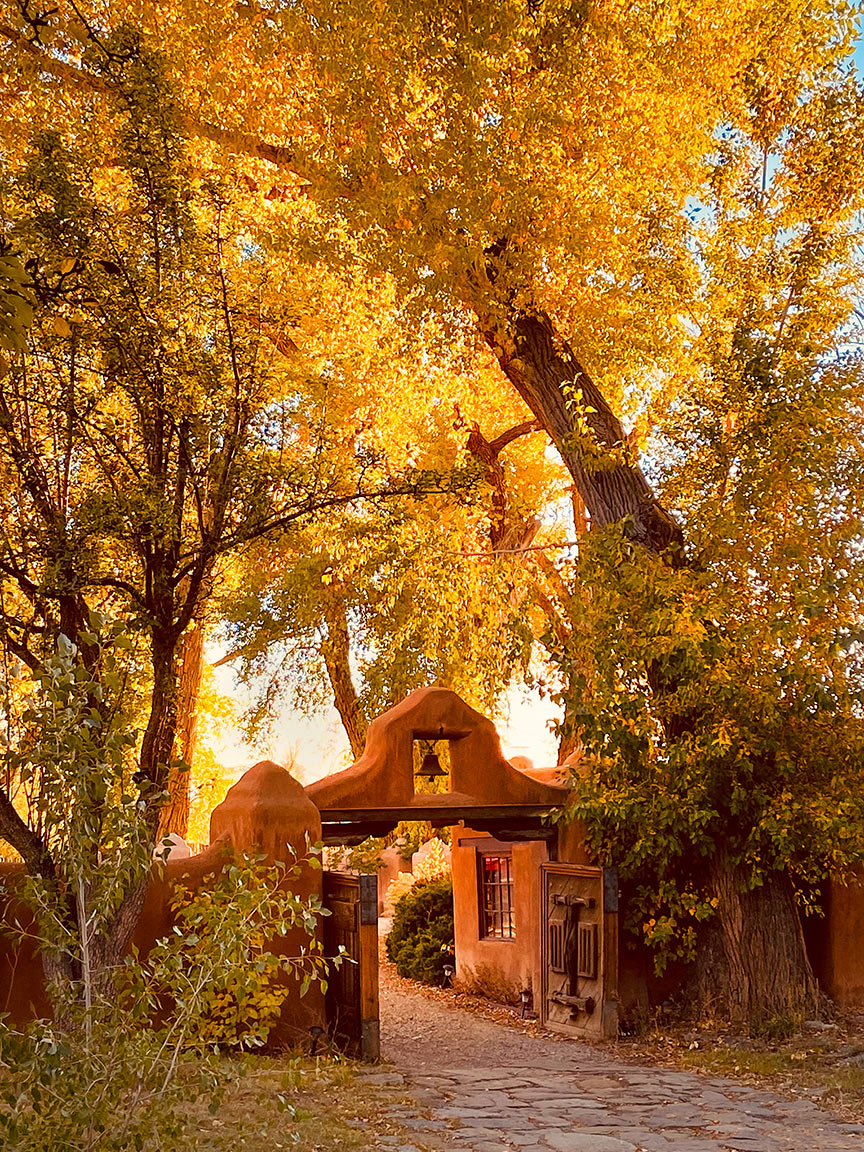
Mabel Dodge Luhan House gateway fall.
Mabel Dodge Luhan House gateway.

As always, thanks for visiting and looking. I apologize for the comment page not working correctly. I appreciate the heads-up and taking the time to let me know. Have a great week. G
Northern Lights, NM. 11-12-2025.

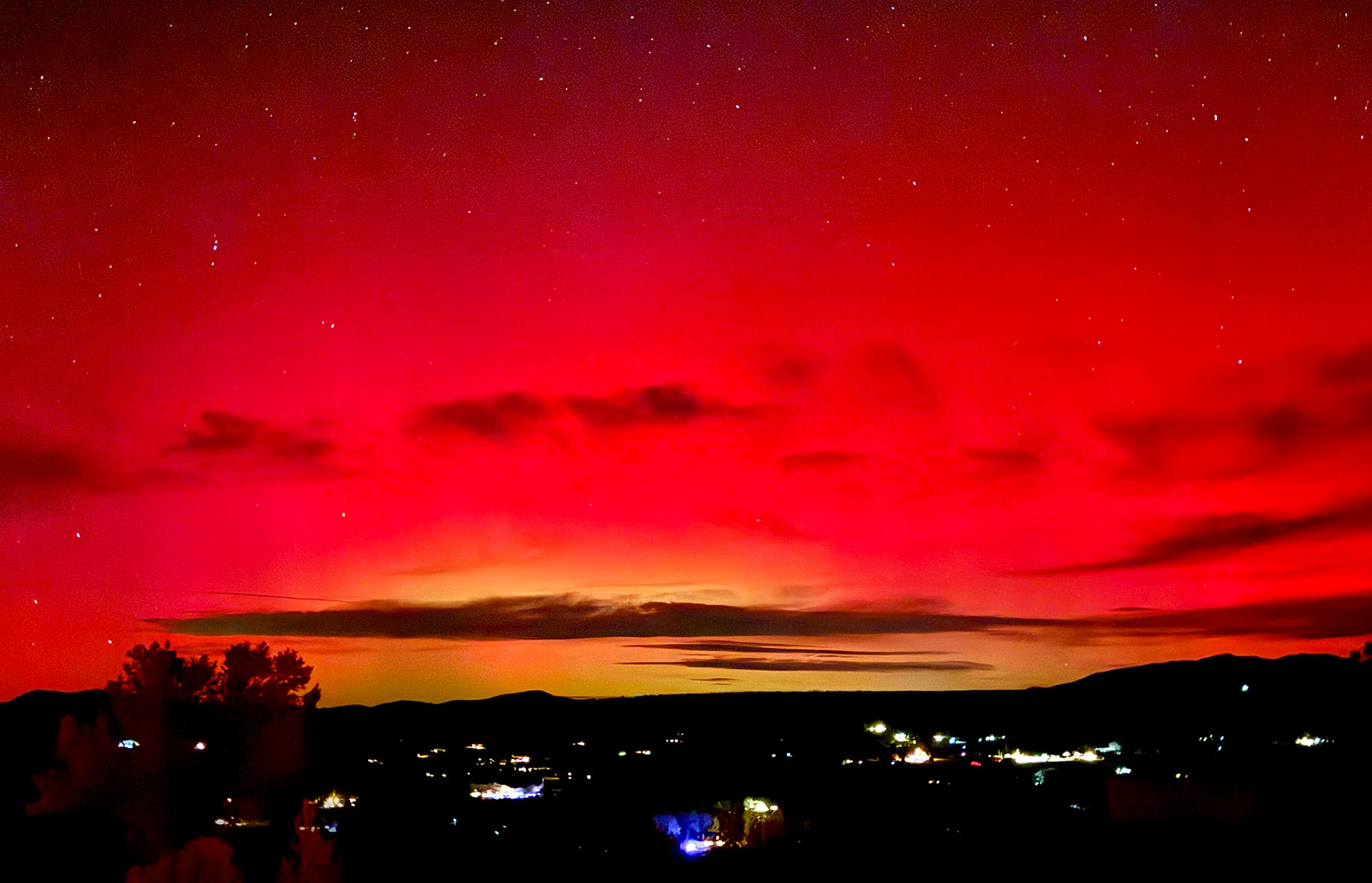
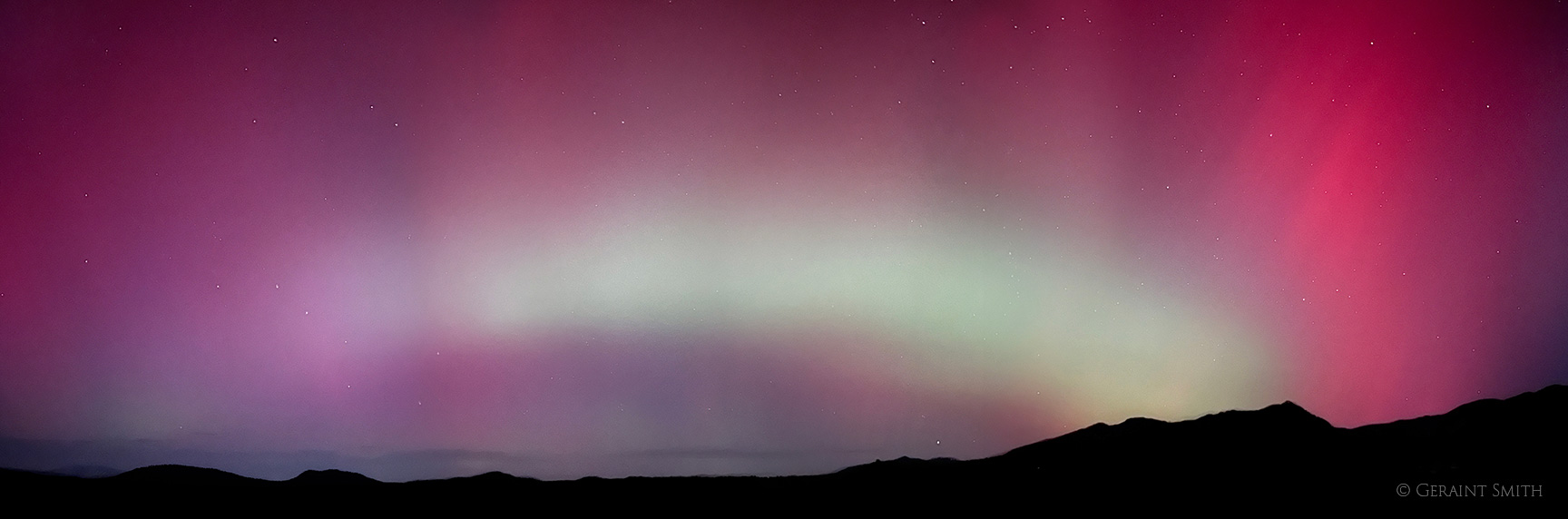
Greetings from New Mexico. This week, a few images of the northern lights as seen from our village of San Cristobal, in the mountains of northern New Mexico.

When I first saw the northern lights last night it was through the trees at our house, so I drove five minutes to this vantage point for a view of our valley and what looked like a sunrise/sunset. Shot on the iPhone.

Northern lights, San Cristobal, NM
Norhtern Lights, San Cristobal, NM

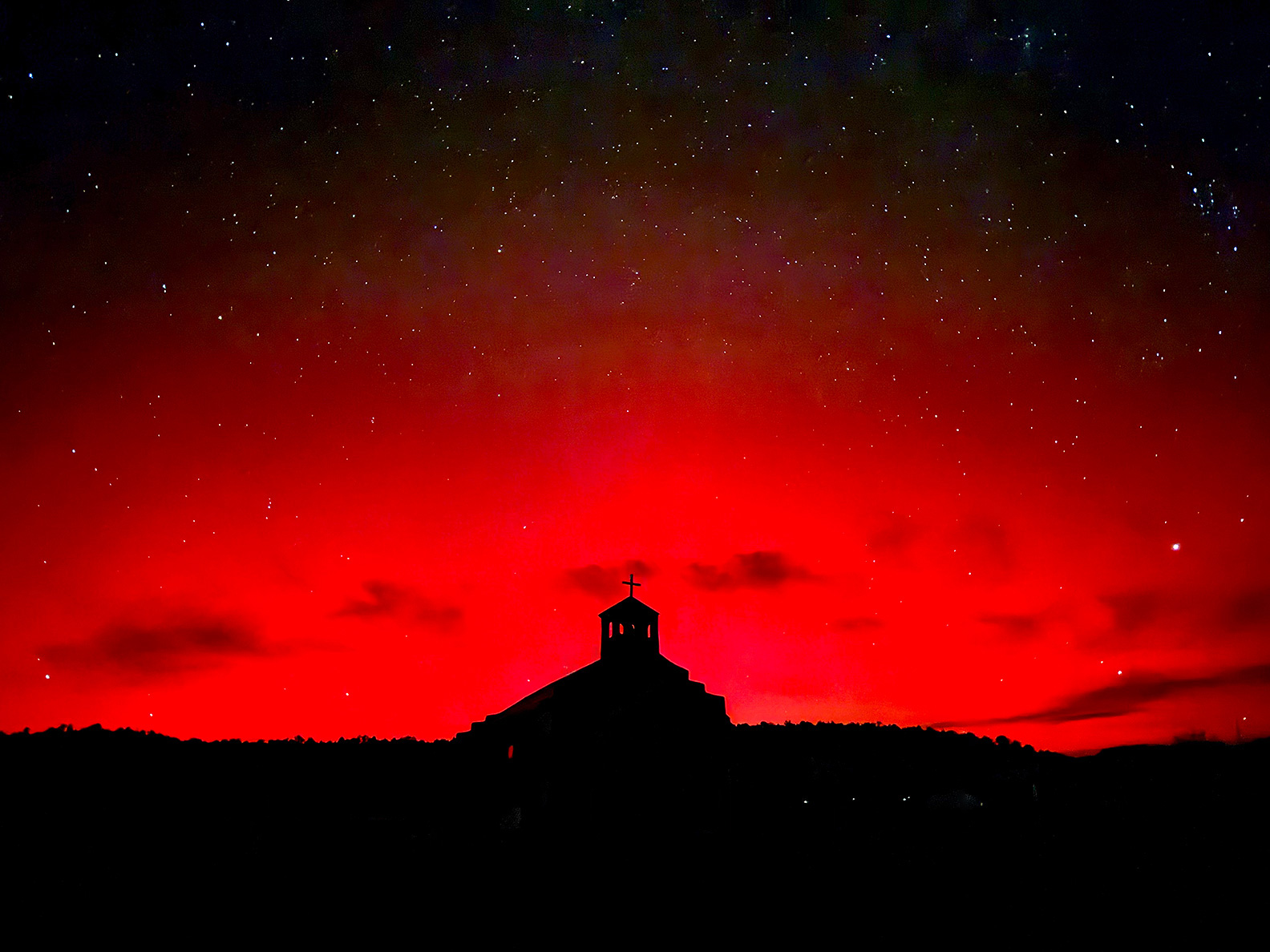
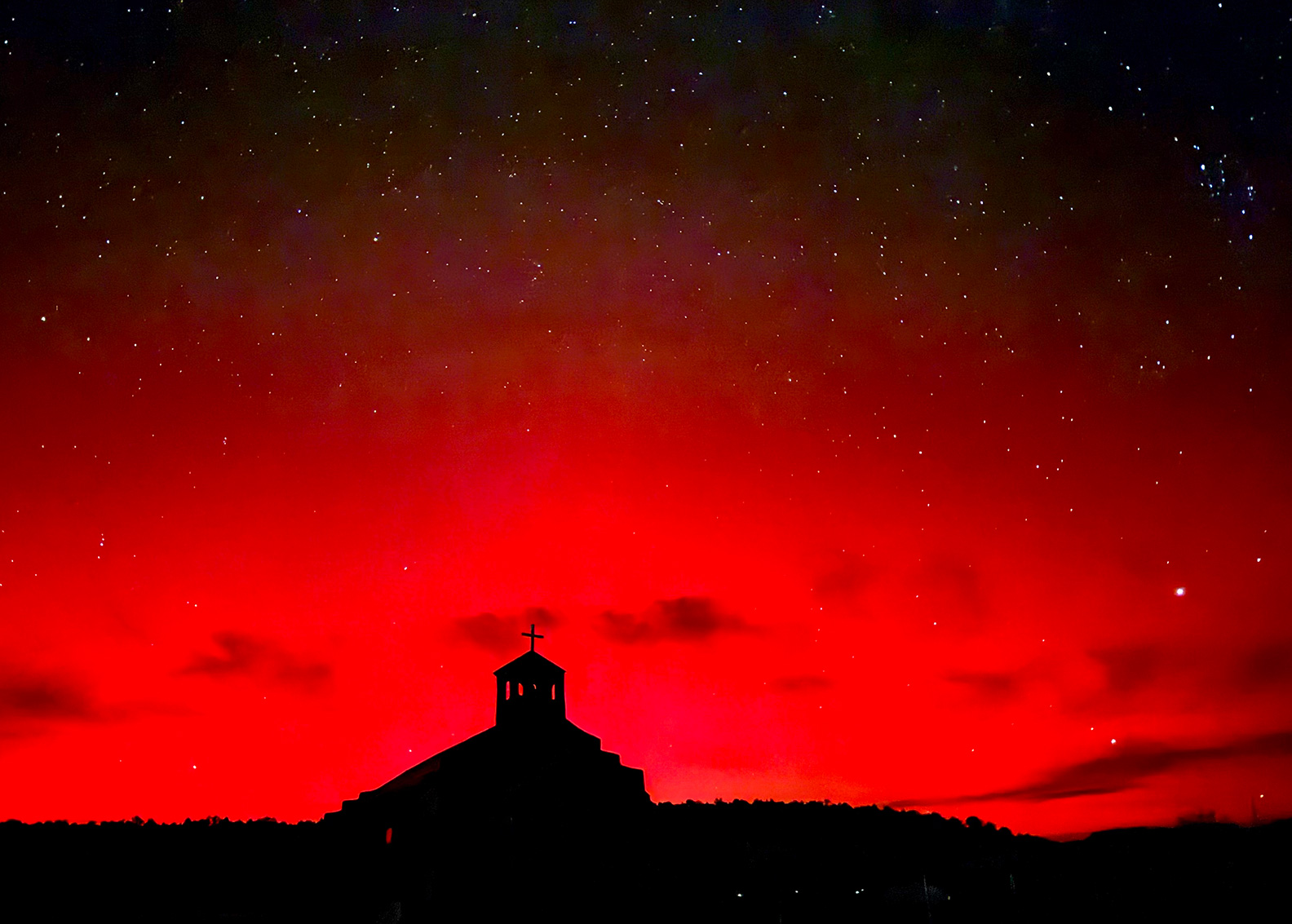
I had a thought to photograph the little chapel in the village against the aurora sky, not one hundred percent sure that it would align.

Chapel San Cristobal, NM
San Cristobal Chapel.

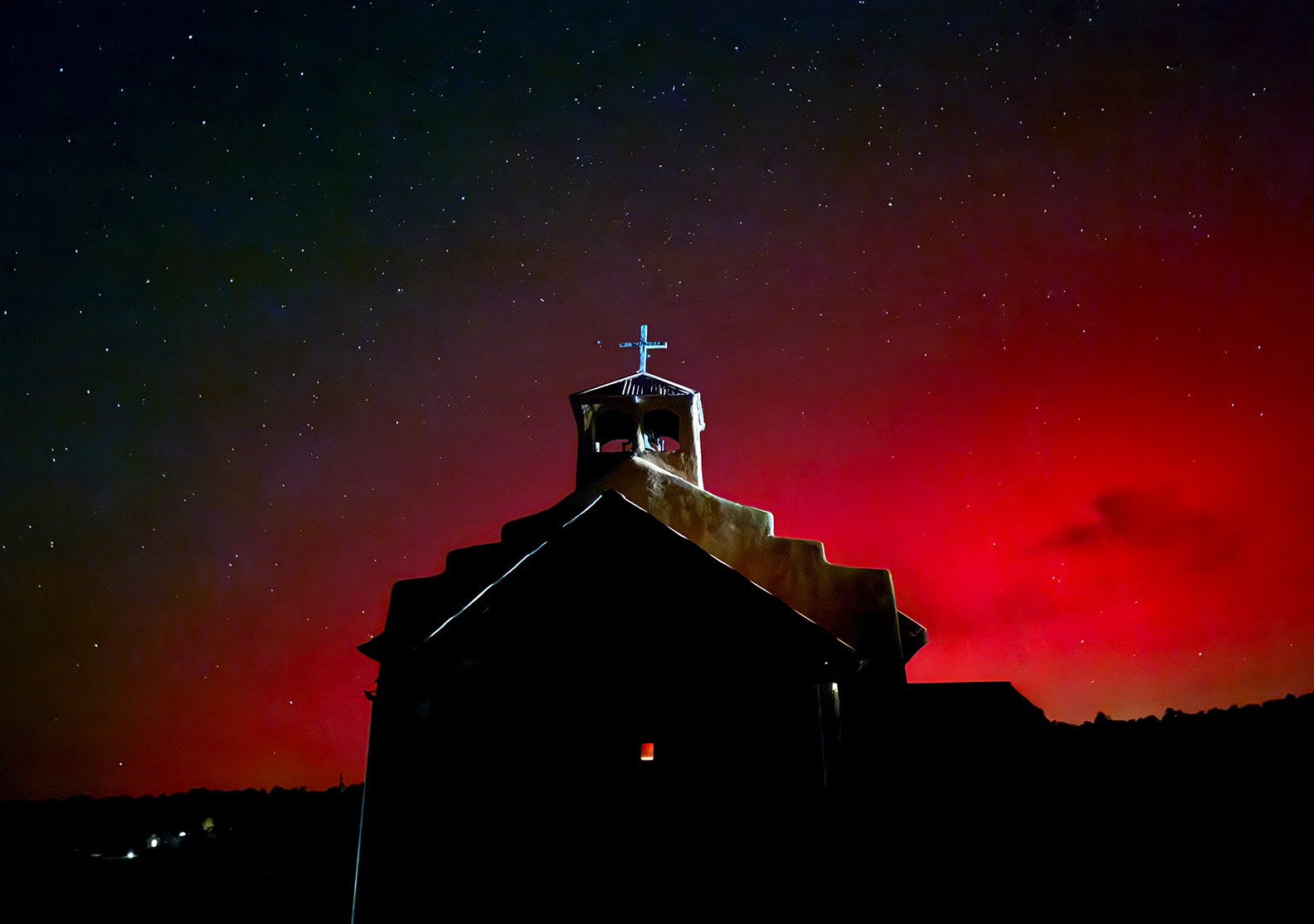
A car came by and highlighted the church.

Chapel San Cristobal, NM
Chapel highlights.

Tonight viewing should be even more spectacular, clear skies permiting.

The image below was shot in our neighborhood in October last year.

Aurora, Northern Lights
Aurora Borealis, October, 2024

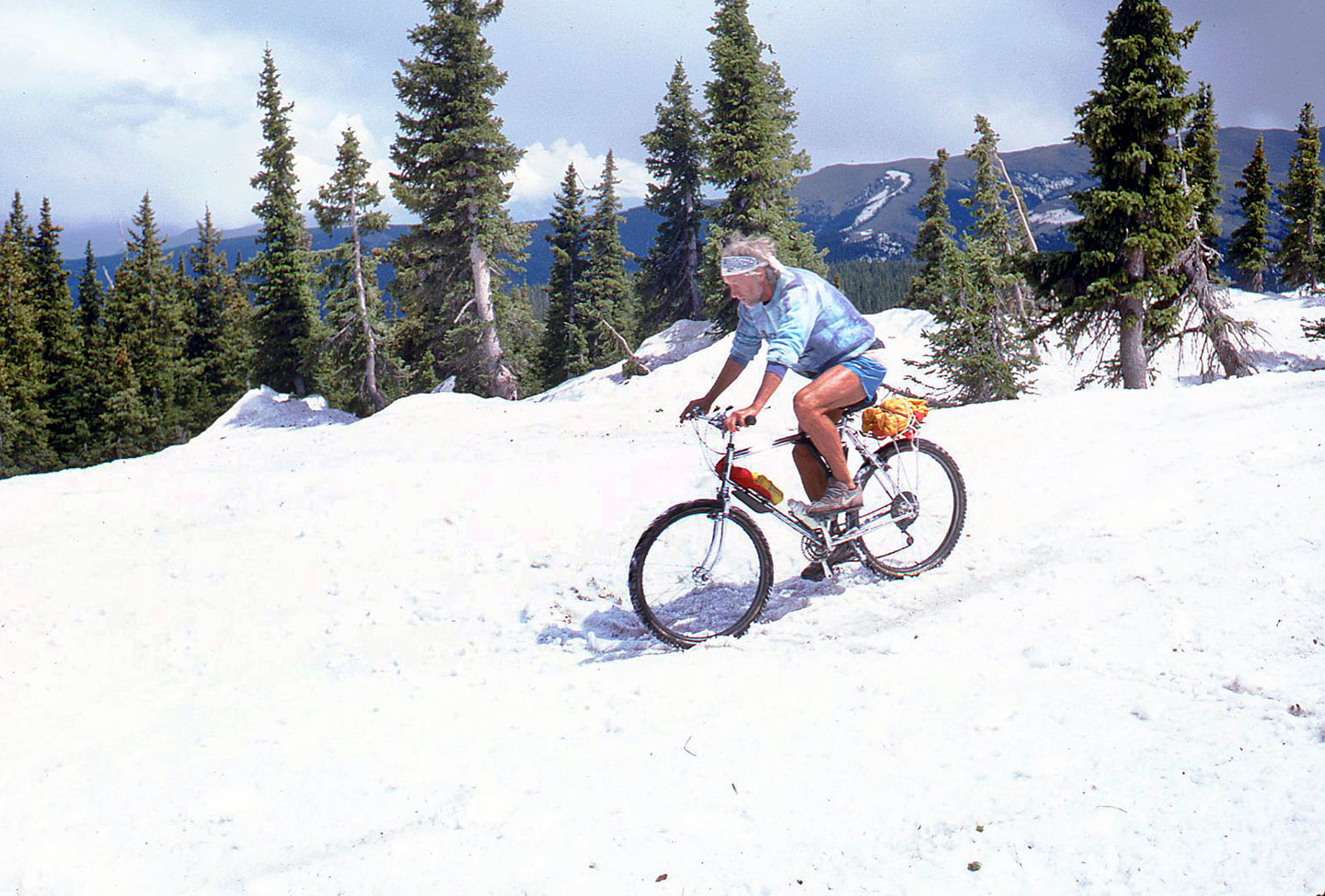
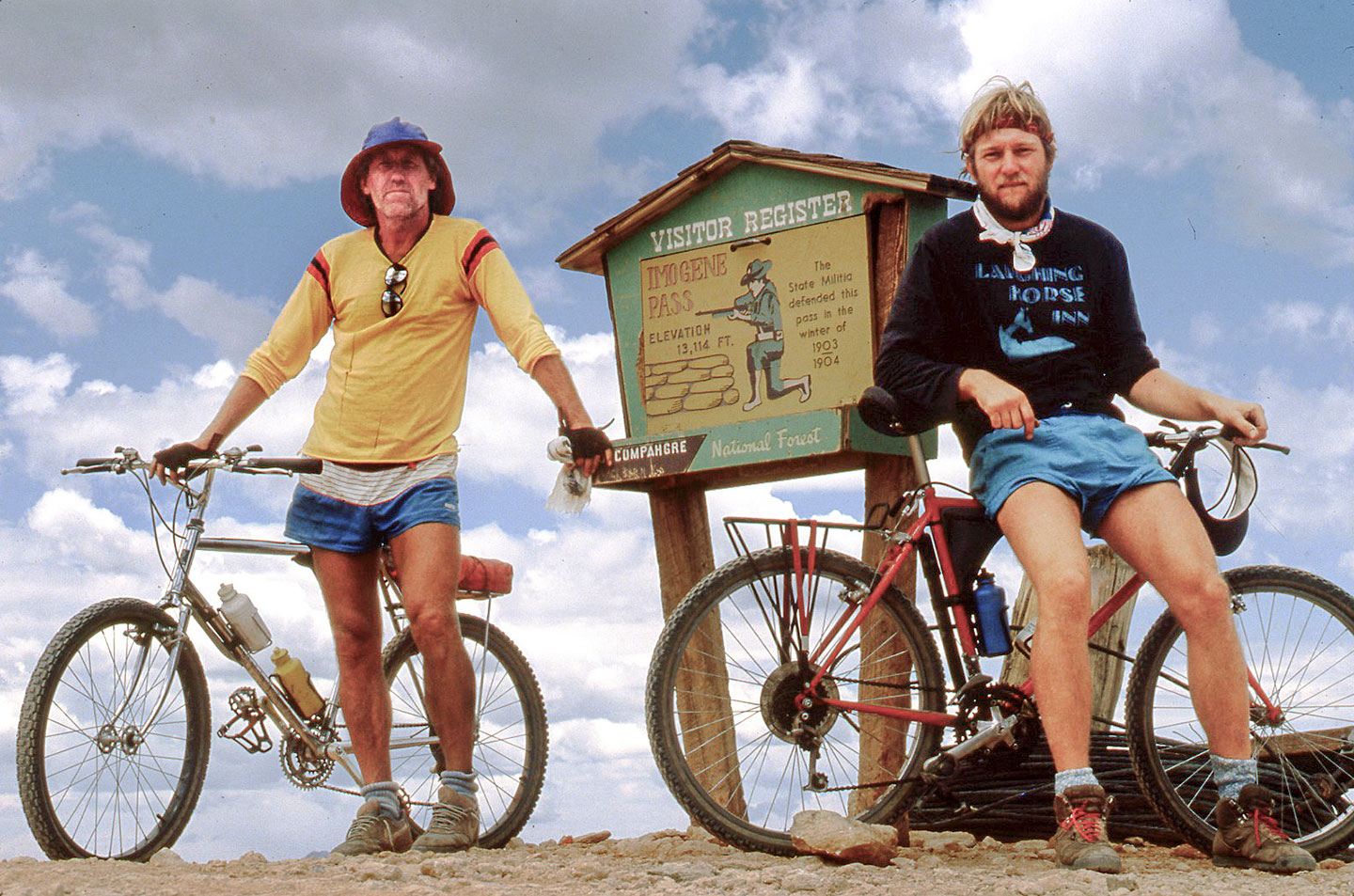
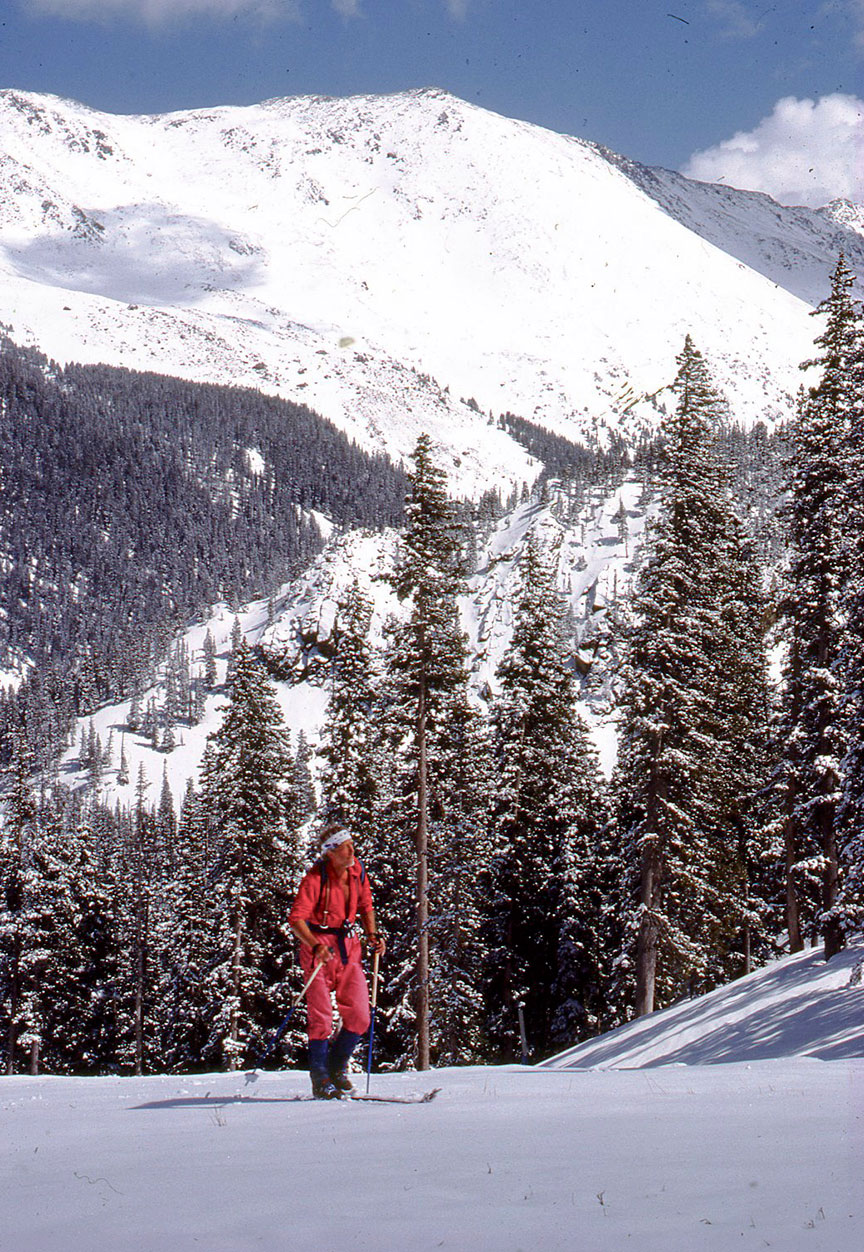
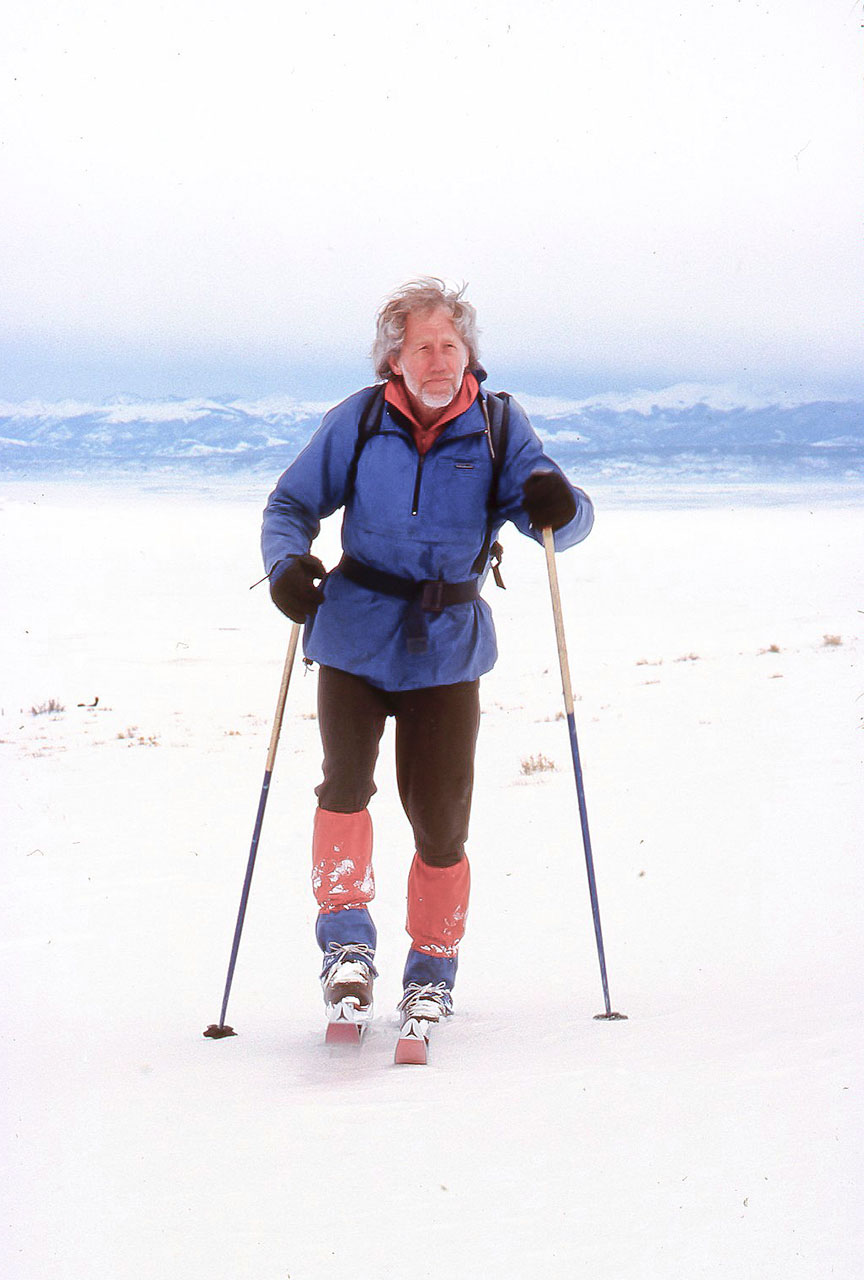
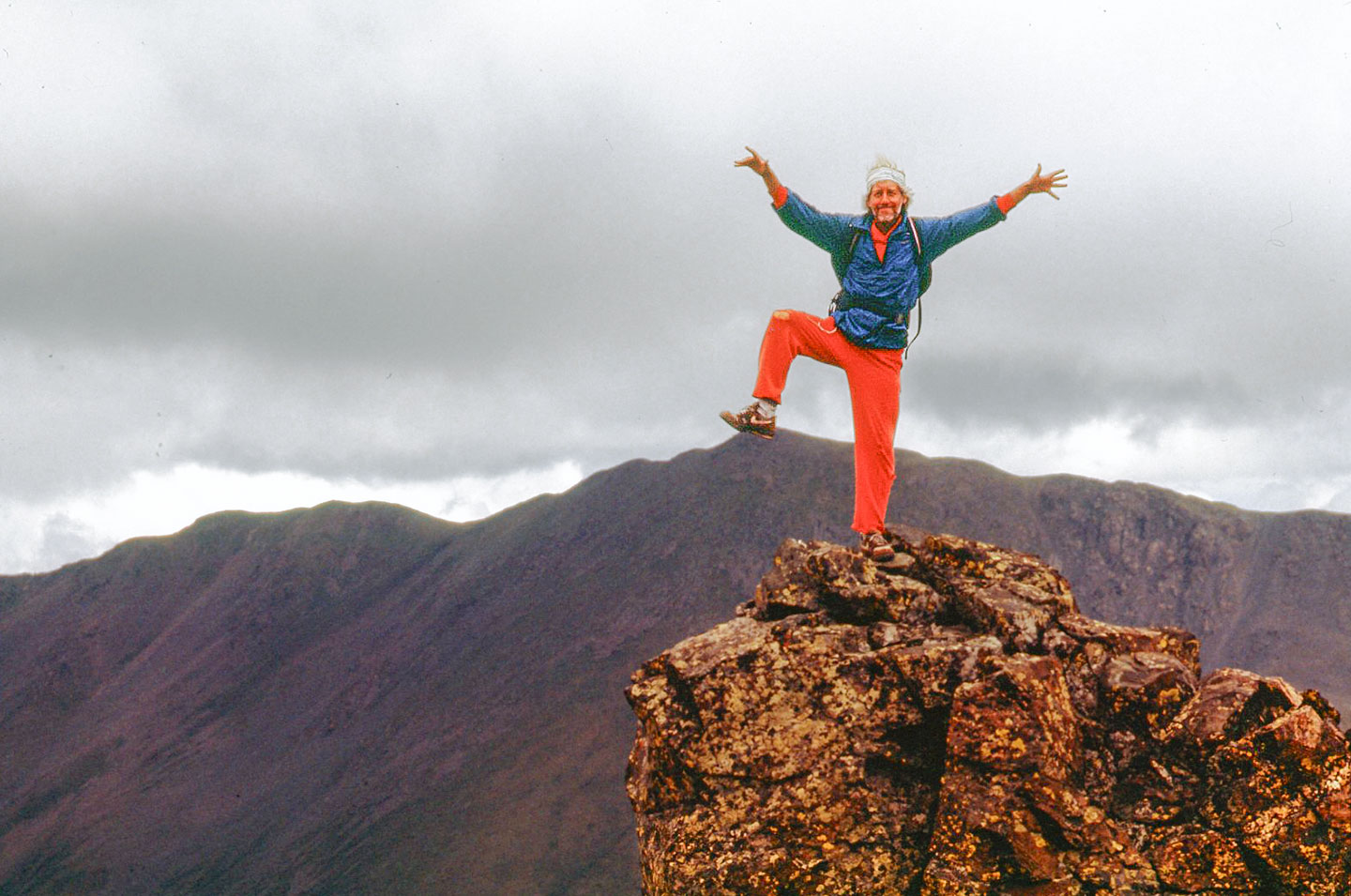
On another note: I want to take a moment to remember my friend Harry Vedoe, who had a profound impact on my life and on the many adventures I’ve had in the backcountry and wilderness over the years. Harry and I were friends for almost 40 years. Rest in glorious peace, Harry.

Harry passed away at age 96 peacefully in his sleep on October 28, 2025.

Harry biking in snow
Harry, biking Gold Hill
Harry, Geraint, Imogene Pass
Harry, Geraint, Imogene Pass.
Harry Taos Ski Valley
Harry x country in Taos Ski Valley.
Harry San Antonio Mountain
Harry on San Antonio Mountain.
Harry with his foot on Wheeler Peak.
Harry, with his foot on Wheeler Peak.

RIP Harry, or then again, bike, hike, ski, and climb on, or take another road, my dear friend.

As always, thanks for looking. Check out the sky tonight, it should be good viewing for the Aurora Borealis. G
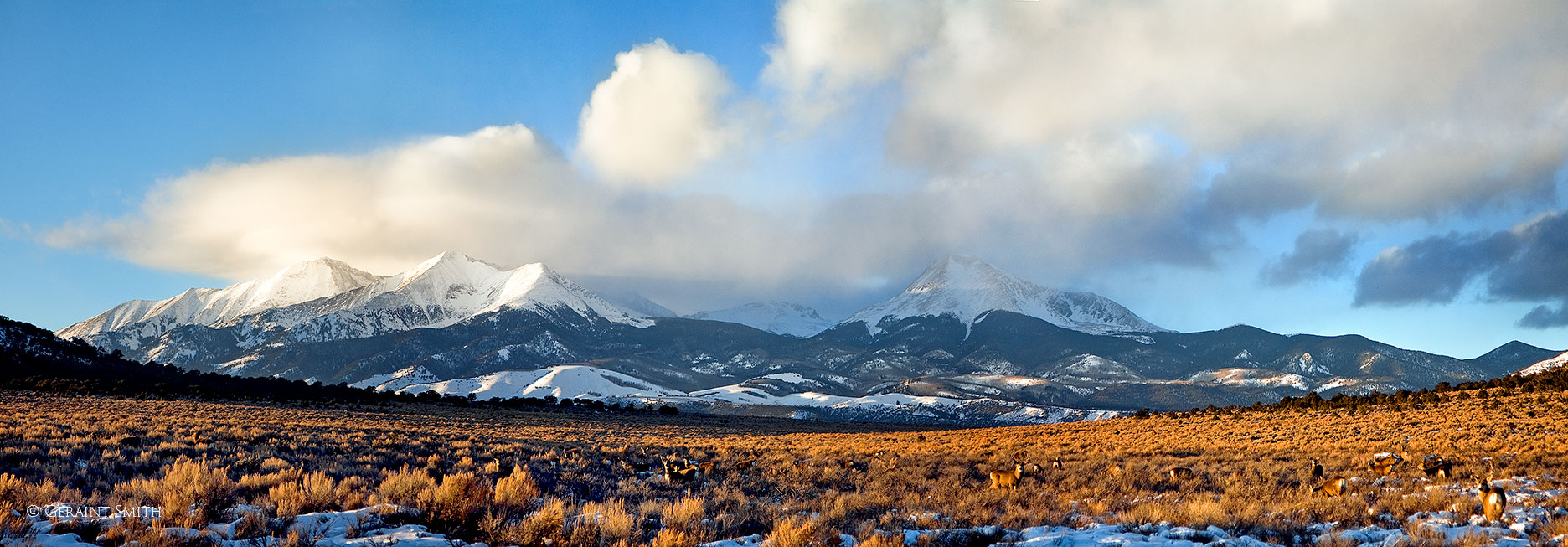
Wild Horses On The Plateau. 10-22-2025

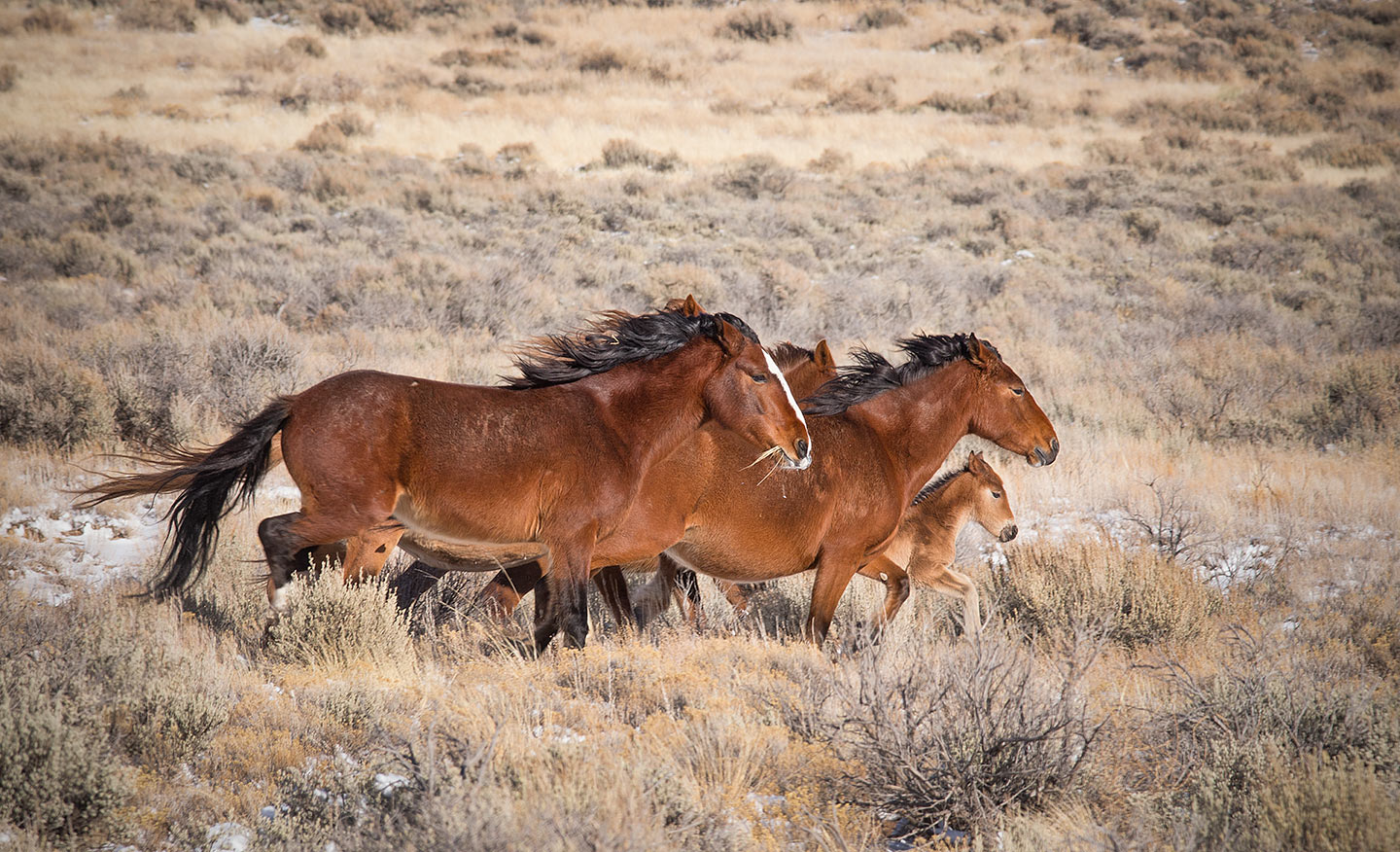
Greetings from New Mexico. This week, wild horses. For the last three weeks, I’ve been in the landscape of a Georgia O’Keeffe painting, exploring the areas around Abiquiu, and Ghost Ranch, NM, five times, and again tomorrow. I never tire of it, but it’s time for a change and to head out in search of wild horses, sandhill cranes, hawks, and elk. A change of scenery and subject is always good for the soul and the portfolio.

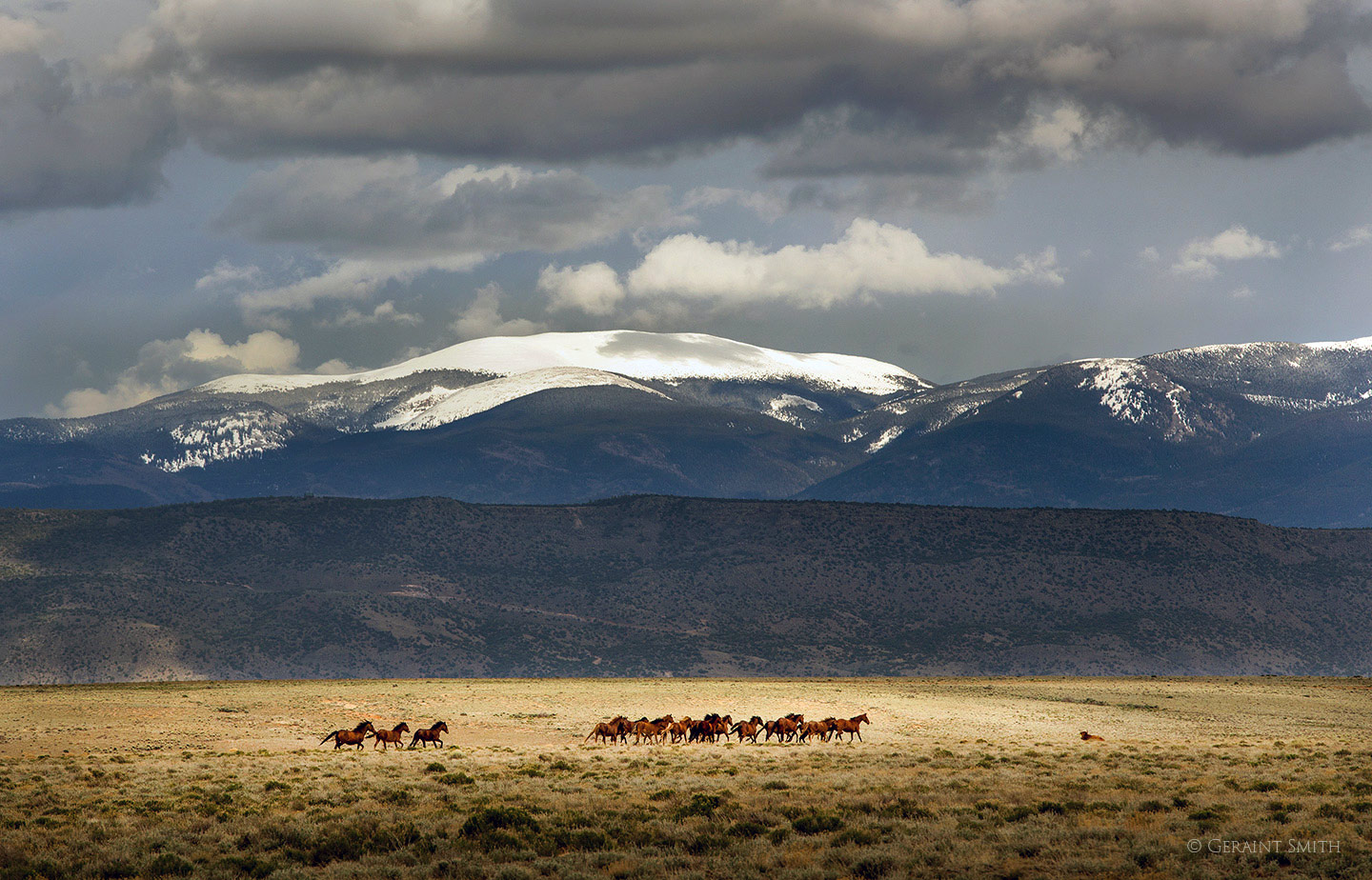
Wild horses on the plateau.
Wild horses (and one bull) on the plateau.

The following two images were taken in spring.

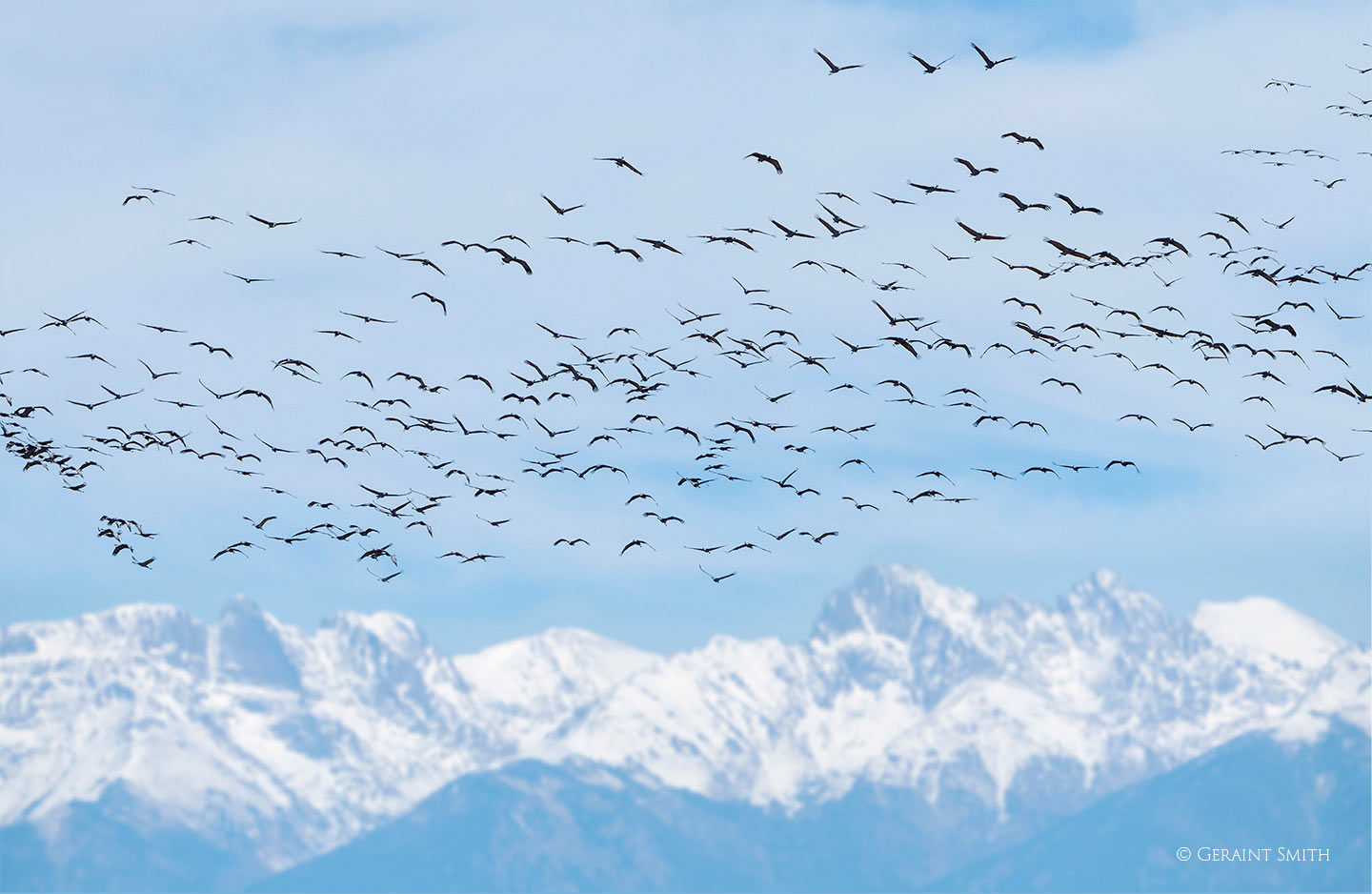
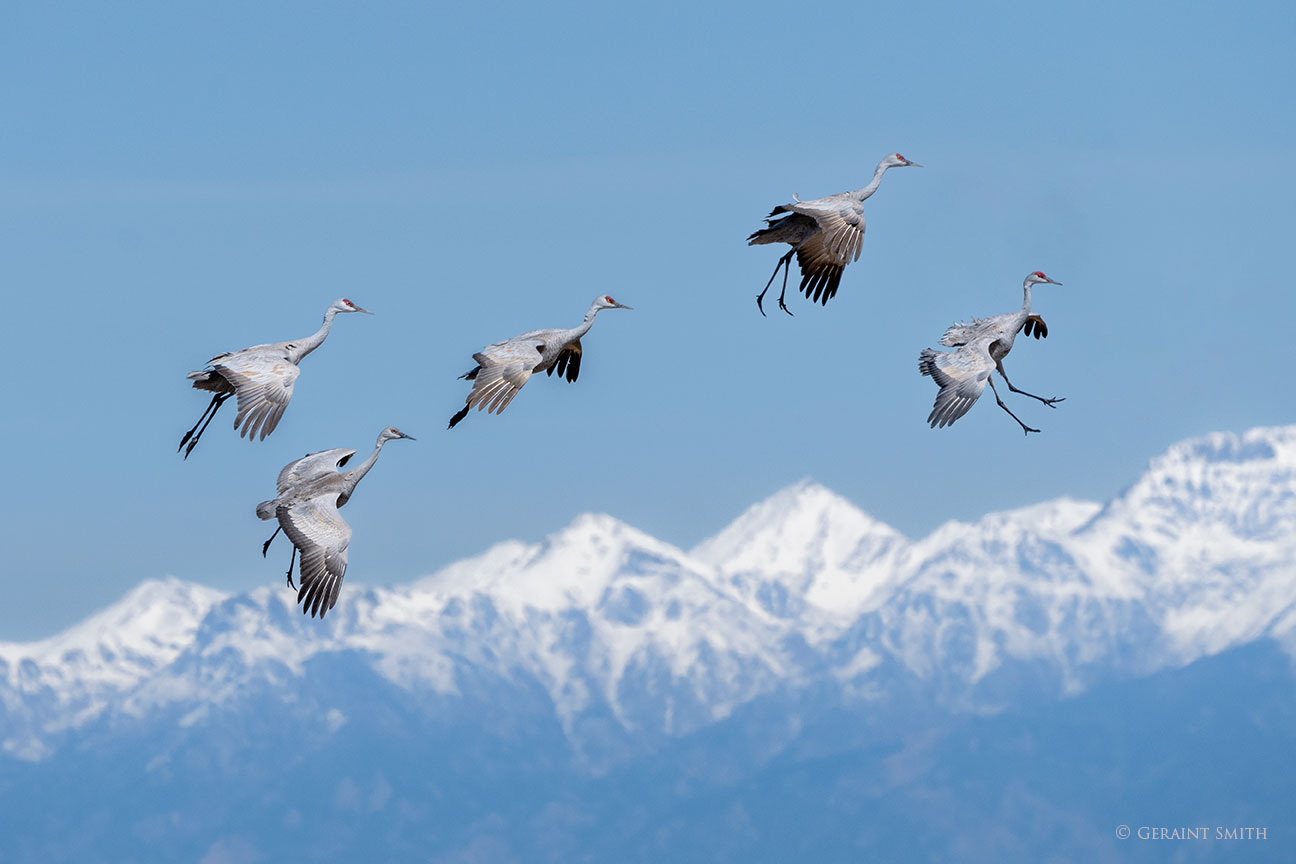
Sandhill Cranes
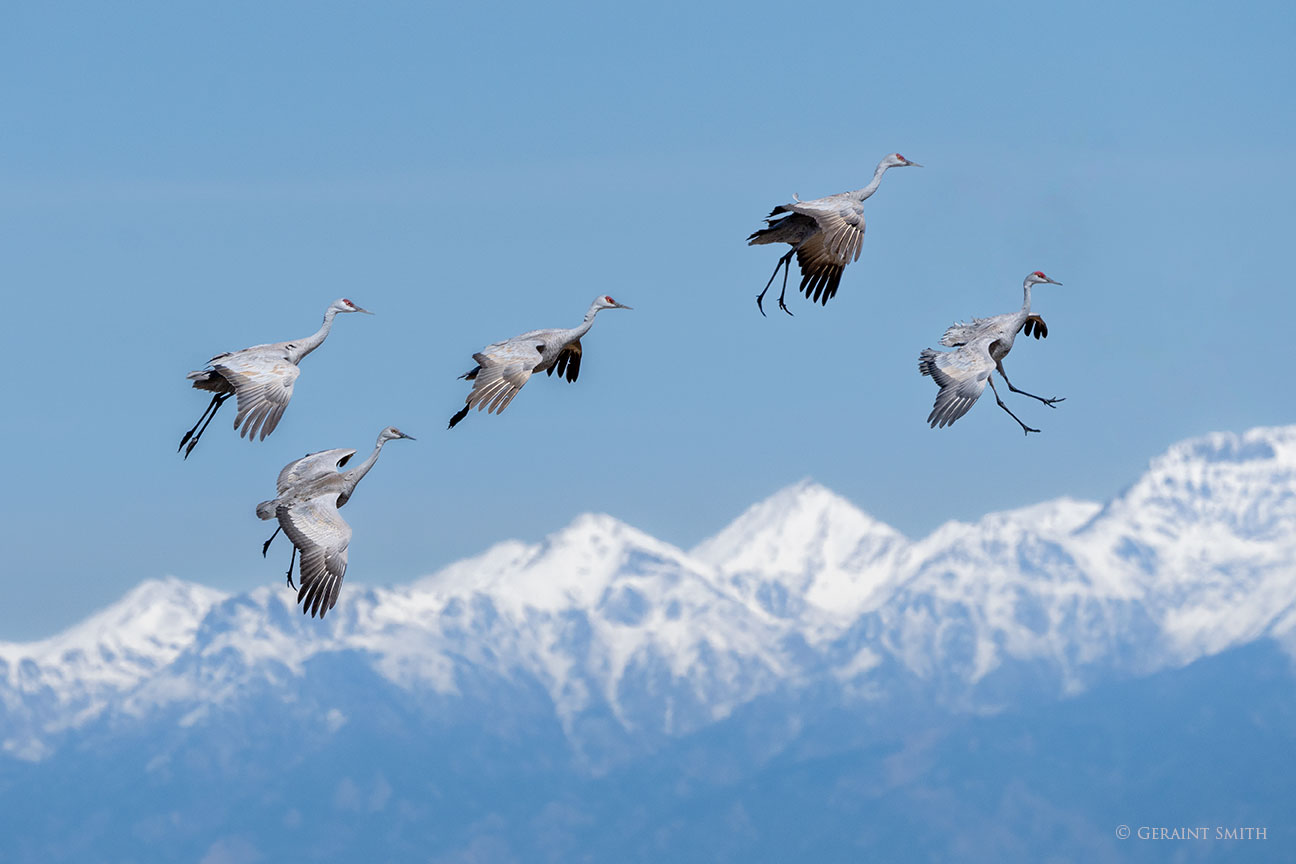
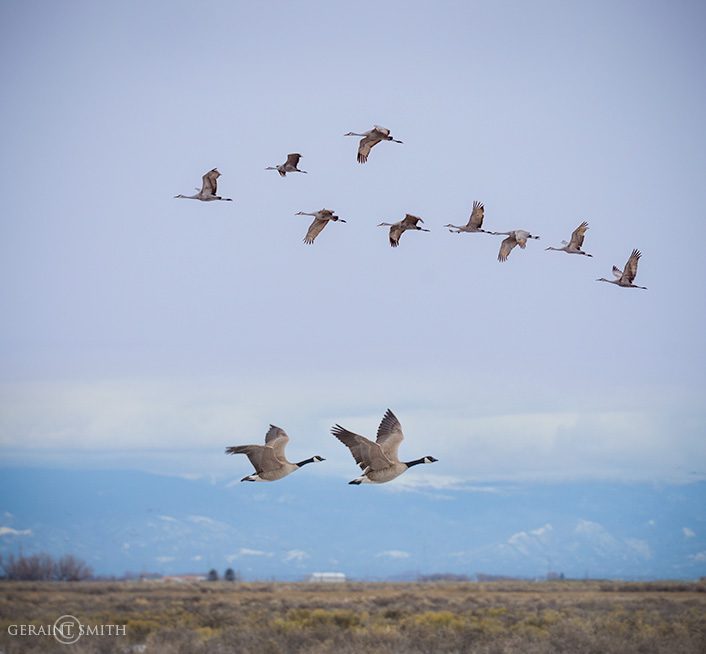
Sandhill Cranes, Sangre de Cristo Mountains.
Sandhill Cranes
Sandhill Cranes coming in for a landing.

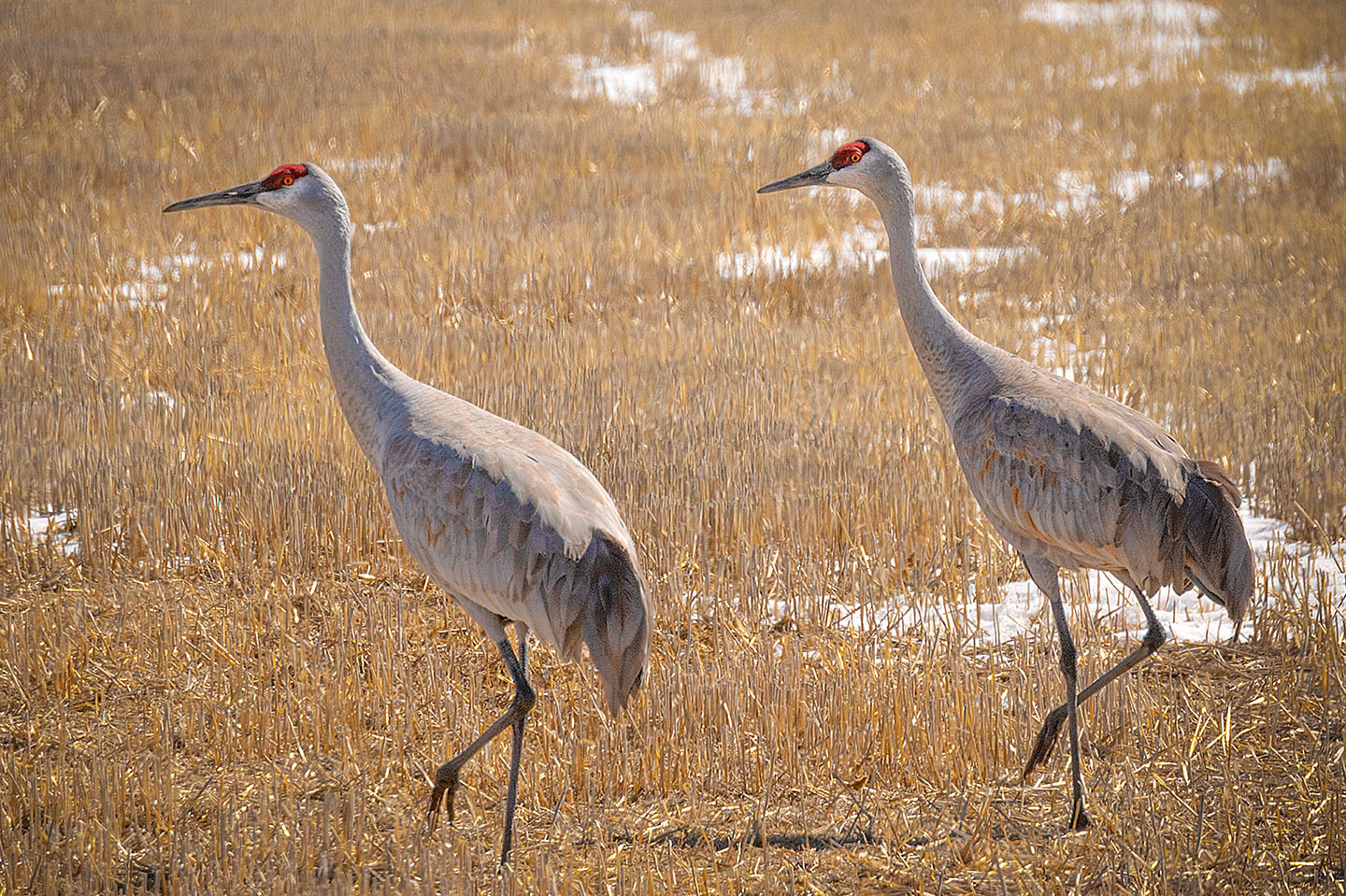
These two were trucking along foraging in the fields near Monte Vista NWR.

Sandhill Cranes
Sandhill Cranes.

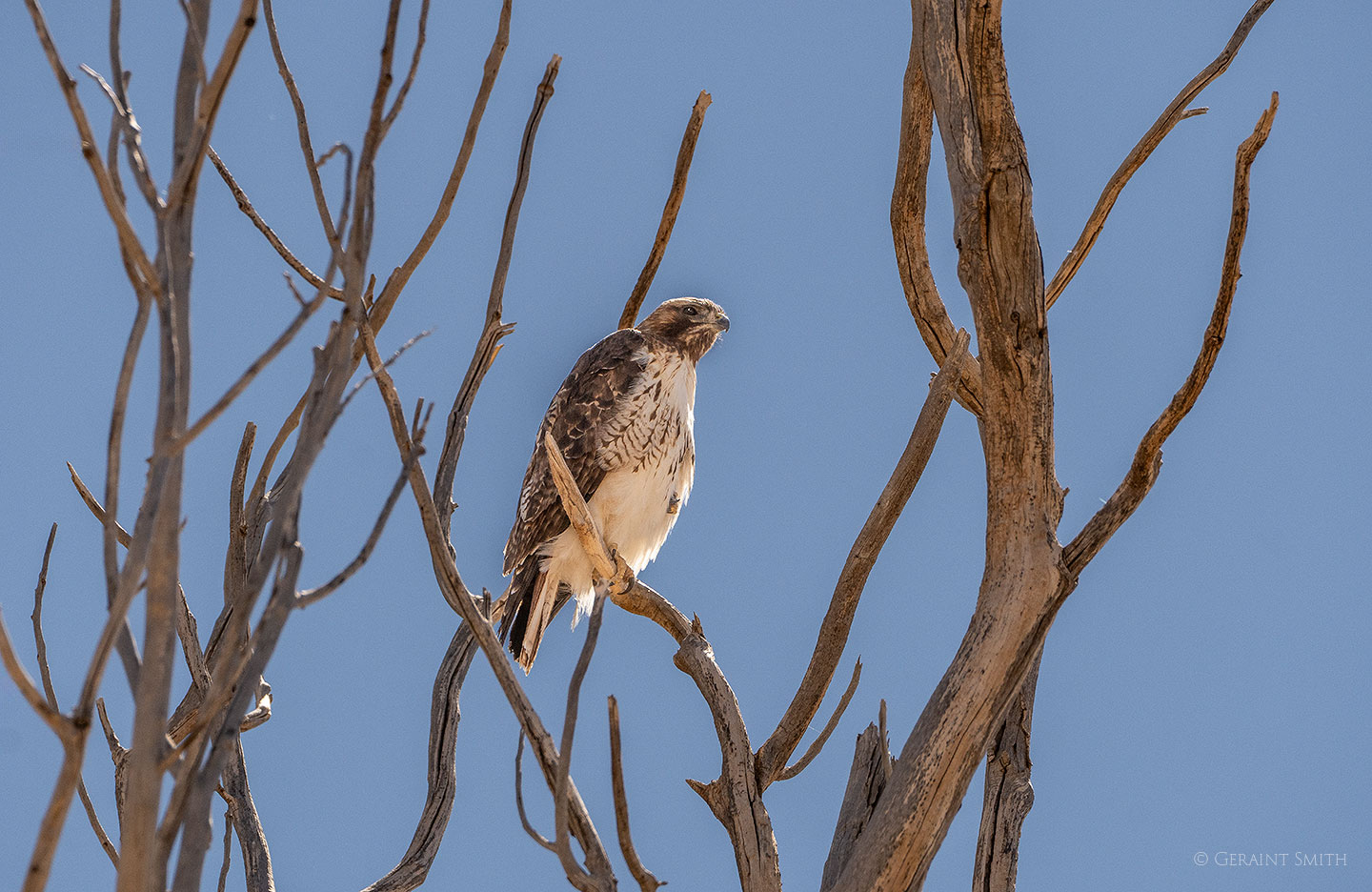
Hawks are plentiful, and this time of year, in old snags and on power poles.

Raptor, red tailed hawk.
Red-tailed hawk…. I think.
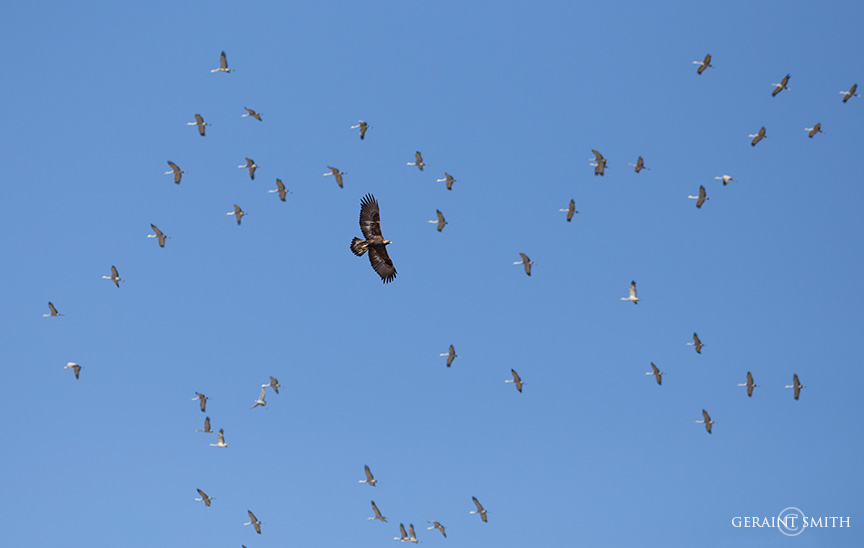
Juvenile Golden Eagle and Sandhill Cranes
Juvenile Golden Eagle and Sandhill Cranes.

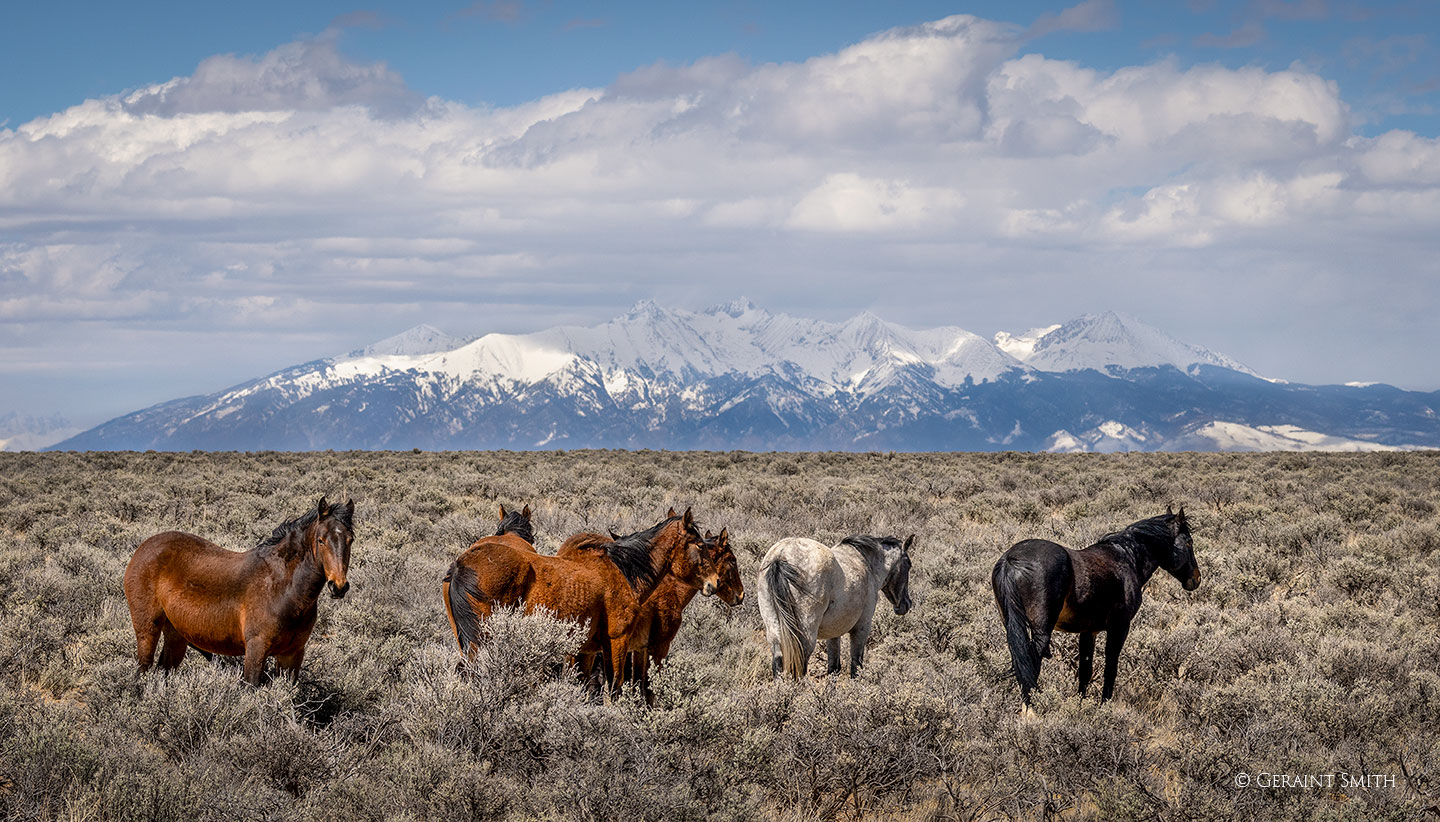
I doubt it will snow on the peaks before next week, but horses are always fun to spot. Here’s a band on the plateau with Blanca Peak in Colorado.

Wild or feral horses, Colorado
On the plateau with Blanca Peak in Colorado.
Band on the plateau
Another band on the plateau.

As always, thanks for looking. Have a great week. G
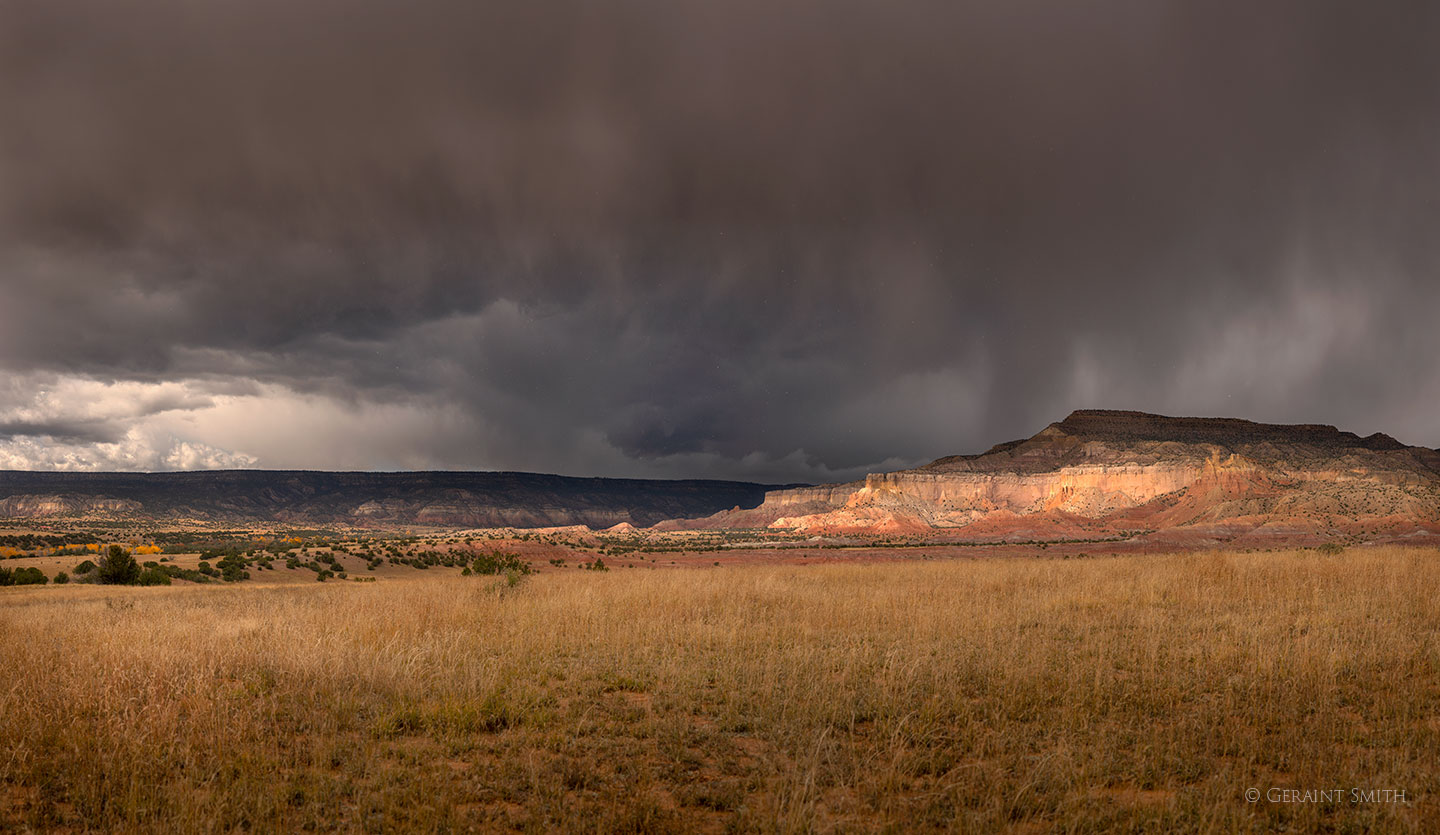
My photo essay on the San Luis Valley, in the form of a PDF to download.

If you’d like to read more, here’s a brief account of the area.

The Taos Volcanic Plateau and the San Luis Valley are remarkable landscapes in the southwestern United States, known for their unique geological features and diverse wildlife.

The Taos Volcanic Plateau, located in northern New Mexico, is a striking expanse formed by volcanic activity millions of years ago. This plateau is characterized by its rugged terrain, with ancient lava flows, cinder cones, and volcanic peaks, such as Ute Mountain and San Antonio Mountain. The Rio Grande Gorge, a dramatic canyon carved by the Rio Grande, slices through the plateau, providing a stunning natural spectacle and a vital habitat for various species.

Adjacent to the plateau, the San Luis Valley stretches across southern Colorado and northern New Mexico. This high-altitude valley is one of the largest in the world, flanked by the Sangre de Cristo and San Juan mountain ranges. Its vast, flat expanse is dotted with wetlands, grasslands, and desert shrublands, creating a mosaic of habitats that support a rich array of wildlife.

The wildlife in these regions is as diverse as the landscapes themselves. The Taos Volcanic Plateau and the San Luis Valley are home to numerous bird species, making them popular destinations for birdwatchers. The wetlands and riparian areas attract migratory birds such as sandhill cranes, which stop over in the valley during their long journeys. Raptors, including golden eagles and red-tailed hawks, soar above the open spaces, while songbirds flit among the shrubs and trees.

Mammals also thrive in these areas. Mule deer and elk roam the grasslands and forests, while smaller creatures like coyotes, foxes, and rabbits are common sights. The plateau and valley provide critical habitat for more elusive species as well, such as bobcats and mountain lions, which find refuge in the rugged terrain.

The Taos Volcanic Plateau and the San Luis Valley are not only geological and ecological treasures but also cultural and historical ones. Indigenous peoples have lived in these regions for thousands of years, and their deep connection to the land is evident in the rich cultural heritage that persists today.

Together, these landscapes offer a glimpse into the dynamic interplay of natural forces and the resilience of life in a challenging environment. They remind us of the importance of preserving such unique ecosystems for future generations to appreciate and enjoy.

Fall In Colorado. 09-03-2025

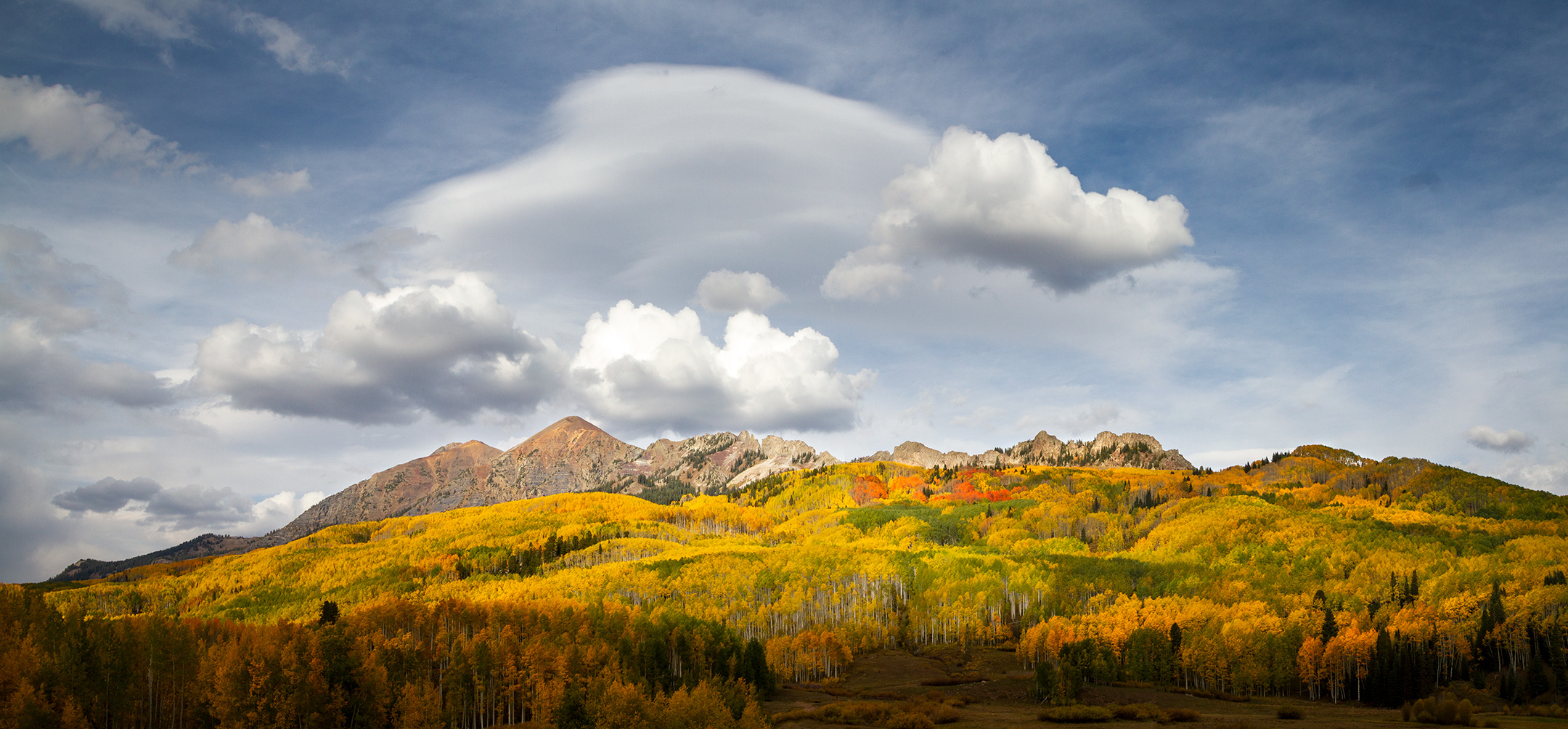
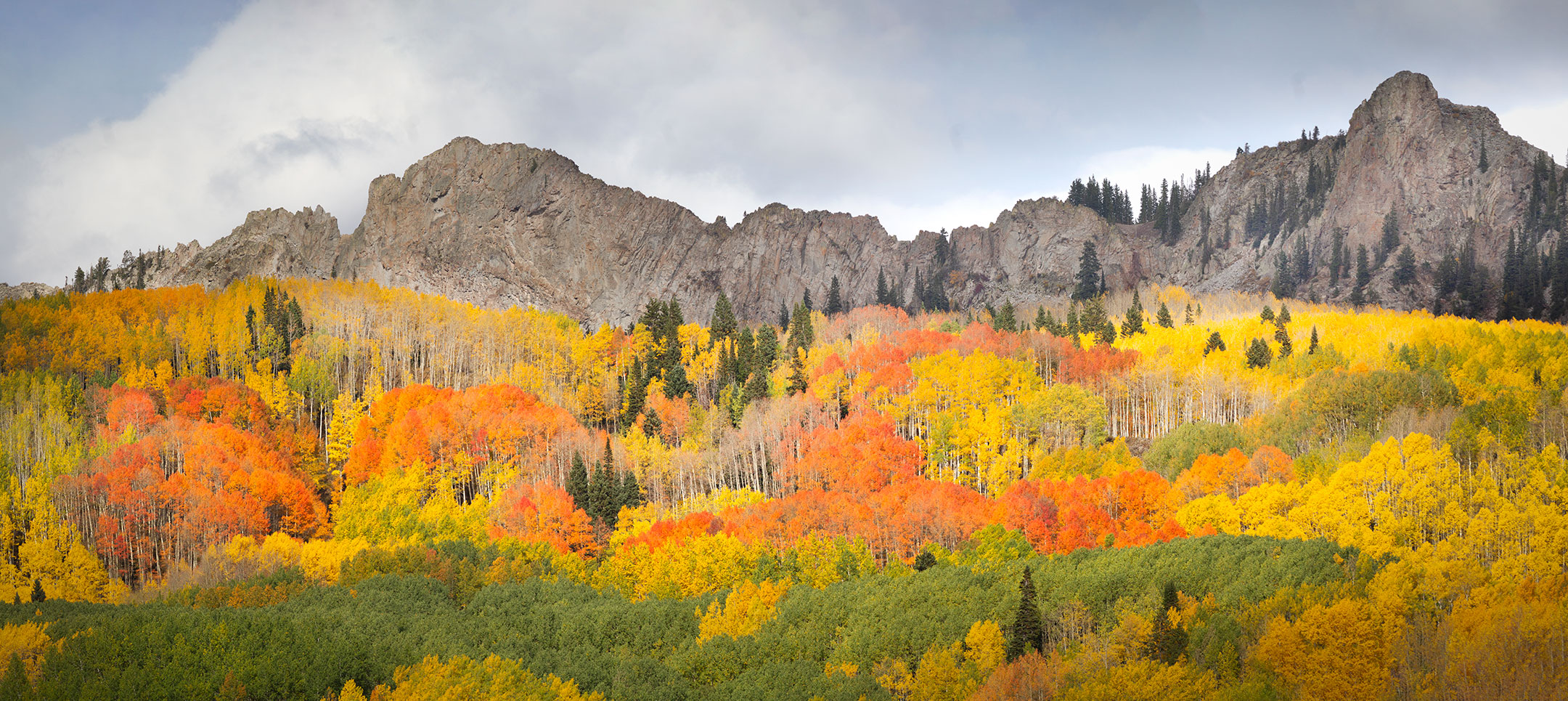
Greetings from New Mexico. This week, some images of fall colors taken in previous years on trips to Crested Butte. I’ll have some of these images as prints in the upcoming Artist Combo Show in Taos on September 12-14 at the Stables Gallery. I look forward to seeing you there.

Kebler Pass road Fall colors, Colorado
Aspens, peaks, and clouds, Colorado.

Near Crested Butte, Colorado
Close-up of the peaks and colors.

Aspens and peaks, Colorado
Near Lost Lake, Colorado.

Last Dollar road, Colorado
Taken from Last Dollar Road, Colorado.

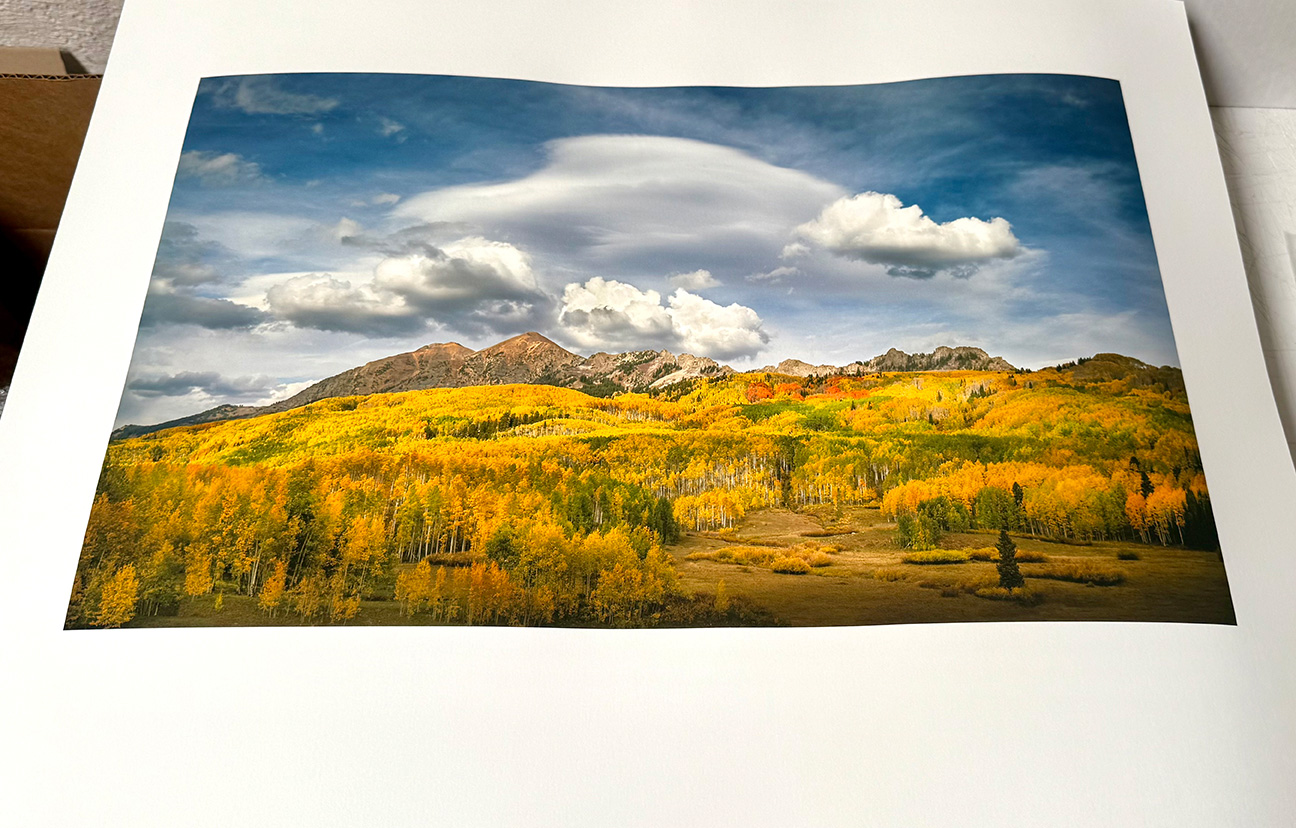
I love making prints. In days past, it wasn’t a photograph until it was printed. This is the first time I’ve printed this image. You can see it at the show next week.

Aspens and peaks print
Print 11″x18″ Aspens and Peaks, Colorado.

New Mexico is stunning in the fall, but I’ve always considered the last week of September a must for a trip to Colorado.

Crested Butte, Colorado, is renowned for its stunning fall colors, making it a popular destination for photographers, hikers, and nature lovers. The area is particularly famous for its vibrant aspen groves, which turn brilliant shades of yellow, gold, and sometimes red during the autumn months.

Best Time to Visit.
The peak color in Crested Butte typically occurs from late September to early October. However, the exact timing can vary each year based on weather conditions, altitude, and other factors. It’s a good idea to check local reports or contact local businesses for the most current information on the status of the leaves.

Best Places to See Fall Colors.

  1. Kebler Pass – Often cited as one of the best places in Colorado to see fall colors, Kebler Pass is accessible via a scenic drive on Gunnison County Road 12. The area is known for having one of the largest aspen groves in the United States.
  2. Gothic Road – Leading north from Crested Butte towards the ghost town of Gothic, this route offers spectacular views of aspen-lined valleys against a backdrop of rugged mountain peaks.
  3. Ohio Pass – Connecting Gunnison to Crested Butte via Ohio Creek Road, this less-traveled pass offers stunning views of the Castles, a unique rock formation, amidst the golden aspens.
  4. Brush Creek Road – Southeast of Crested Butte, this area provides a mix of aspen forests and open meadows, offering a different perspective on the fall colors.
  5. Slate River Road – This route provides beautiful vistas of the surrounding mountains and valleys filled with colorful aspens, especially stunning with early morning or late afternoon light.

As always, thanks for looking and following along. G
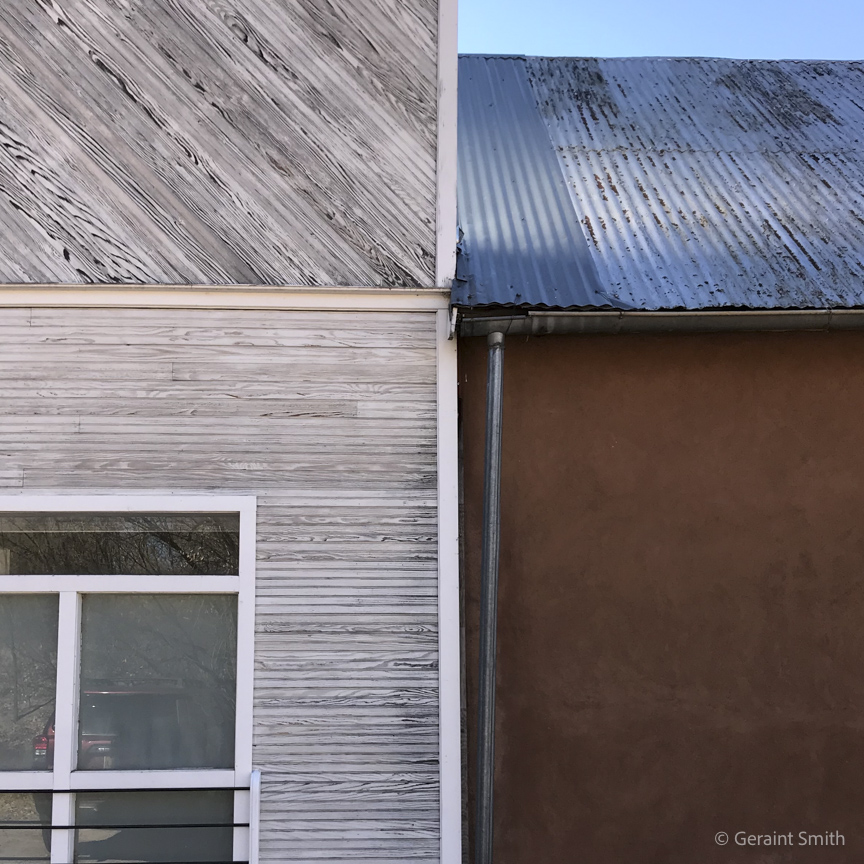
Lindisfarne, Boat Sheds. 08-27-2015

Greetings from New Mexico! This week, I find myself drawn back to the mystical shores of the Holy Island of Lindisfarne, nestled on the rugged northeast coast of England. I am particularly enchanted by the island’s quaint and curious overturned fishing boat storage sheds. These unique structures, repurposed from old boats, stand as a testament to the island’s rich maritime heritage and the ingenuity of its people. They evoke a sense of history and charm that is quintessentially Lindisfarne.

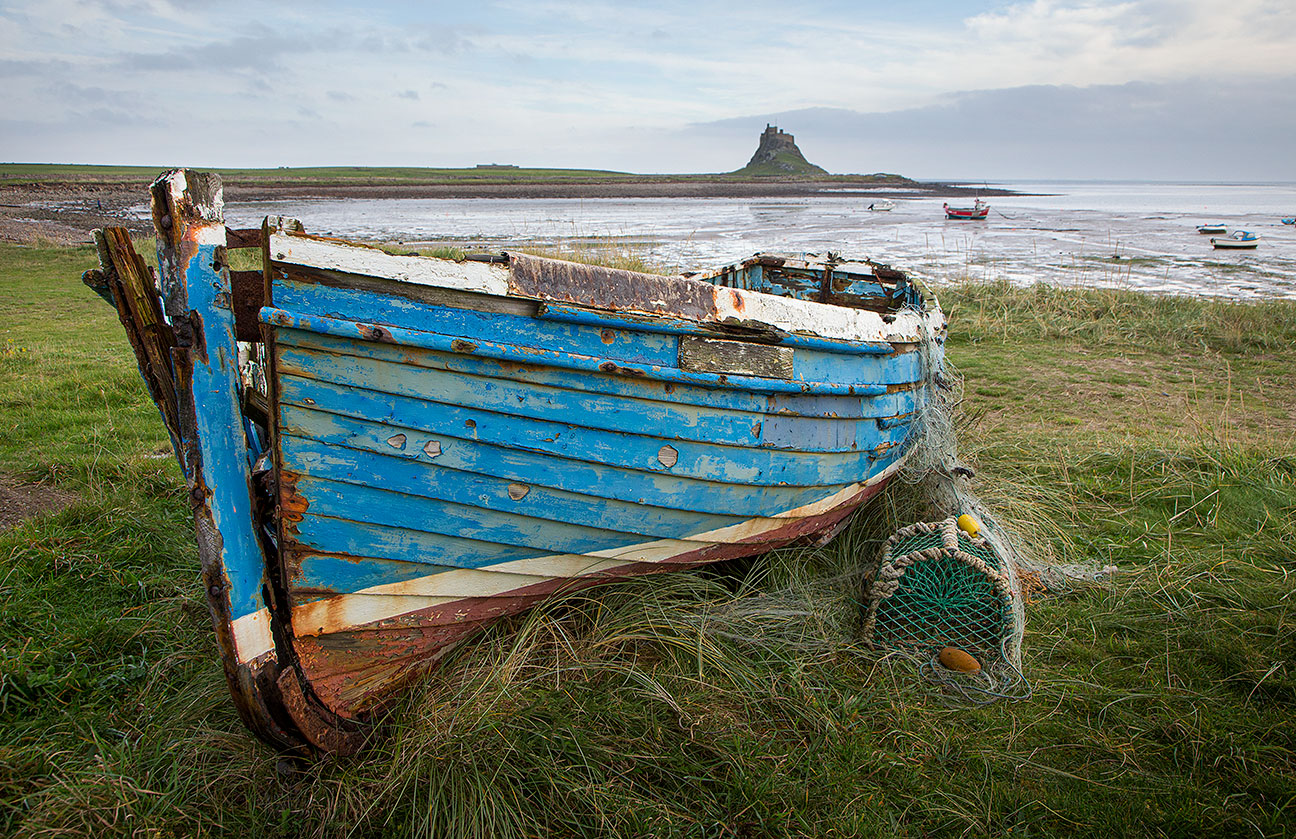
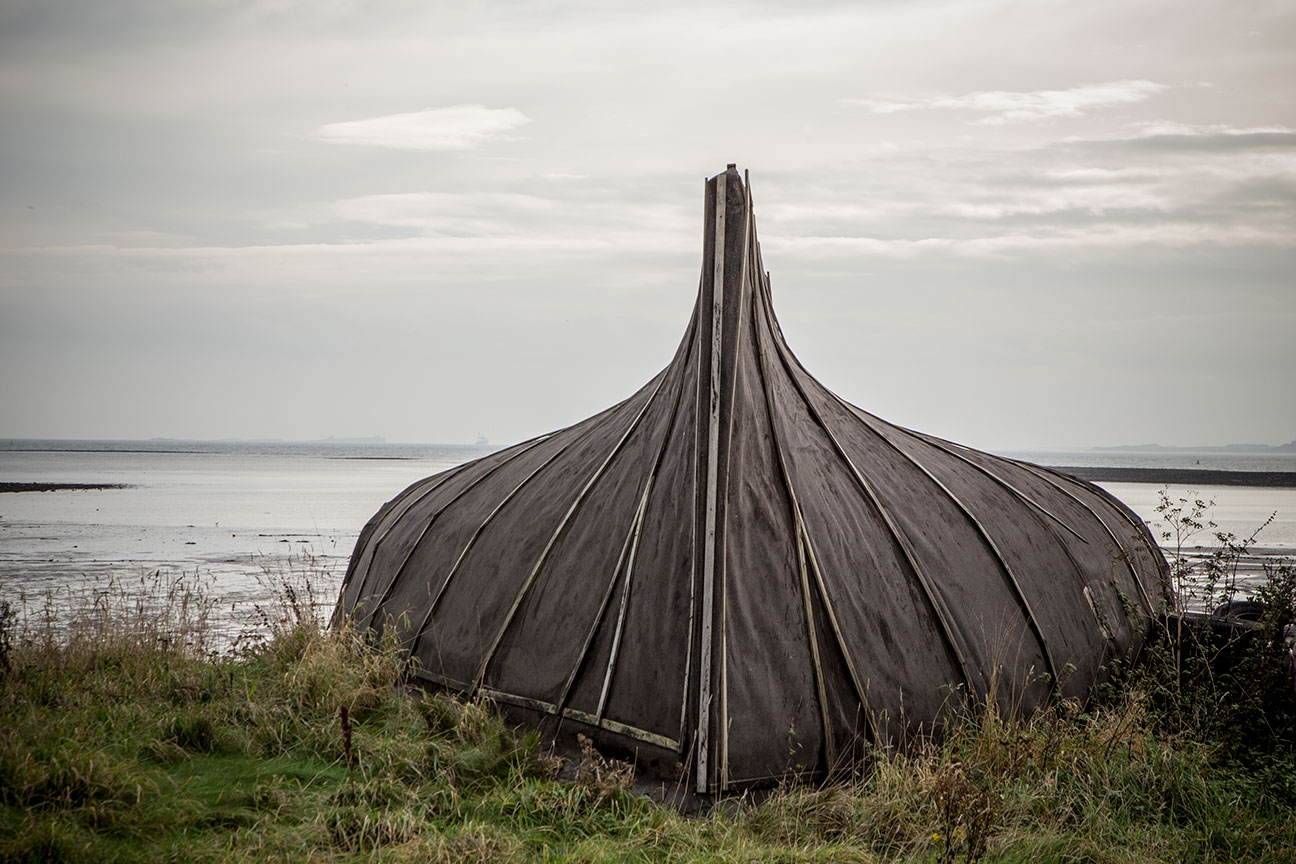
Boat with Lindisfarne castle
Unseaworthy lobster fishing boat with Lindisfarne Castle.
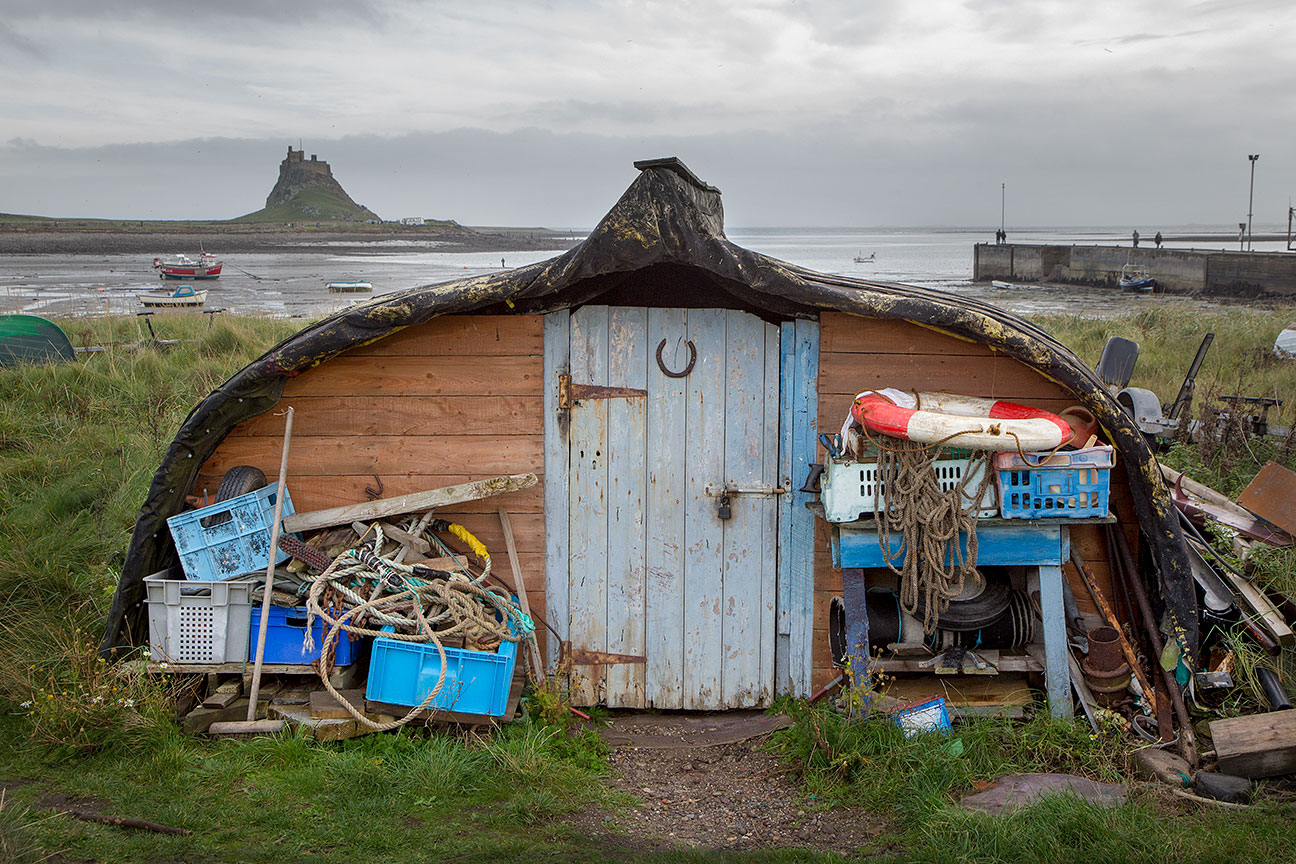
Boat shed Holy Island
Boat shed or herring shed on Holy Island

Lindisfarne, also known as Holy Island, is a tidal island off the northeast coast of England. It is renowned for its medieval religious heritage and its picturesque natural scenery. Fishing has been a part of the island’s economy and culture for centuries, given its coastal location and abundant marine resources.

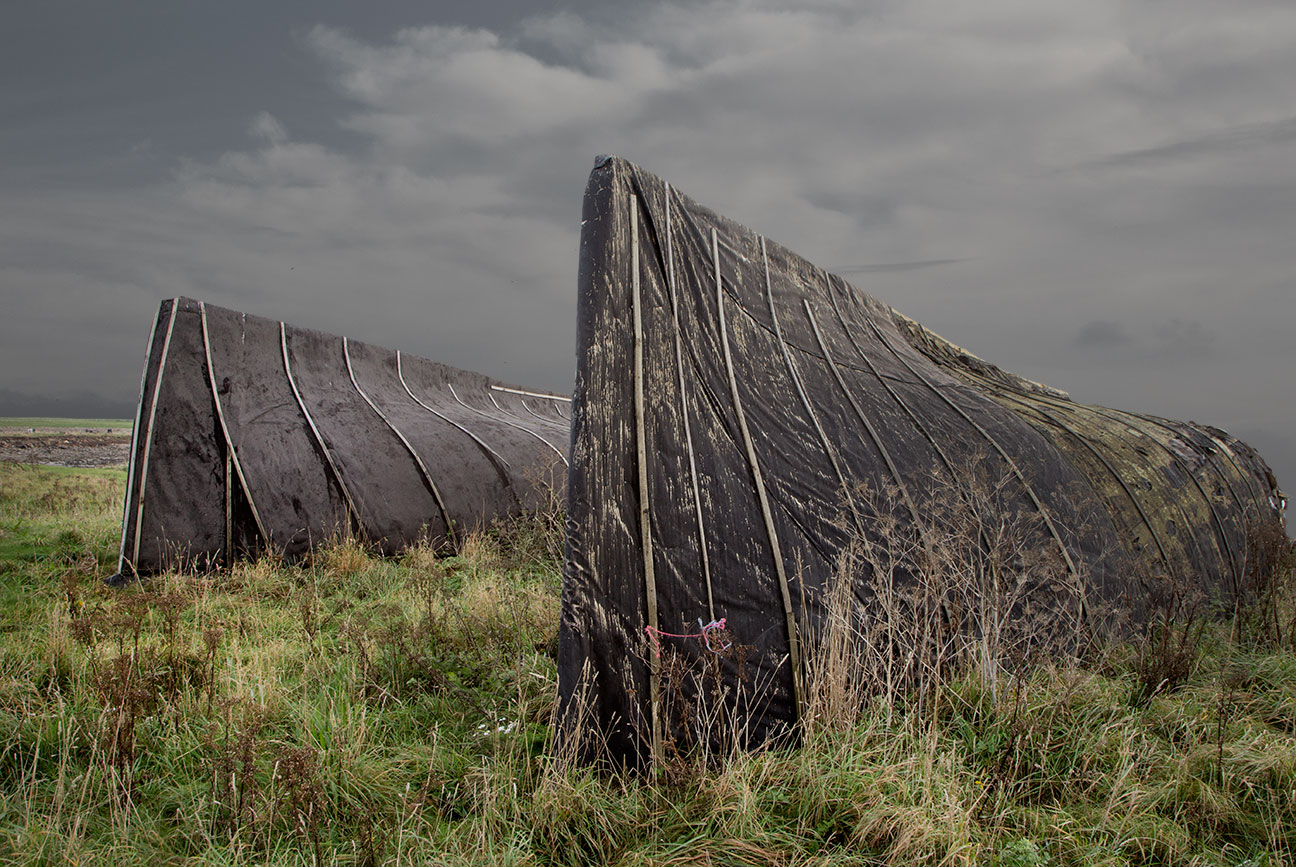
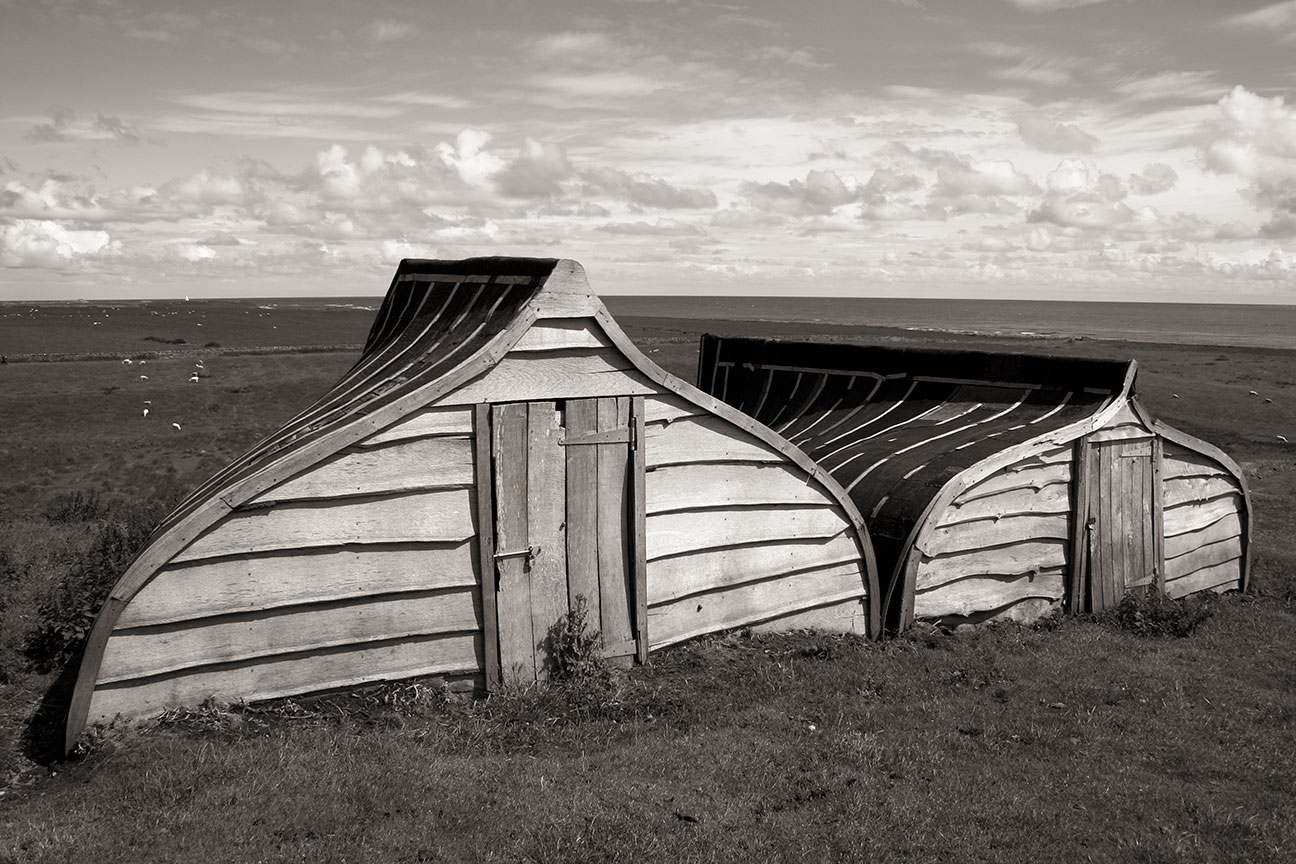
Two overturned boat storage sheds
Two overturned-boats, repurposed storage sheds.

On Lindisfarne, you can find traditional fishing boat storage sheds, known locally as “herring sheds” or “upside-down boats.” These sheds are unique and picturesque, contributing to the island’s charm and historical ambiance. They are made from old wooden fishing boats turned upside down, with the hulls repurposed to serve as roofs. This method of recycling old boats provides a practical and durable solution for storage needs, while also preserving a piece of the island’s maritime history.

Overturned boat storage shed.

These boat sheds are typically located near the harbor, where they blend seamlessly into the landscape, often painted in bright colors that add to their visual appeal. They are used to store fishing gear, nets, and other equipment, serving as a testament to the island’s ongoing fishing activities.

Two overturned boat storage sheds
Two overturned boat storage sheds.

Visiting Lindisfarne offers a glimpse into the traditional life and practices of its inhabitants, with the boat sheds standing as a unique cultural and historical feature. The island itself is accessible via a causeway that is submerged under water during high tide, adding to its mystique and the sense of isolation from the mainland. This, along with its rich history, including the famous Lindisfarne Priory and Castle, makes it a fascinating destination for tourists interested in history, nature, and traditional British coastal life.

Lobster pots, Holy Island
Lobster pots, Holy Island, and in black and white.

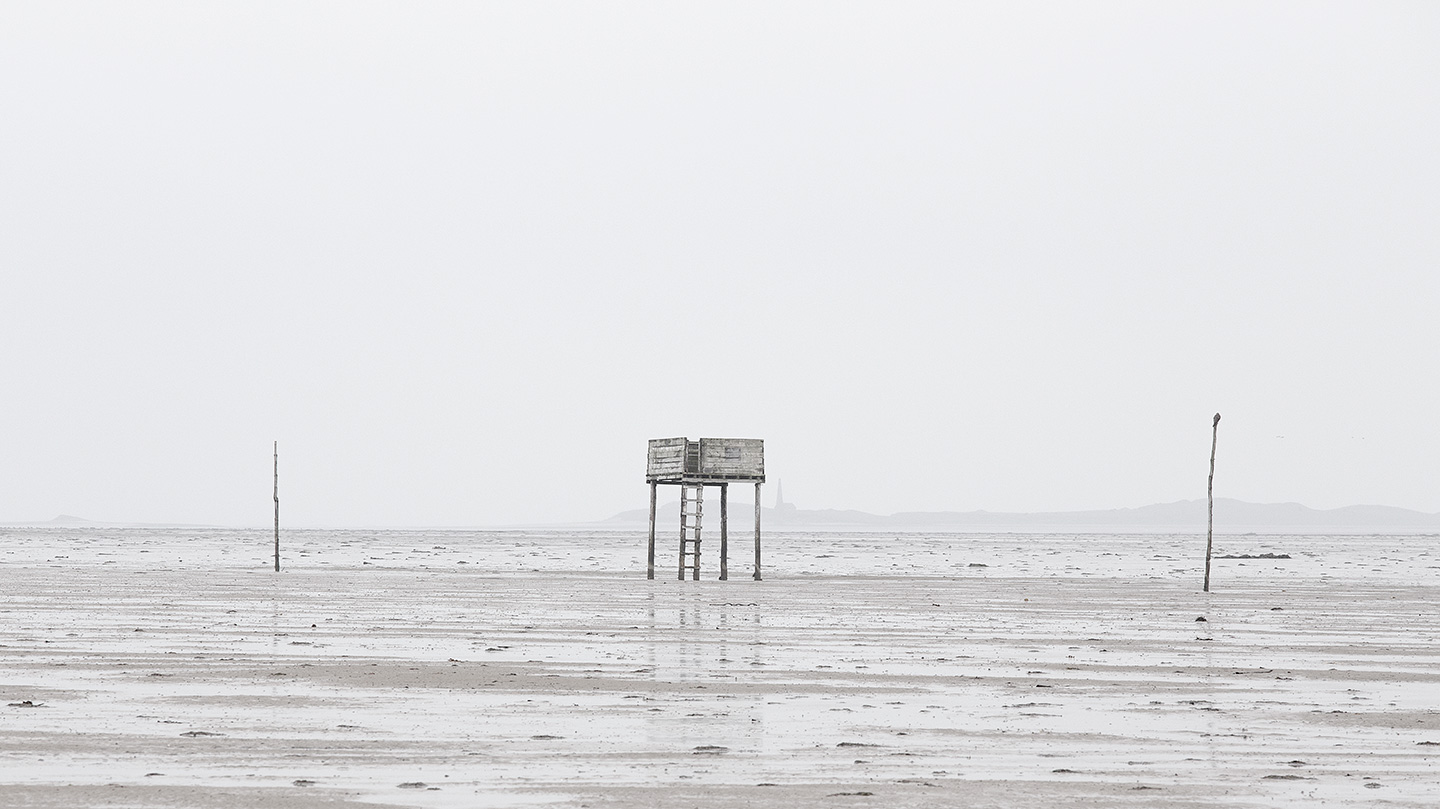
Pilgrims cross the tidal sands to the Holy Island of Lindisfarne via the Pilgrim’s Way, a route marked by posts that can only be safely crossed at low tide when the sands are firm. The three-mile walk takes about 90 minutes and leads to the island where St. Aidan and St. Cuthbert established a significant monastic community. Modern pilgrims follow the same historic path, using refuge boxes for safety from the swift currents.

Pilgrims crossing refuge Holy Island of Lindisfarne
Pilgrims way, Holy Island.

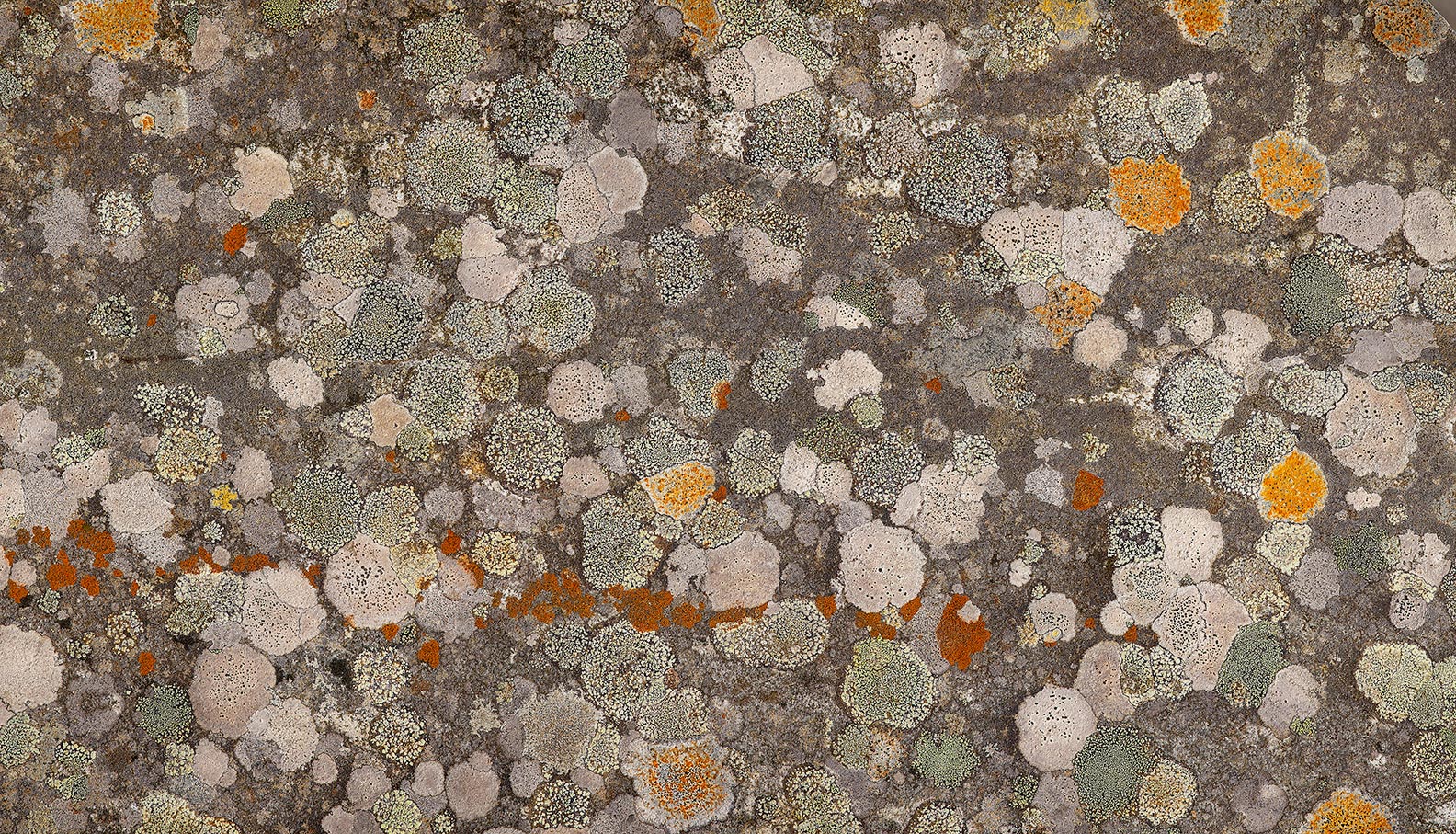
Finally, with its proximity to the coast, lichen grows on everything. Below is a print of lichen on the face of a Celtic cross. I’ll have this image and some of the overturned boat images in my upcoming show.

Lichen on Celtic cross
Lichen on a Celtic cross.

As always, thanks for looking. I hope you have a good week. G
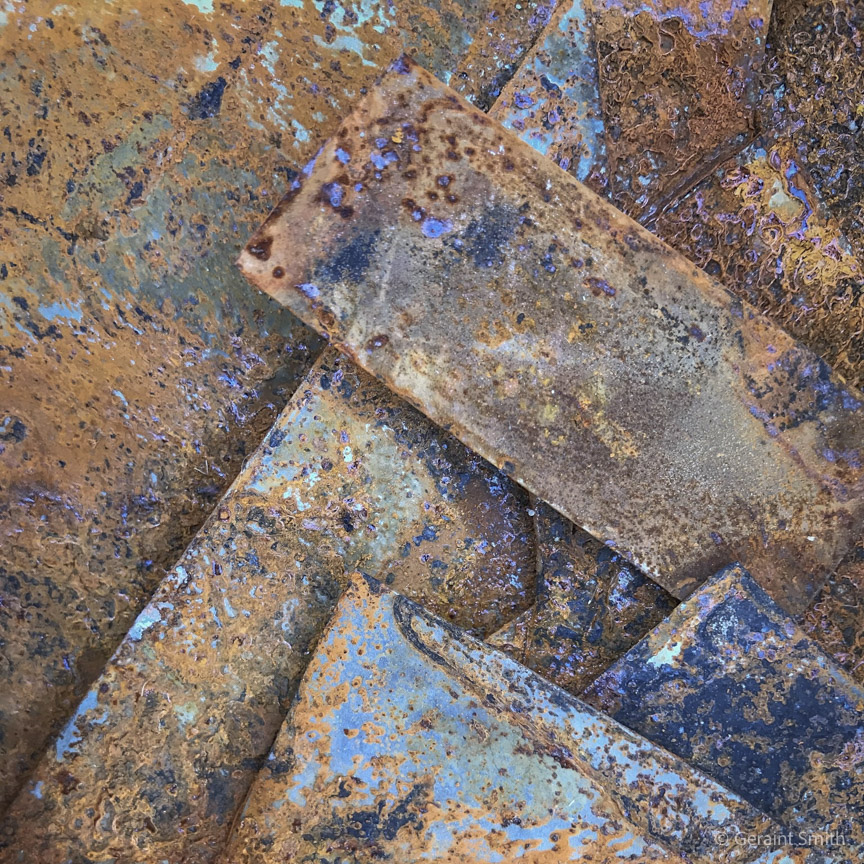
Landscapes And More. 06-04-2025

Greetings from San Cristobal, NM! This week, I’m excited to showcase landscapes and more in current and upcoming publications. Don’t miss my print of the week feature, highlighting a captivating image for your collection. I also had the honor of participating in a podcast Q&A on Landscape Photography with esteemed experts Bill Shapiro and Dr. Grant Scott, offering valuable insights and inspiration.

This week, my work appears in the current edition of Enchanted Outpost magazine. You may remember when I was the featured artist in their premier edition.

Thanks to all at Enchanted Outpost.

Blanca Peak, Colorado Landscapes
Blanca Peak, a favorite of Colorado Landscapes.
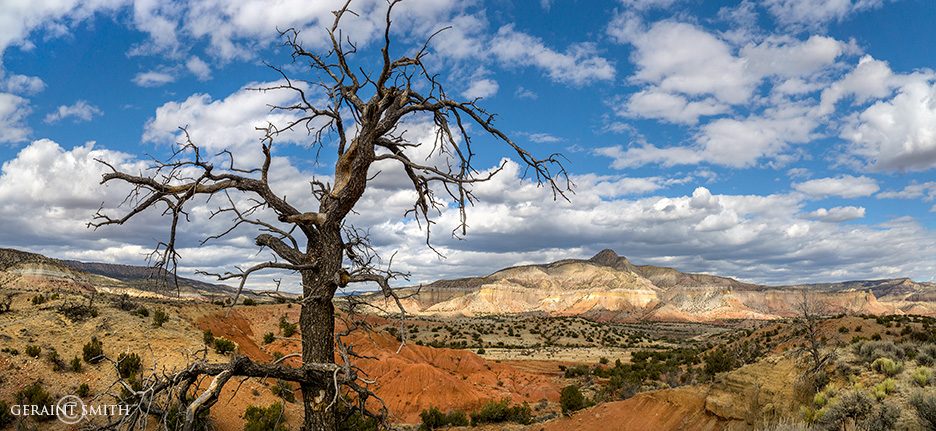
Ghost Ranch, NM
Ghost Ranch, NM.

The Taos News, our esteemed and multi-award-winning small-town newspaper, has featured the following three images in its summer guide.

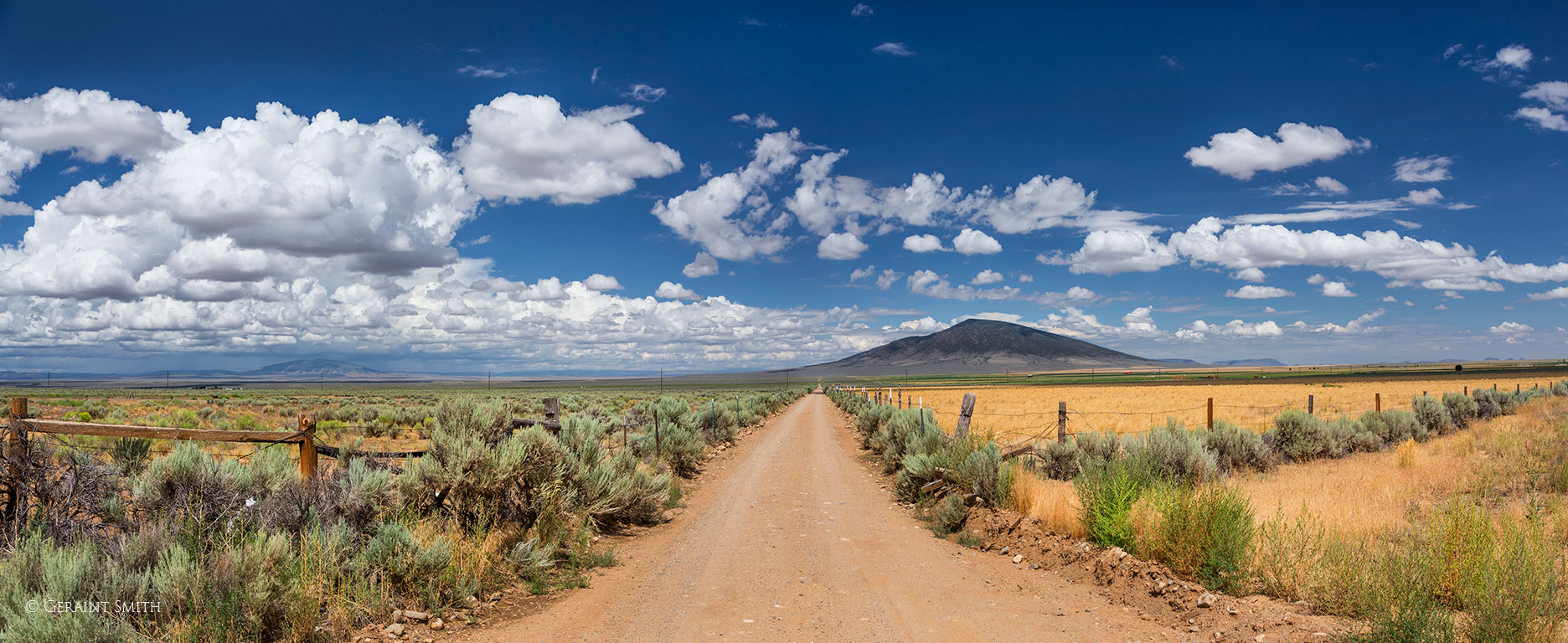
Ute Mountain Road
Road to Ute Mountain.
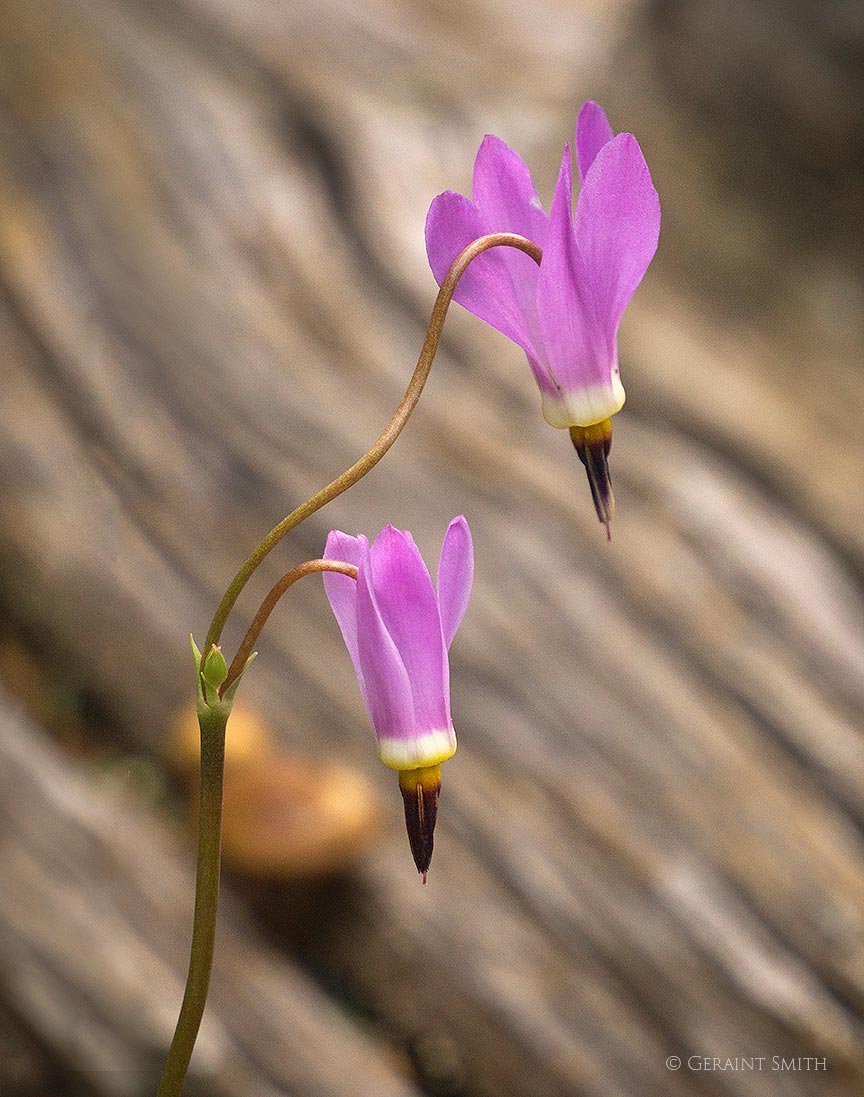
Shooting stars, wildflowers Taos Ski Valley
Shooting stars, wildflowers in Taos Ski Valley.
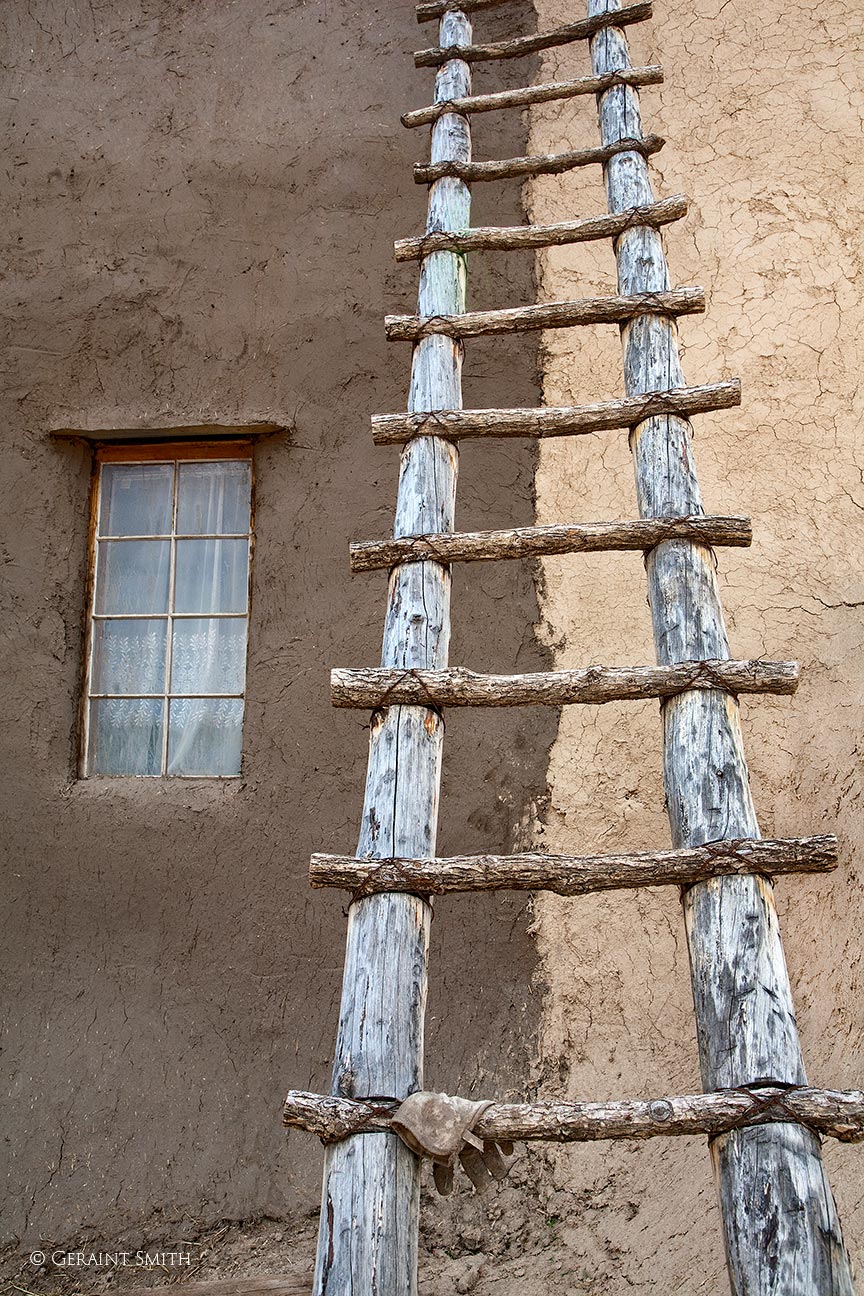
A ladder at the Picuris Pueblo Church restoration
A ladder at the Picuris Pueblo Church restoration.

And in the upcoming New Mexico Treasures 2026 desktop calendar, the following four images are featured. The calendar is due out in July and sells out quickly.

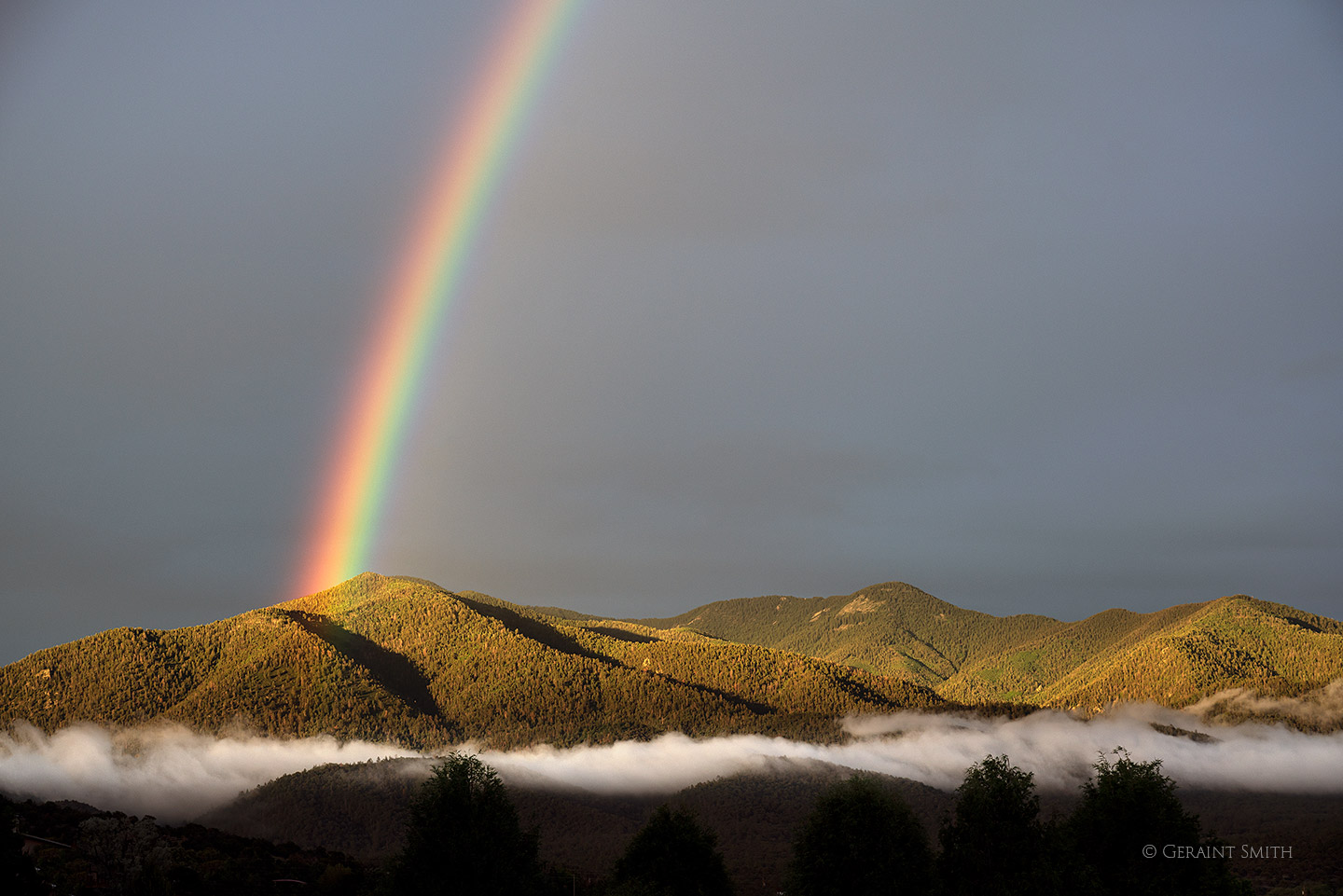
Rainbow, San Cristobal
Rainbow, Columbine Hondo Wilderness from San Cristobal, NM.
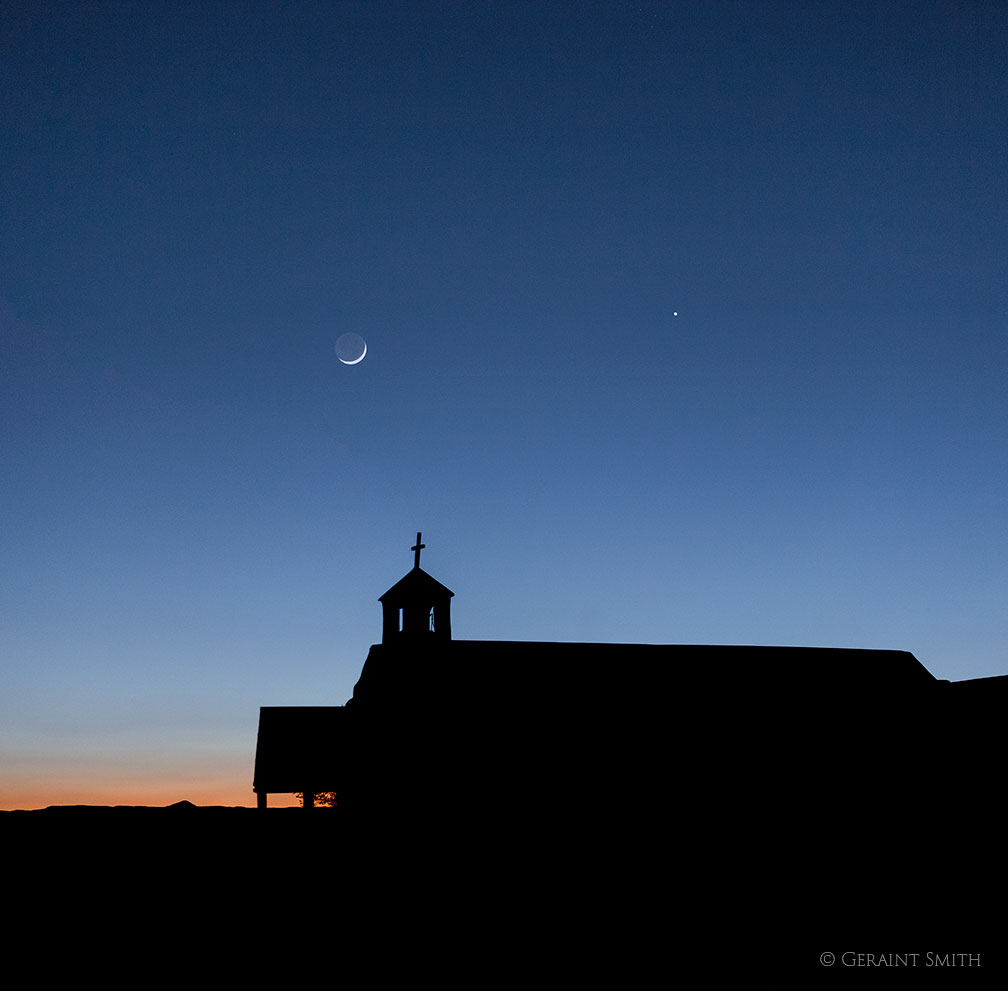
Crescent moon and Venus over the San Cristobal Chapel
Crescent Moon and Venus over the San Cristobal Chapel.
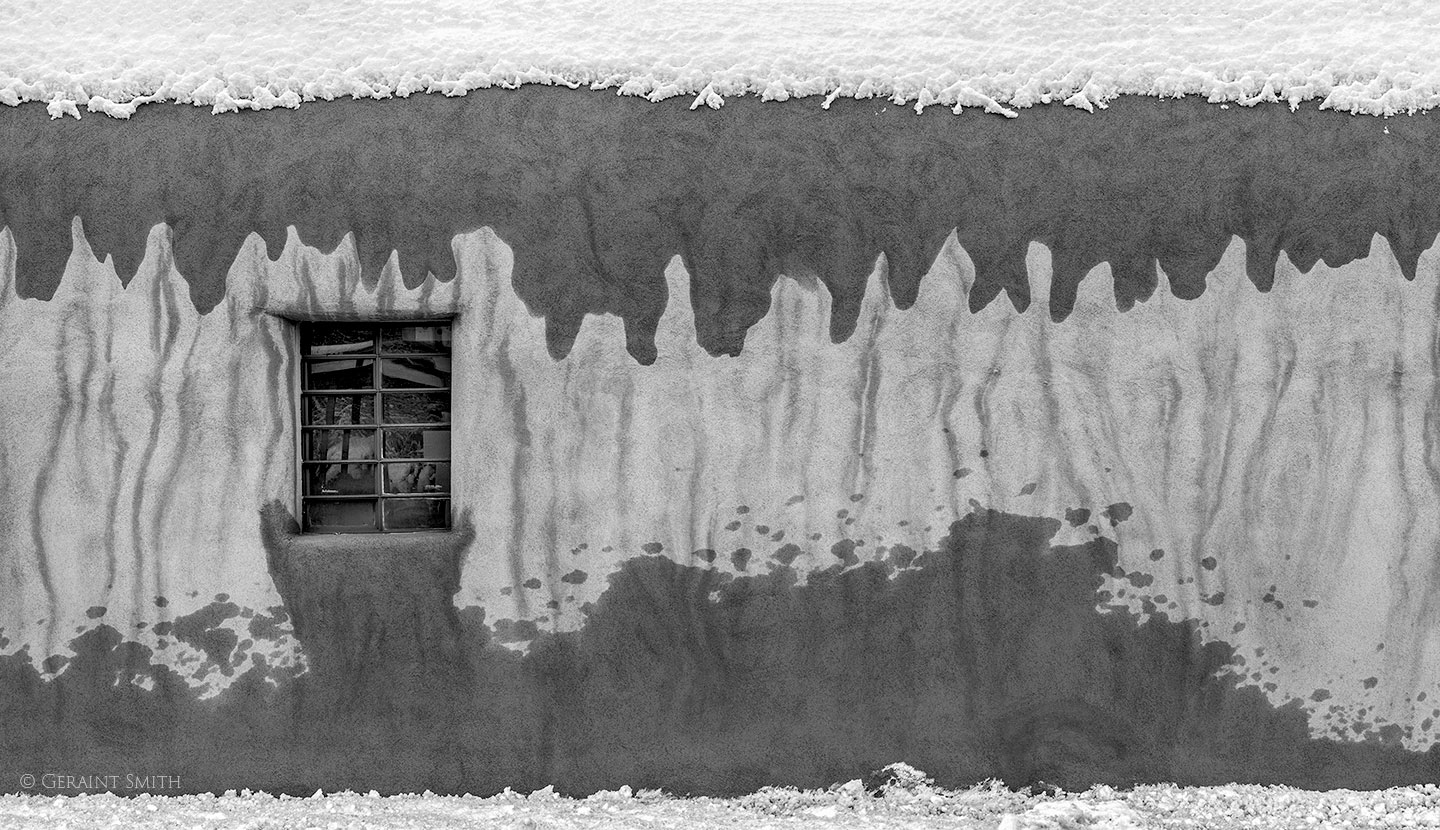
Snow melt, Weeping Walls, Taos
Snow melt, “Weeping Walls, Taos”.
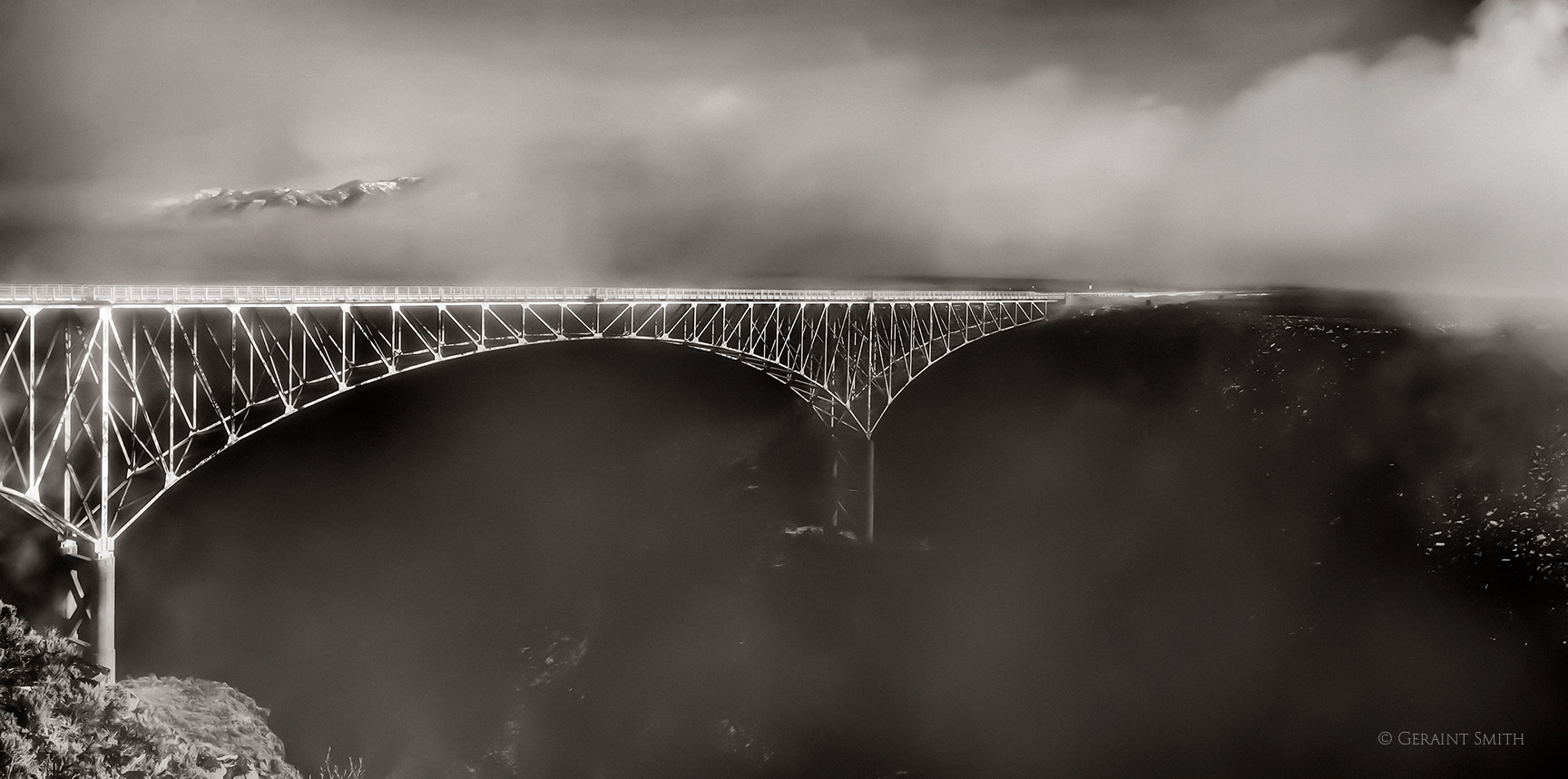
Rio Grande Gorge bridge in fog
Fog lifting at the Rio Grande Gorge Bridge.

Podcast Q&A on Landscape Photography with esteemed experts Bill Shapiro and Dr. Grant Scott.

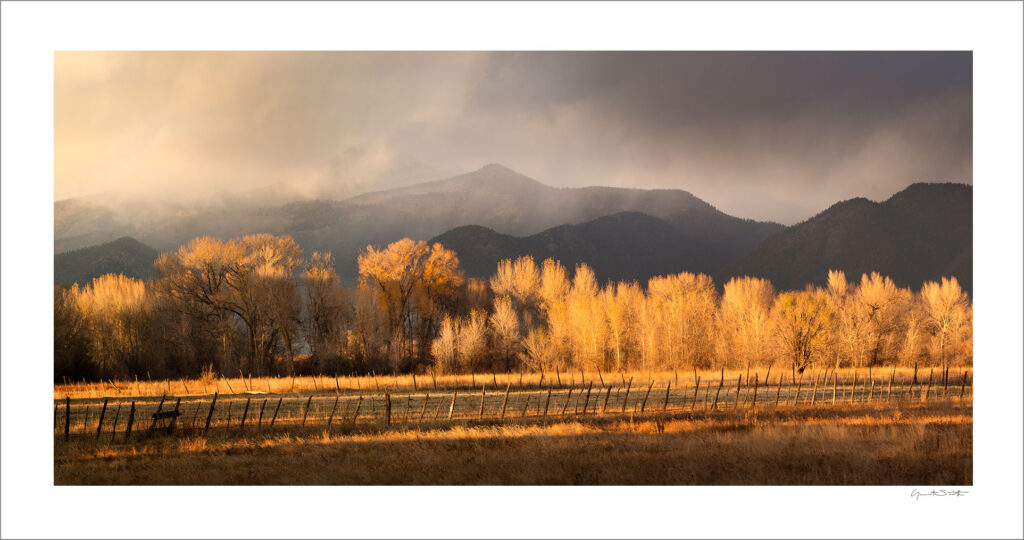
Lastly, the print of the week, El Prado Cottonwood Light, is one of my favorite landscapes.

Print of the week, El Prado Cottonwoods
El Prado Cottonwoods.

As always, thank you for looking. I’m honored and grateful for every opportunity to share my work that shines a light on this place I call home. Have a great week. G

Williams Lake, Wheeler Traverse. 05-14-2025

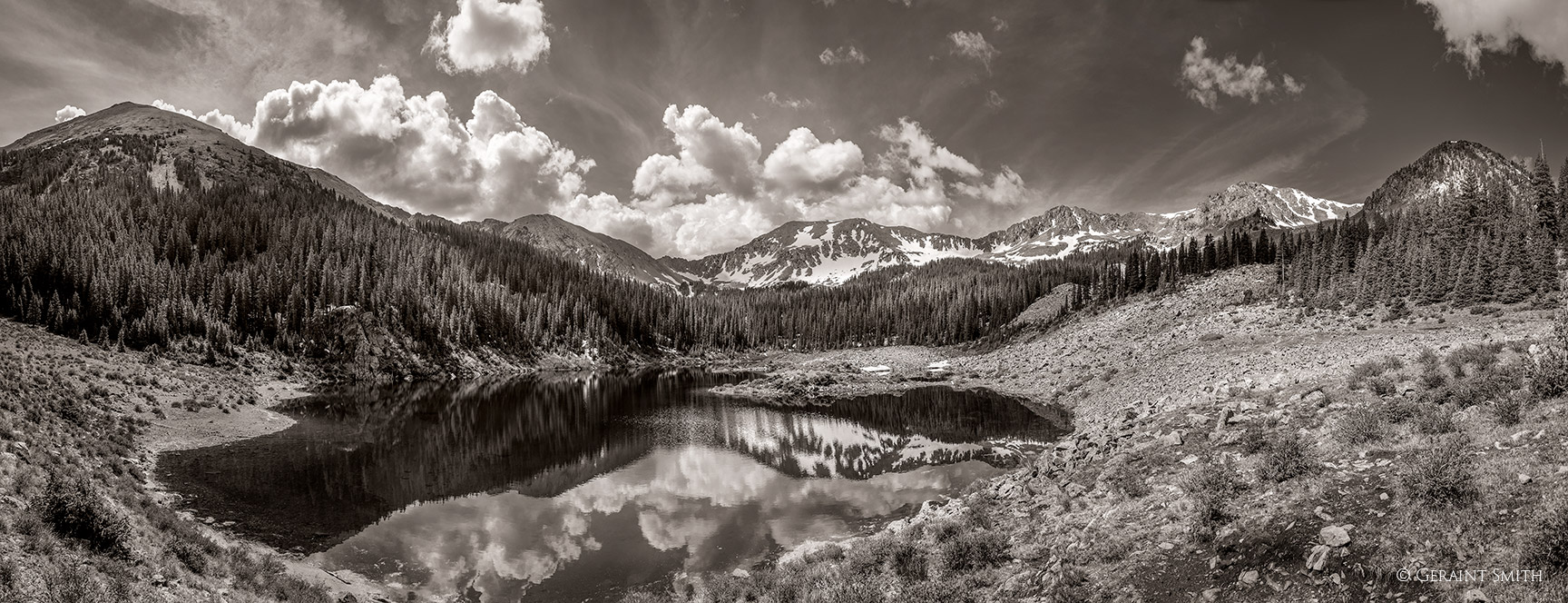
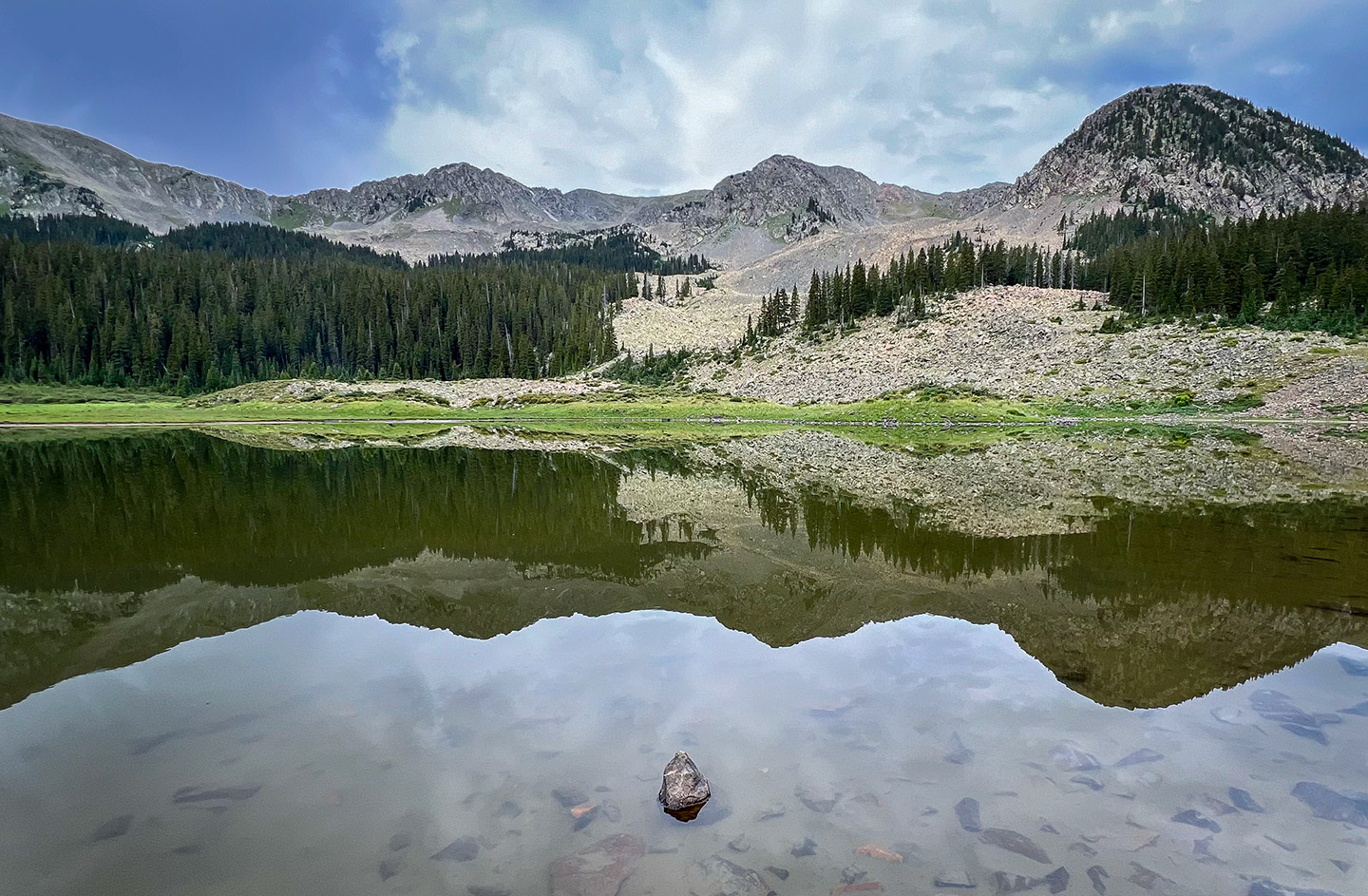
Greetings from San Cristobal, NM. This week, I’m sharing a wide panorama from Williams Lake, a panorama shot on my iPhone. It’s a short post, but a sweeping view. I’m going back up to the lake sometime next week and follow up with another perspective.

The Wheeler Traverse extends from Wheeler Peak on the left of the frame to the peak on the extreme right and beyond down to the Taos Ski Valley. I did the traverse in 1989, again in 1990, and maybe again this year. Click on the image to expand.

Williams Lake, New Mexico
Williams Lake, New Mexico.

Williams Lake and Wheeler Peak, New Mexico, are located high in the Sangre de Cristo Mountains near Taos, New Mexico. Williams Lake and Wheeler Peak form one of the most iconic alpine destinations in the state. Their rugged beauty, pristine wilderness, and accessibility from Taos Ski Valley make them favorites for hikers and backpackers.

Wheeler traverse
Wheeler traverse.

Wheeler Peak, elevation 13,161 feet (4,011 m), is the highest point in New Mexico. From Williams Lake, a steep, rocky spur trail continues another 2 miles and gains 2,000 feet to the summit. The views are sweeping: to the north, you see the Rio Grande Gorge; to the east, the Moreno Valley and Eagle Nest Lake; and to the west, the layered mesas of northern New Mexico. Bighorn sheep, marmots, pika, golden eagles, and the occasional black bear frequent the alpine tundra.

If you’re fit and would enjoy a guided hike to the lake for a photography tour, please message me through my contact form.

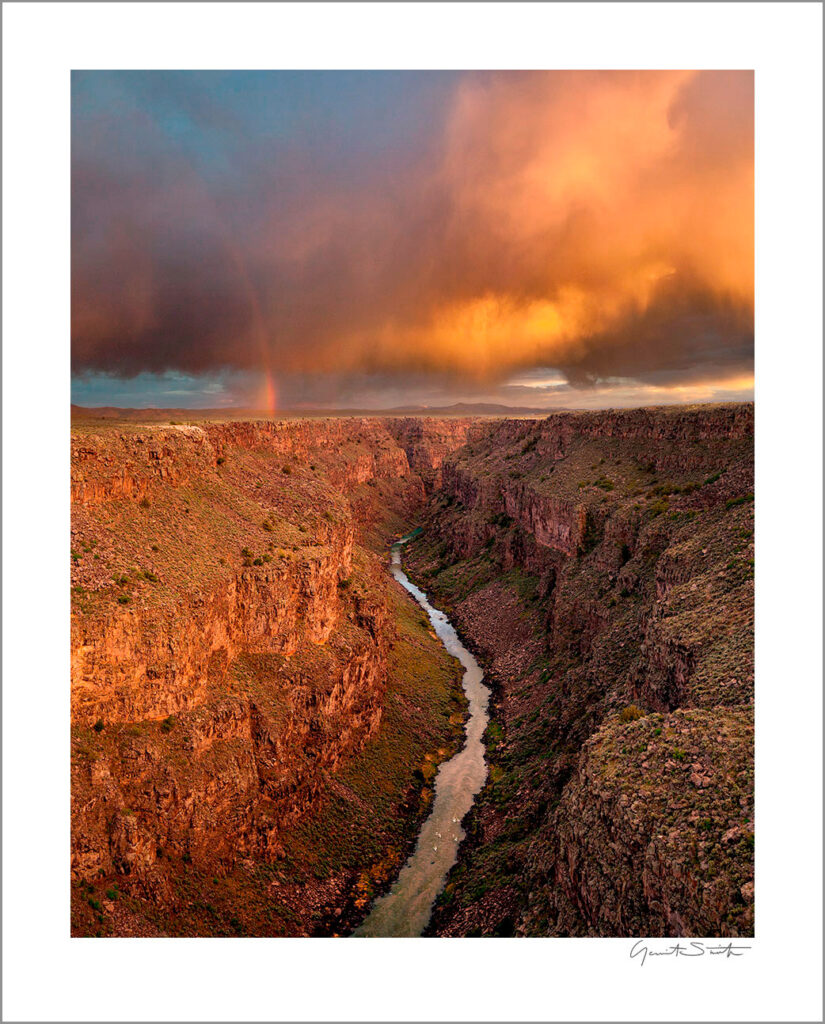
Print of the week. Click on the image to see more details.

Rio Grande Gorge Rainbow
Rio Grande Gorge Rainbow.

As always, thanks for looking. Have a great week. G

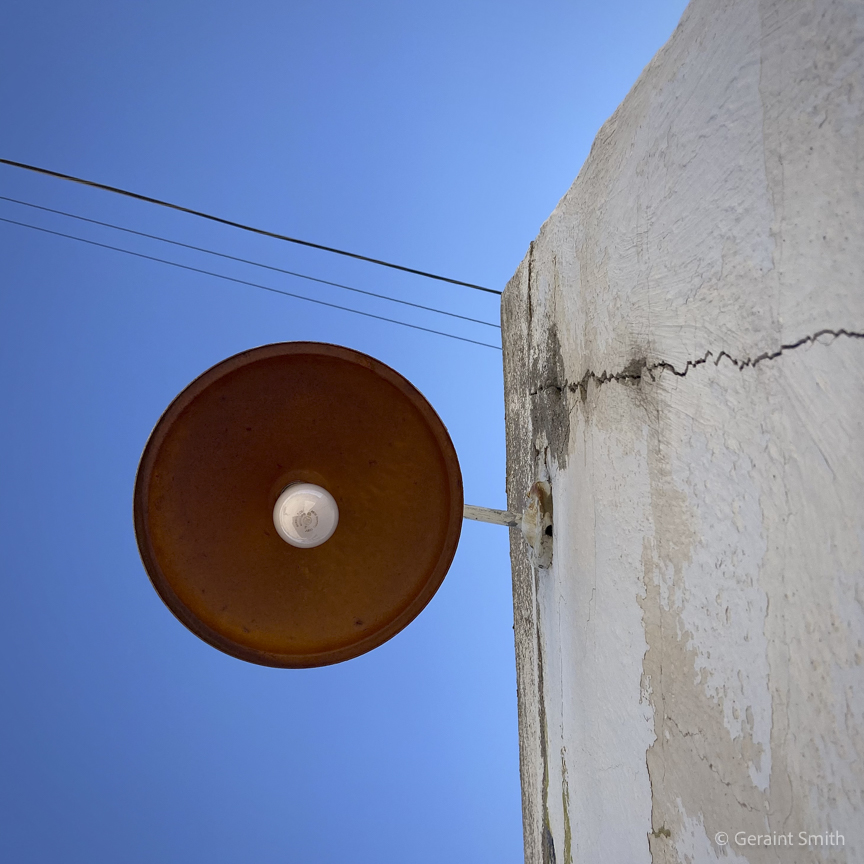
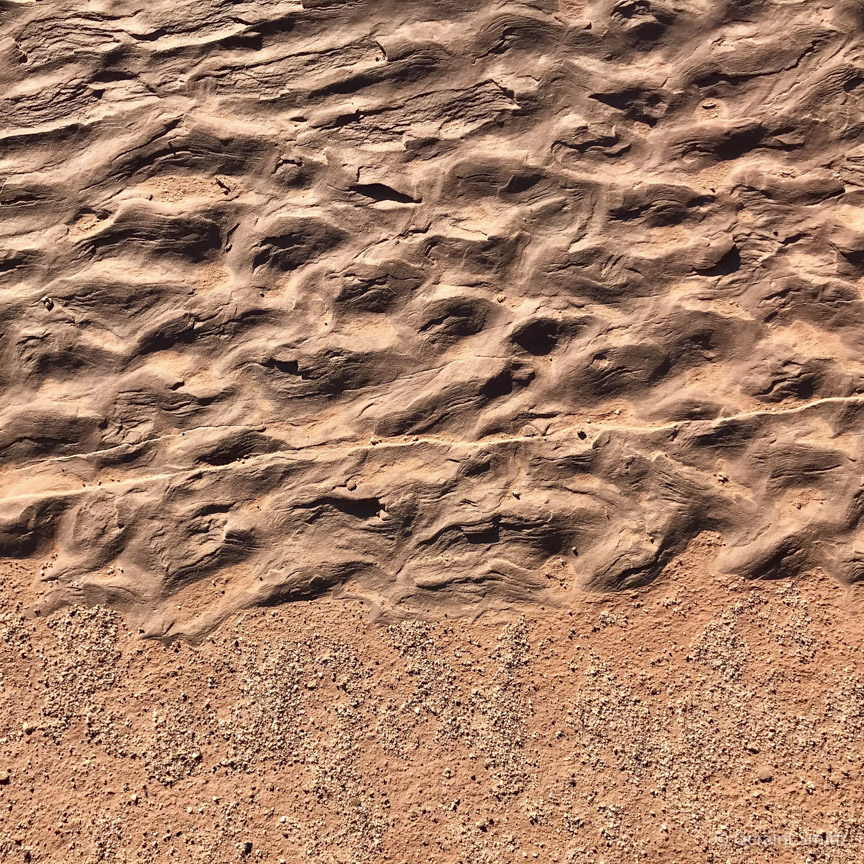
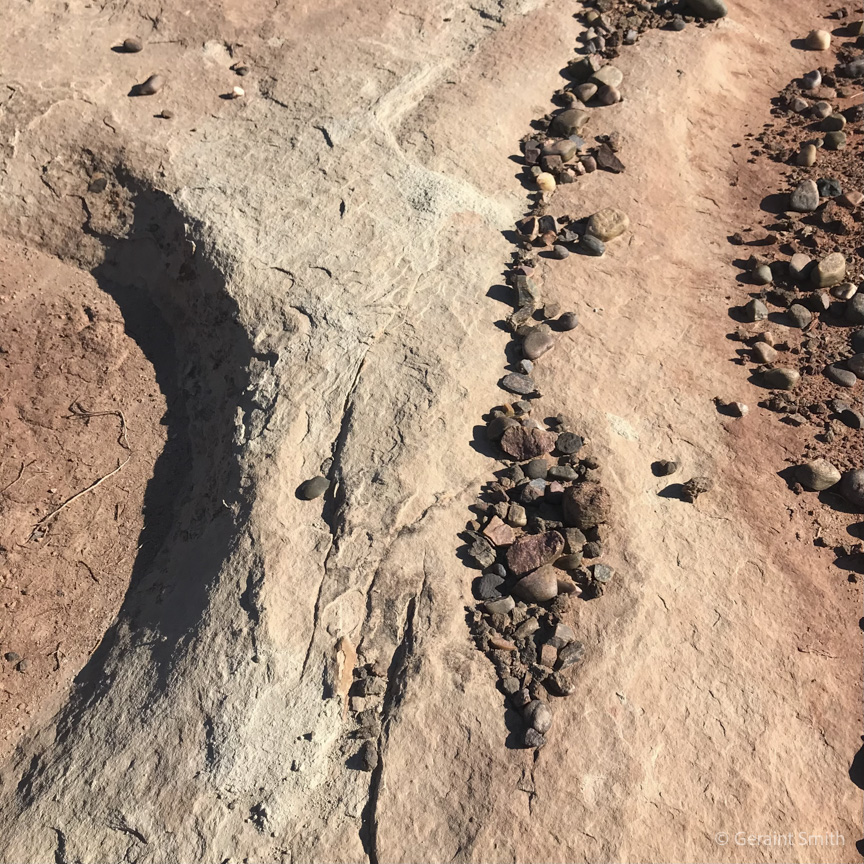
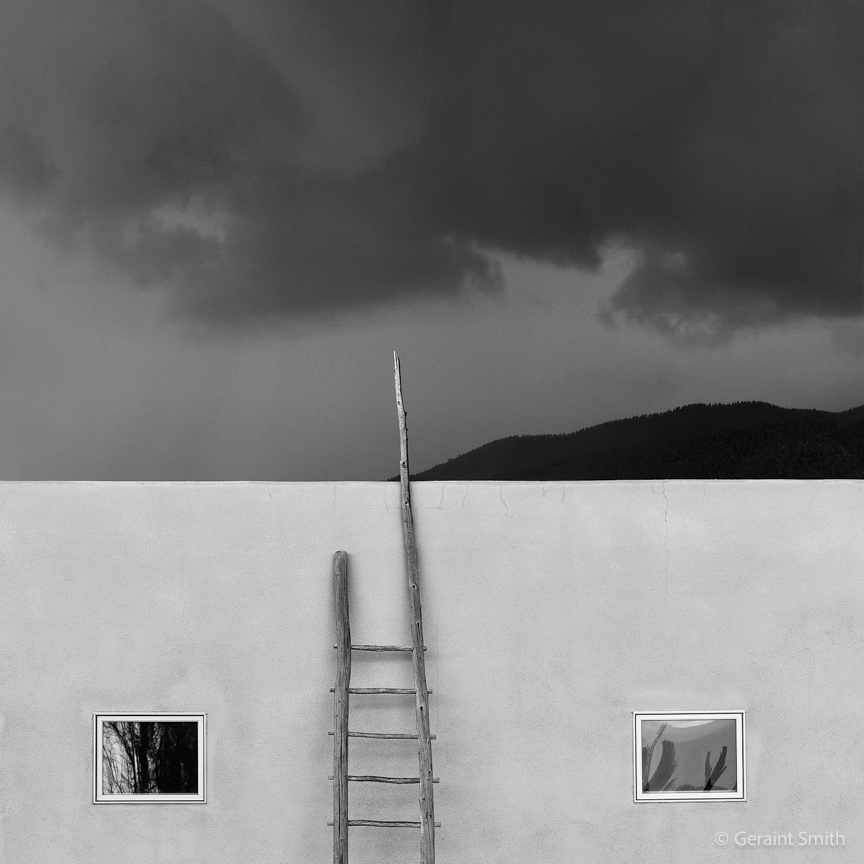
Minimalist Abstract Art, The Square. 04-16-2025

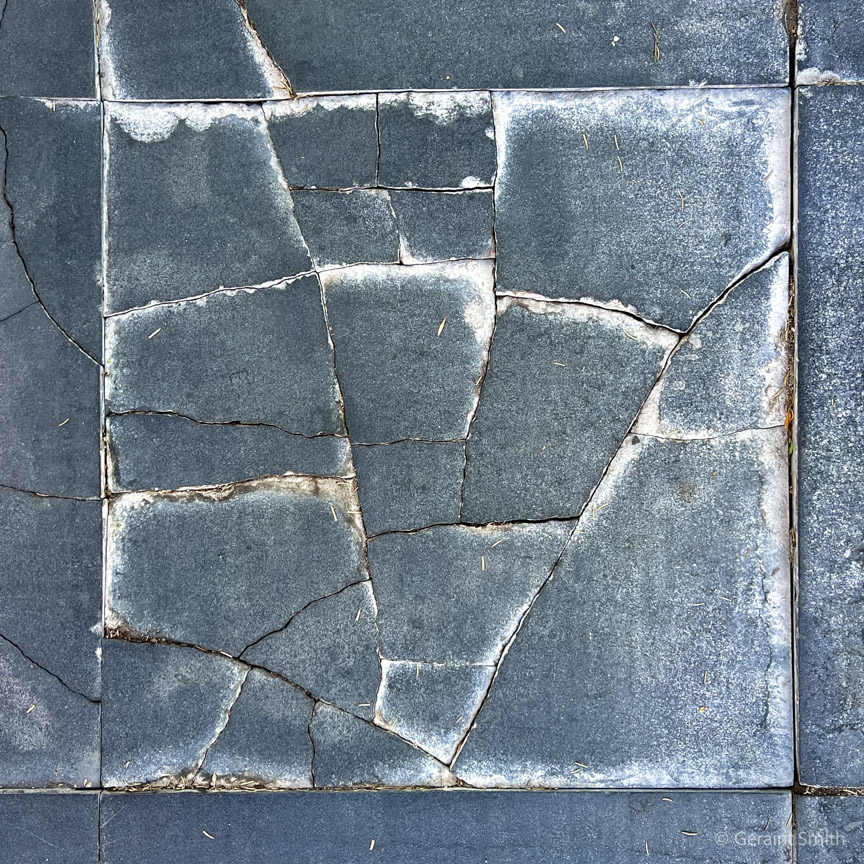
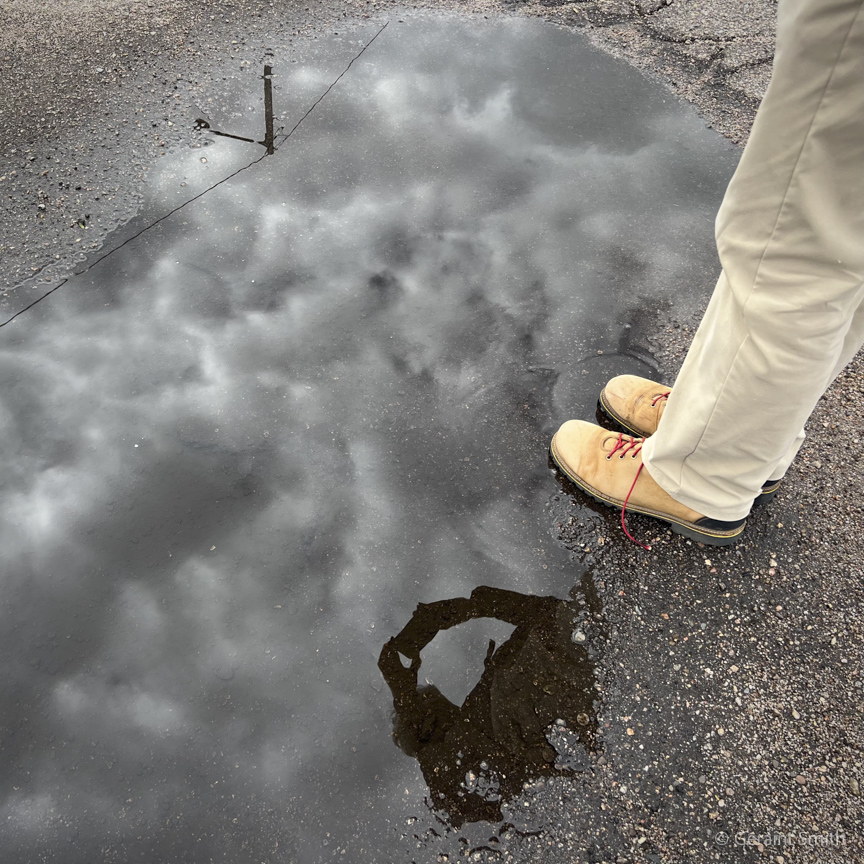
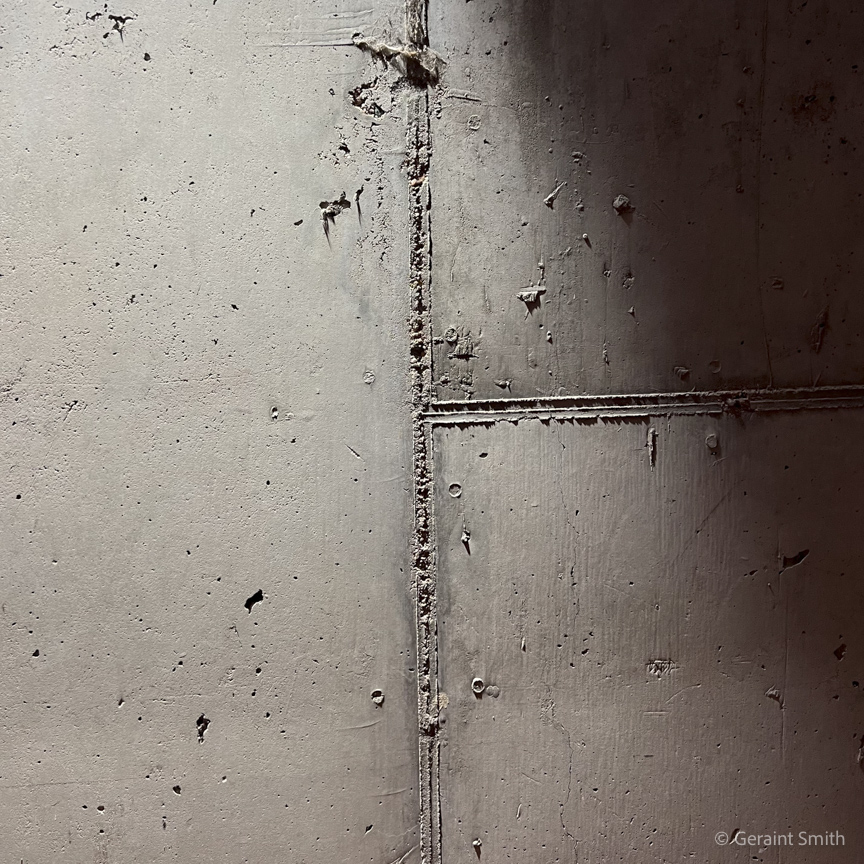
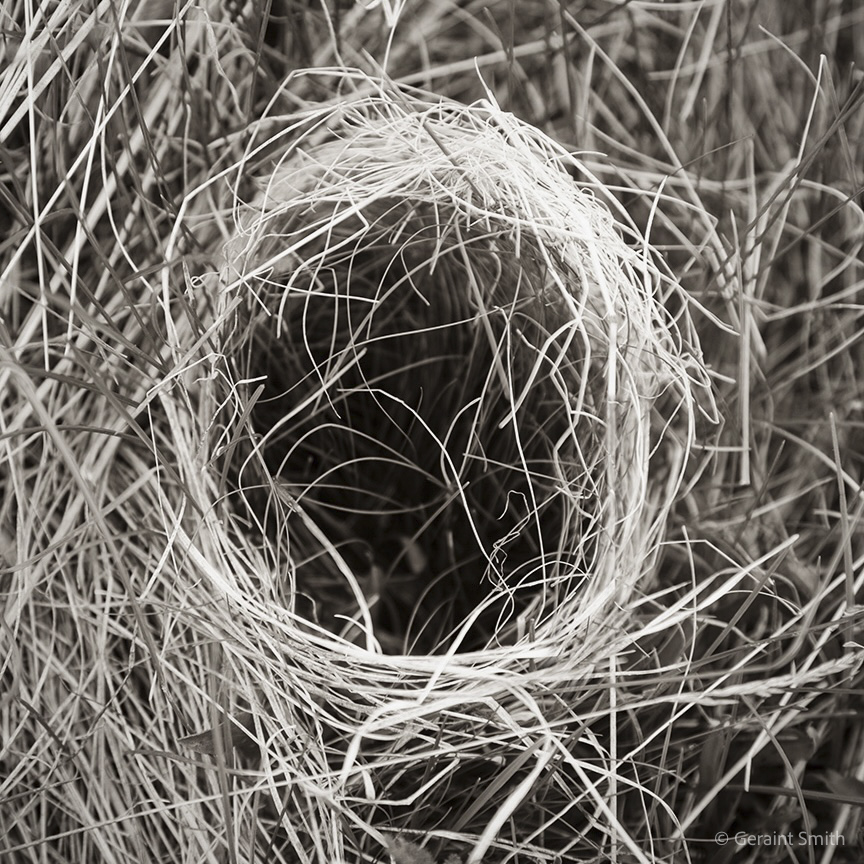
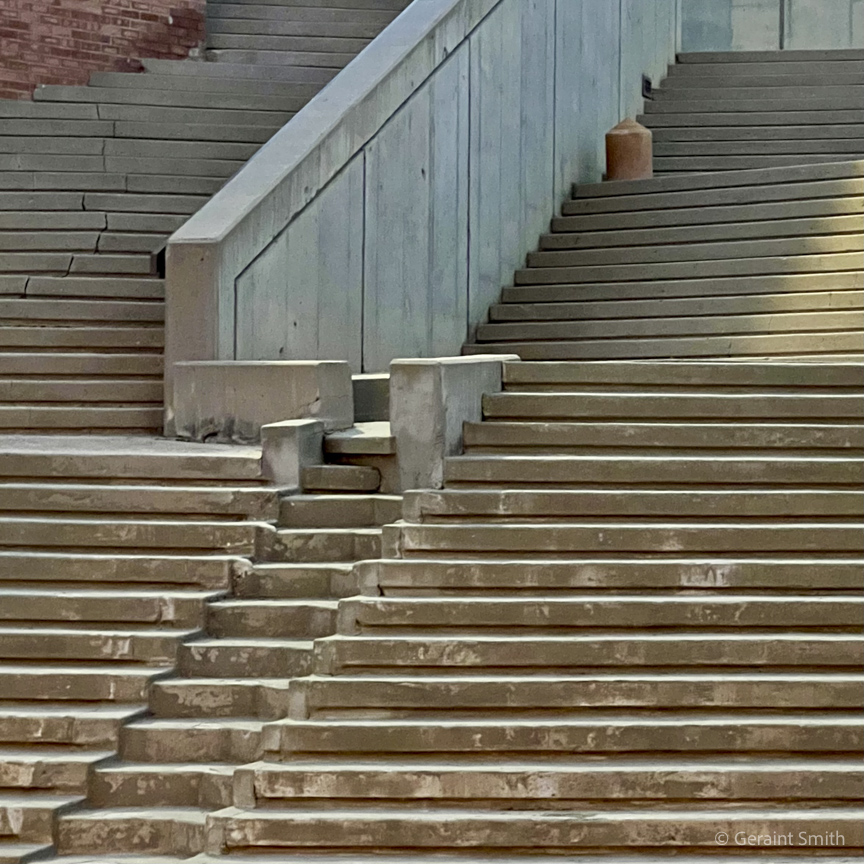
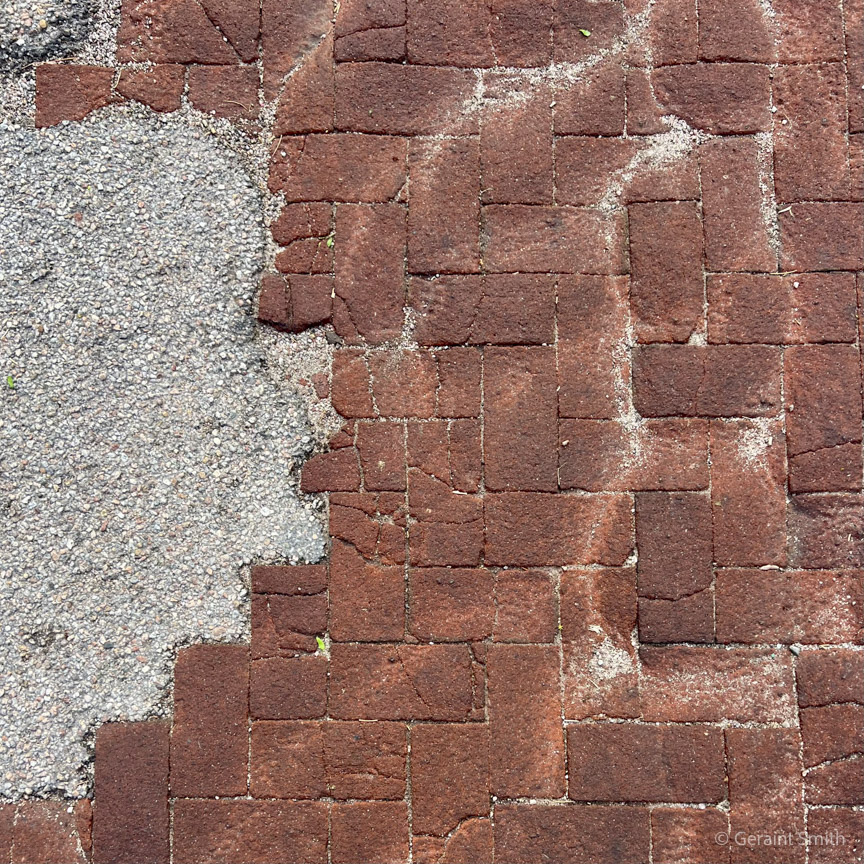
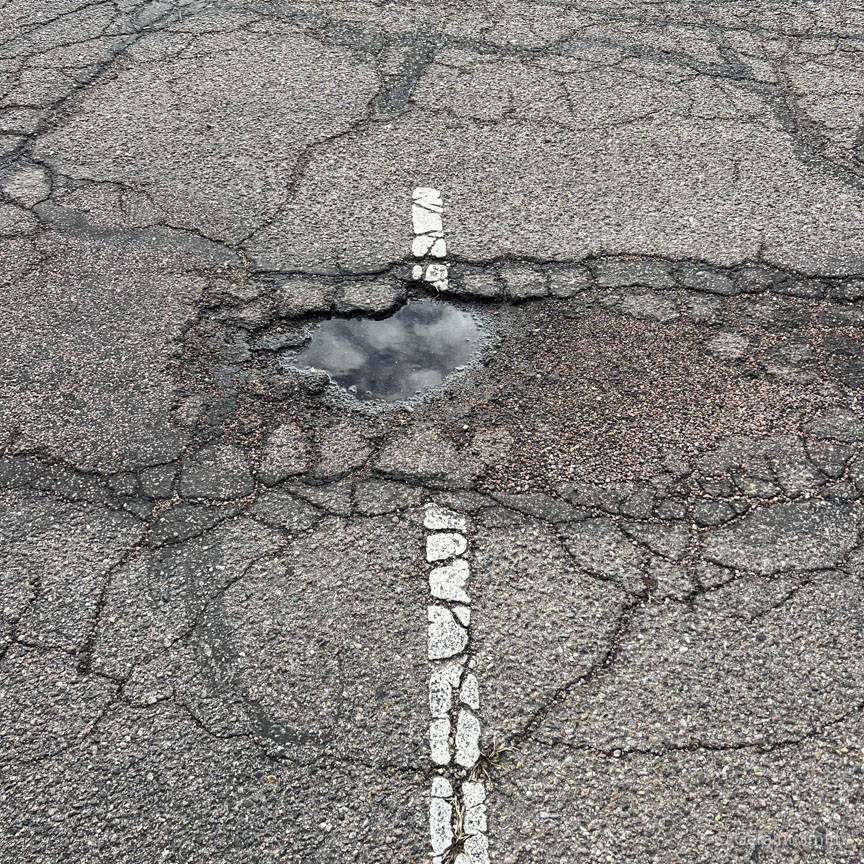
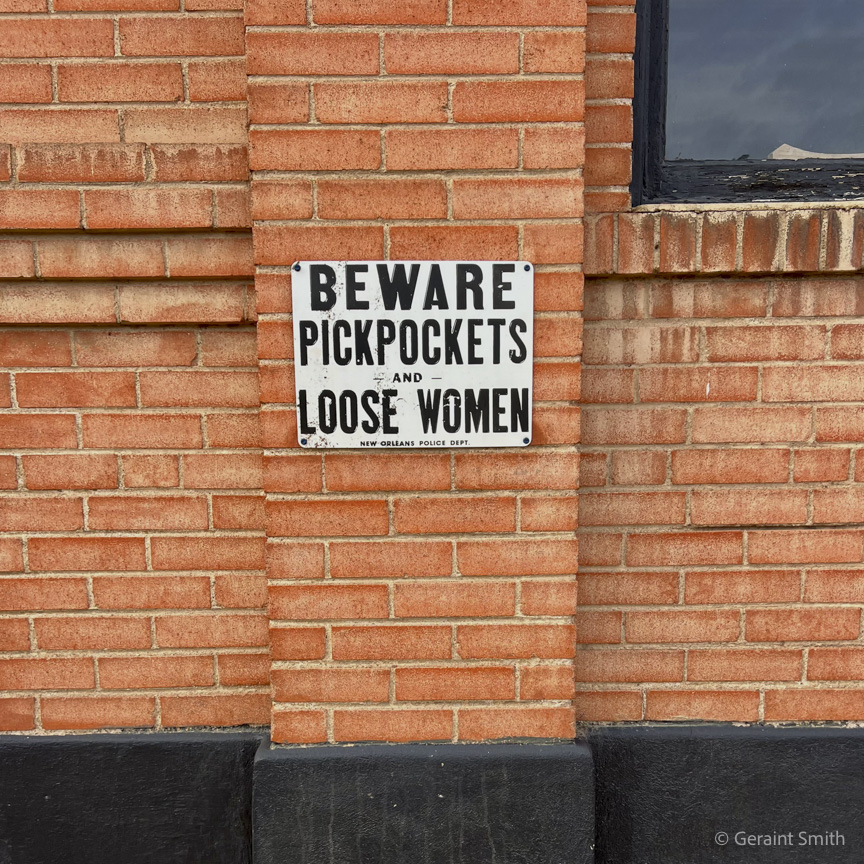
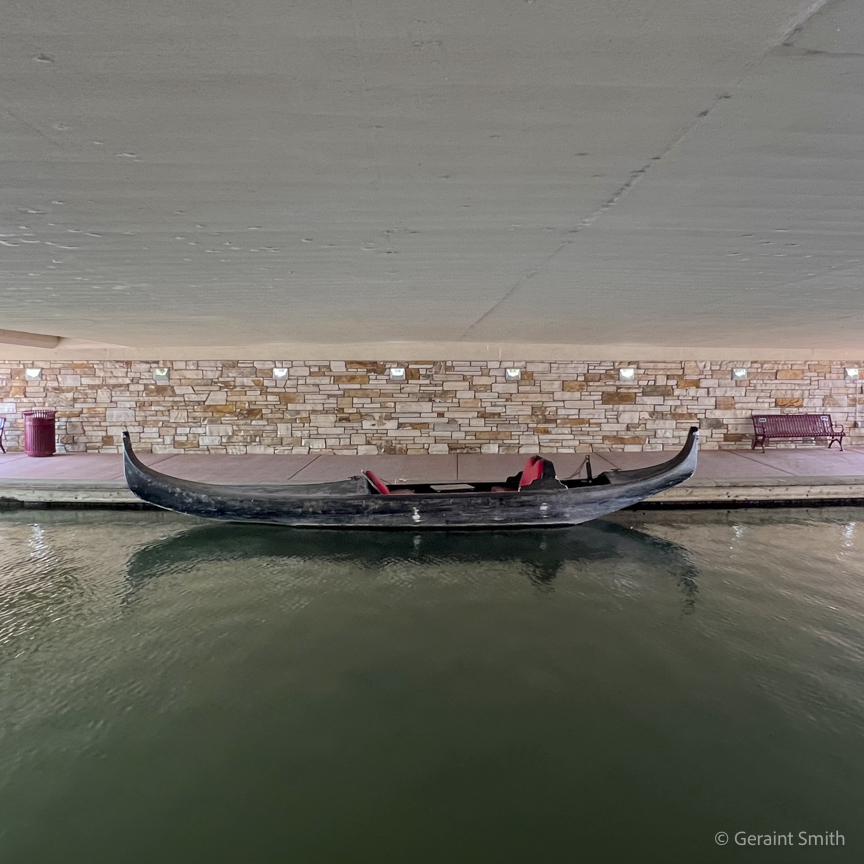
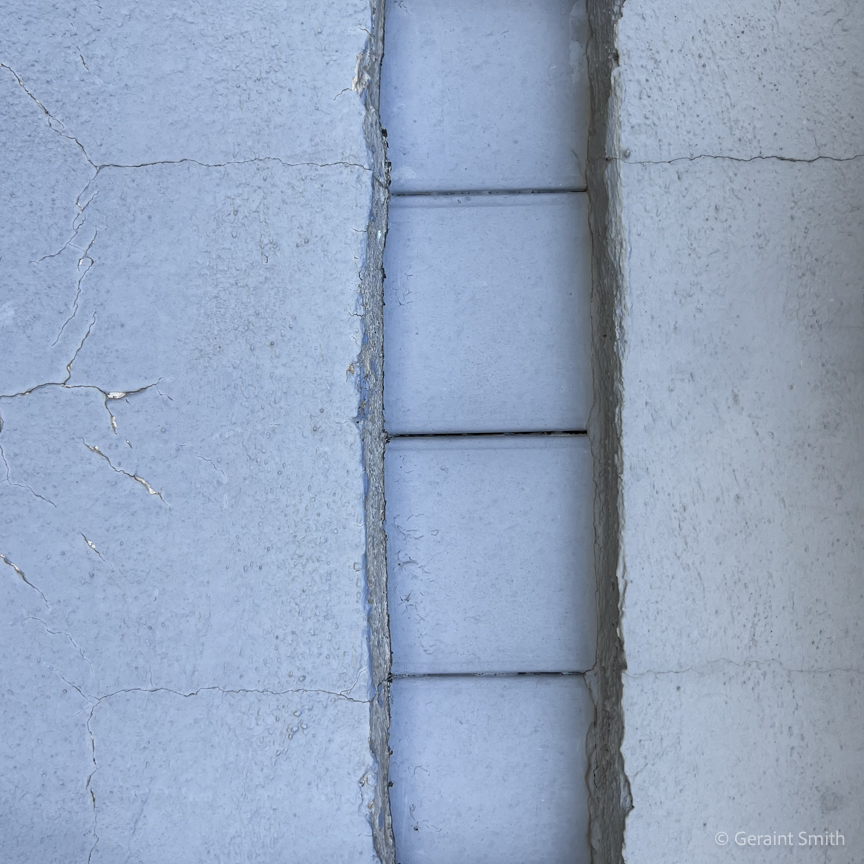
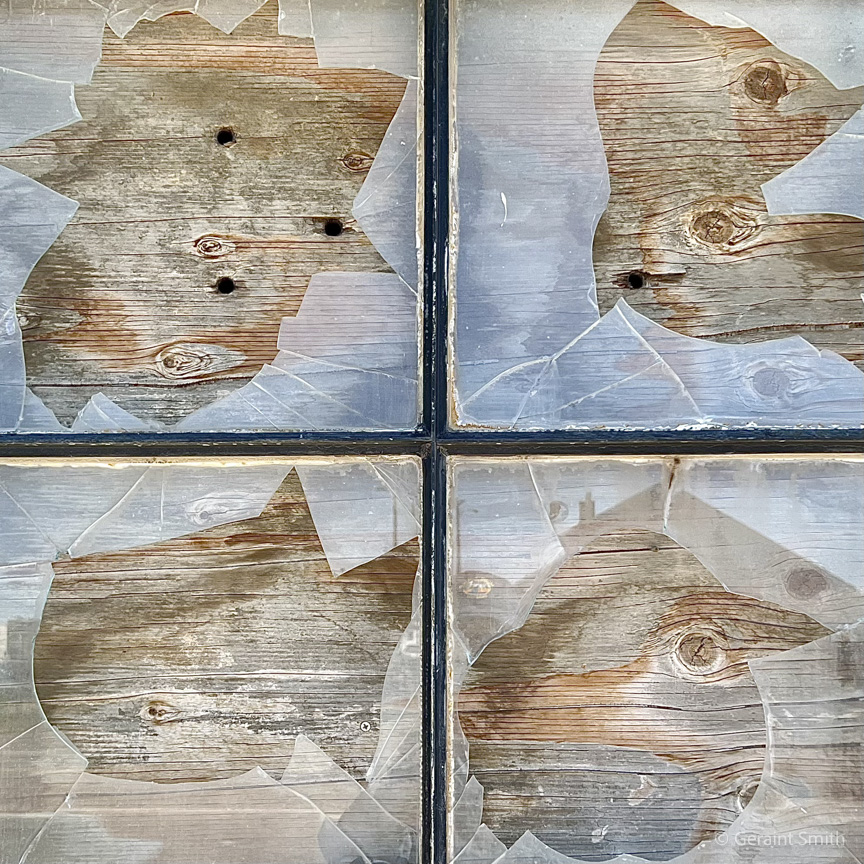
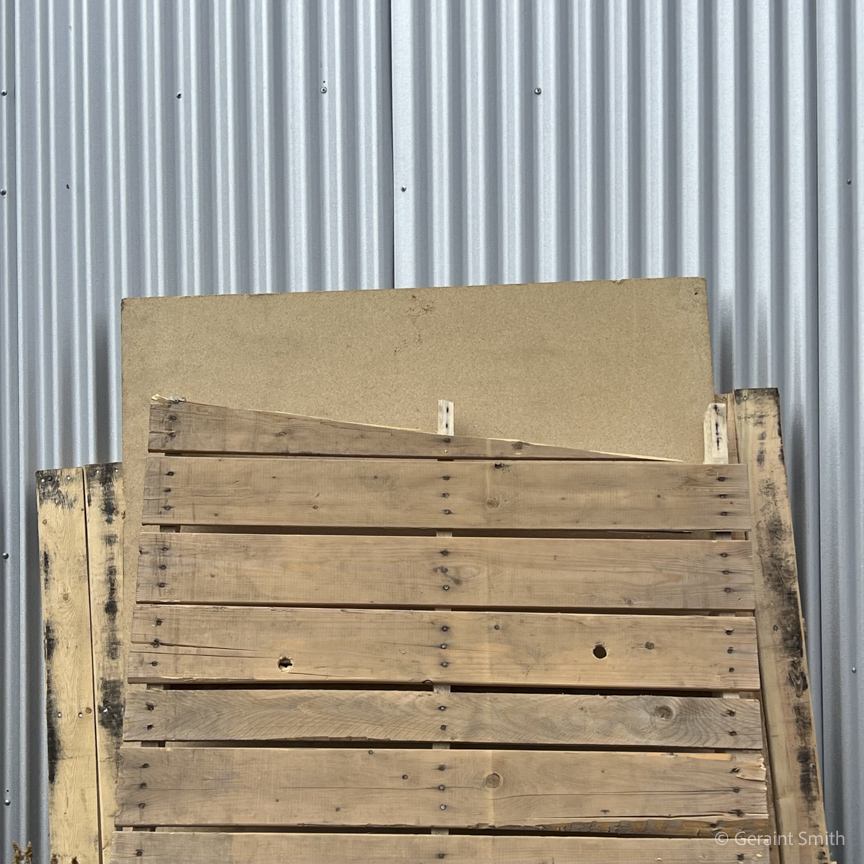
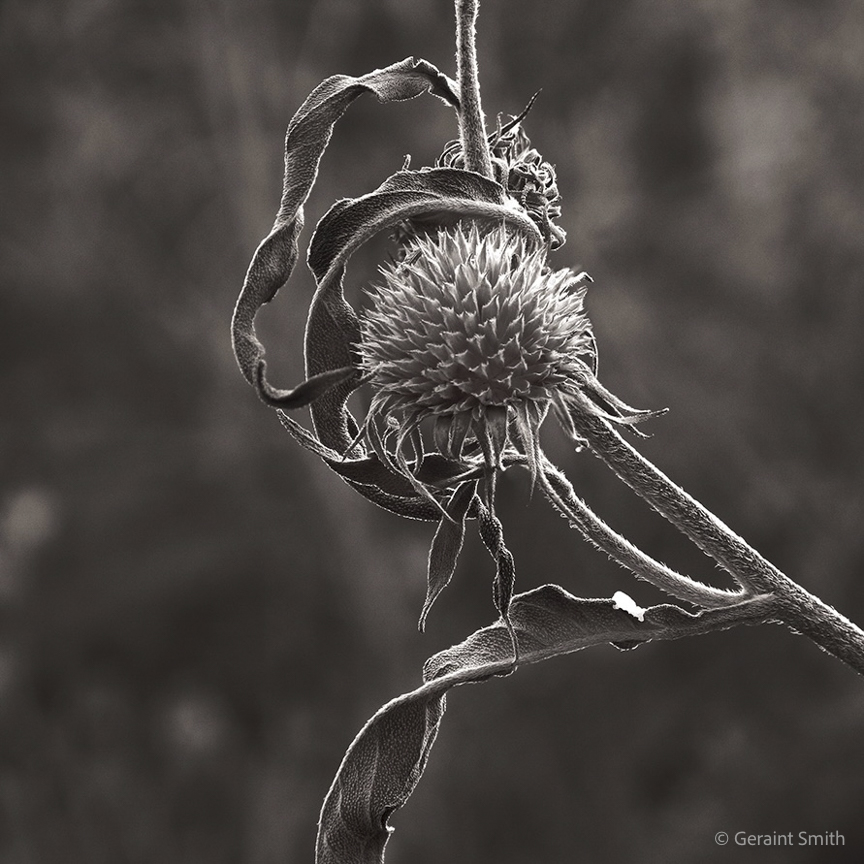
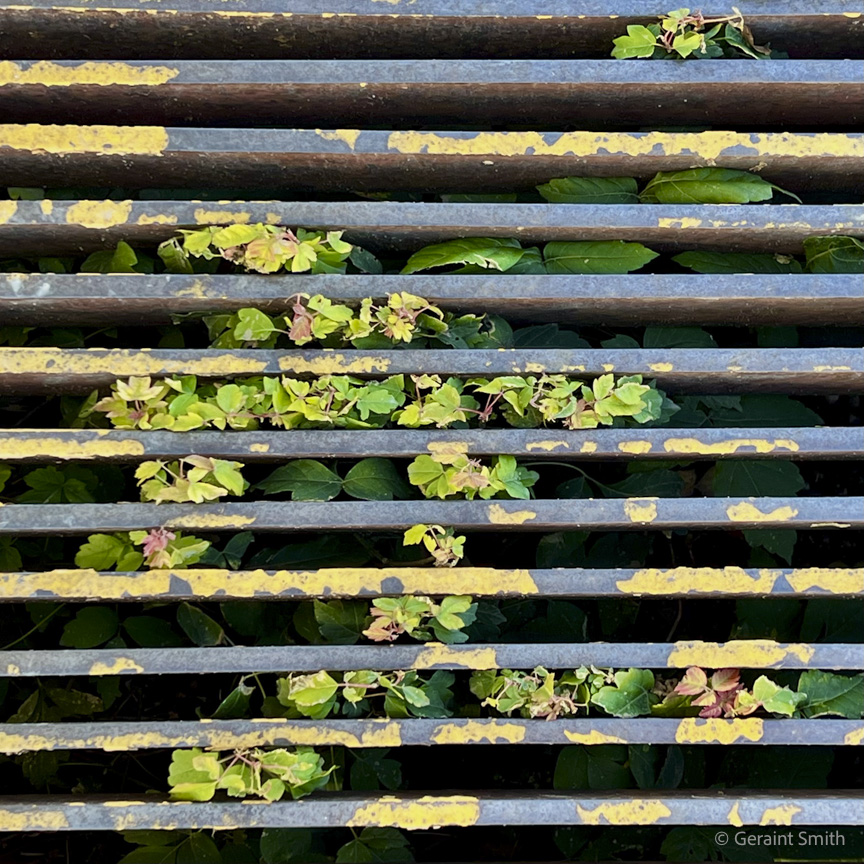
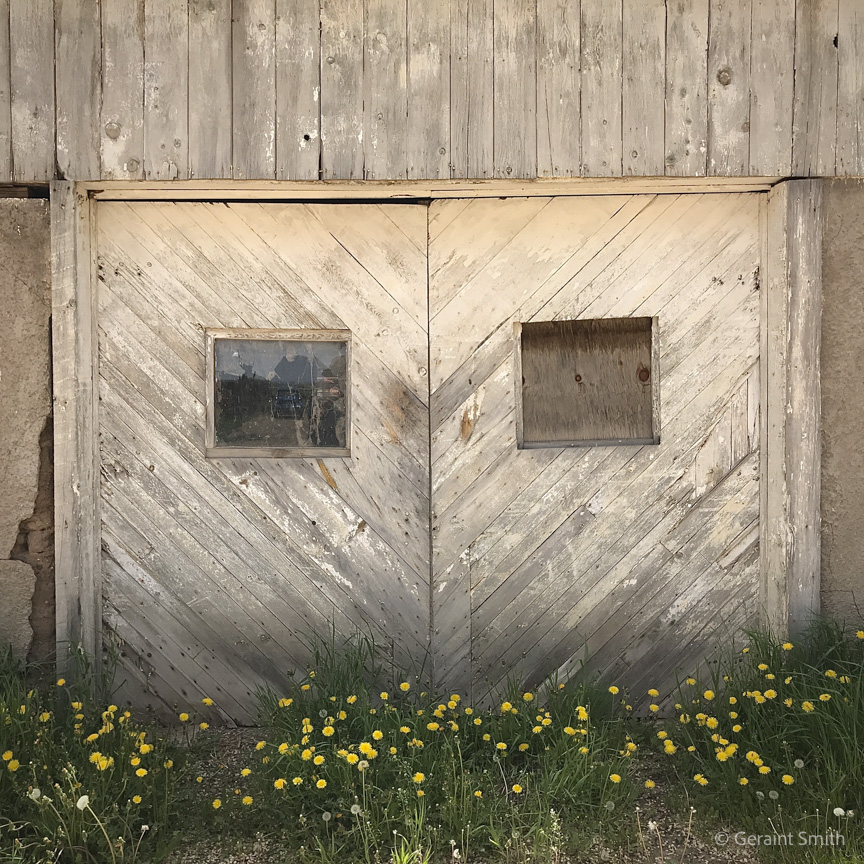
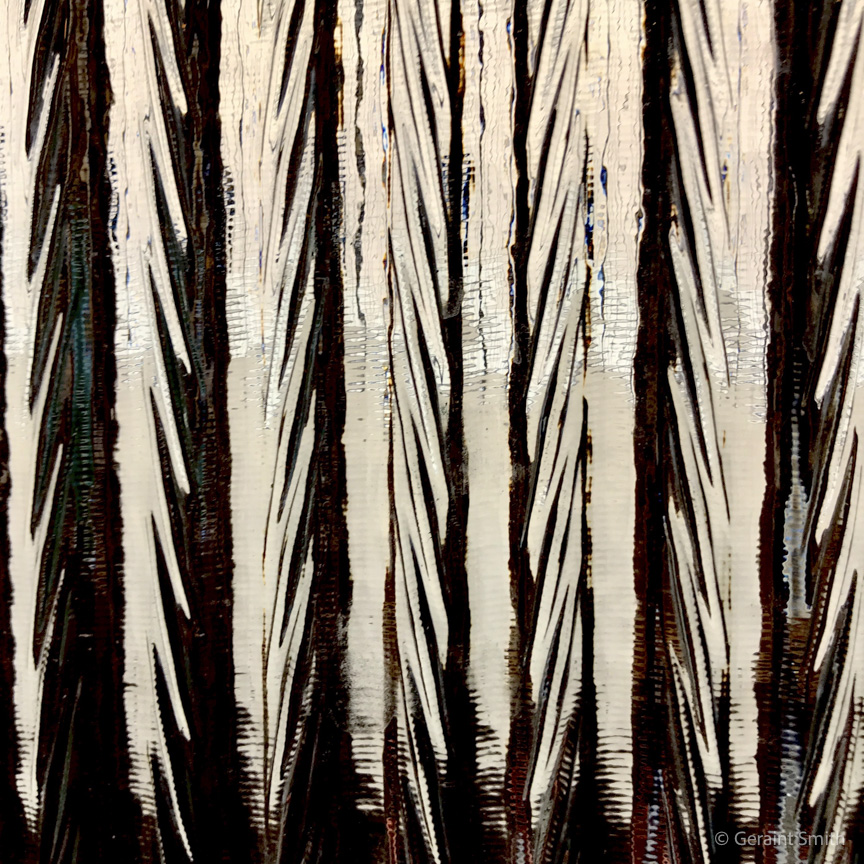
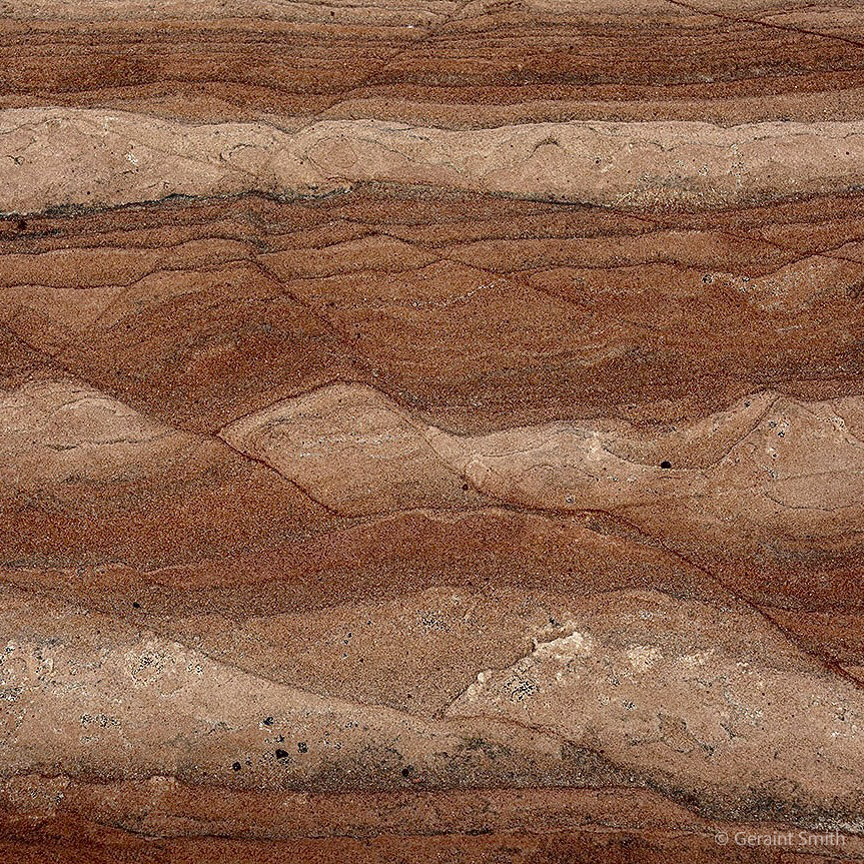
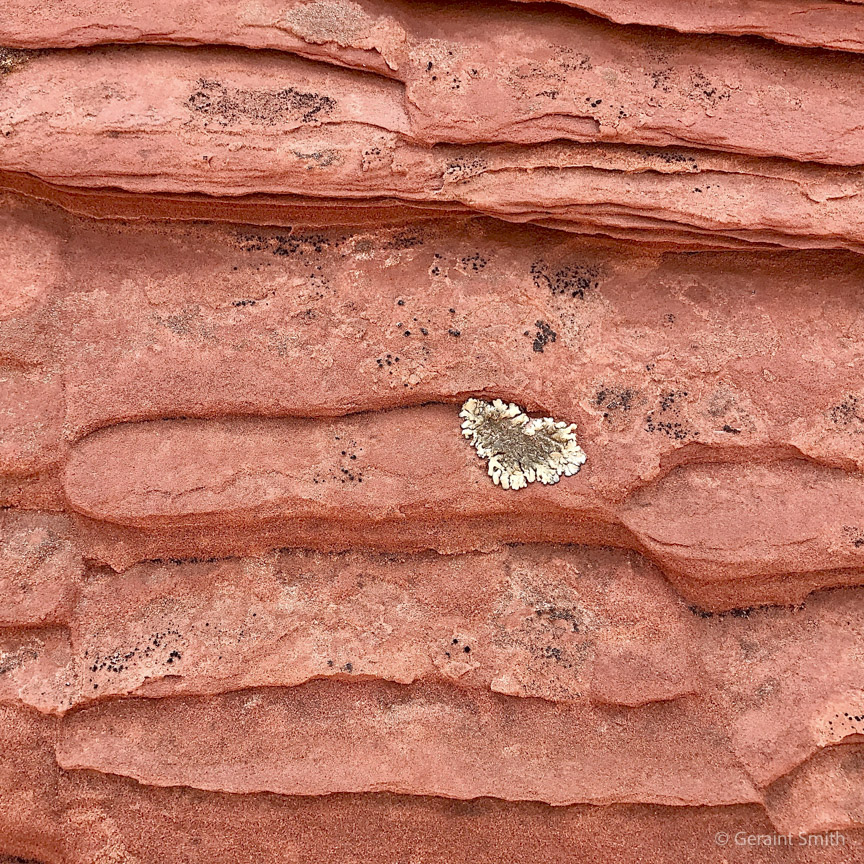
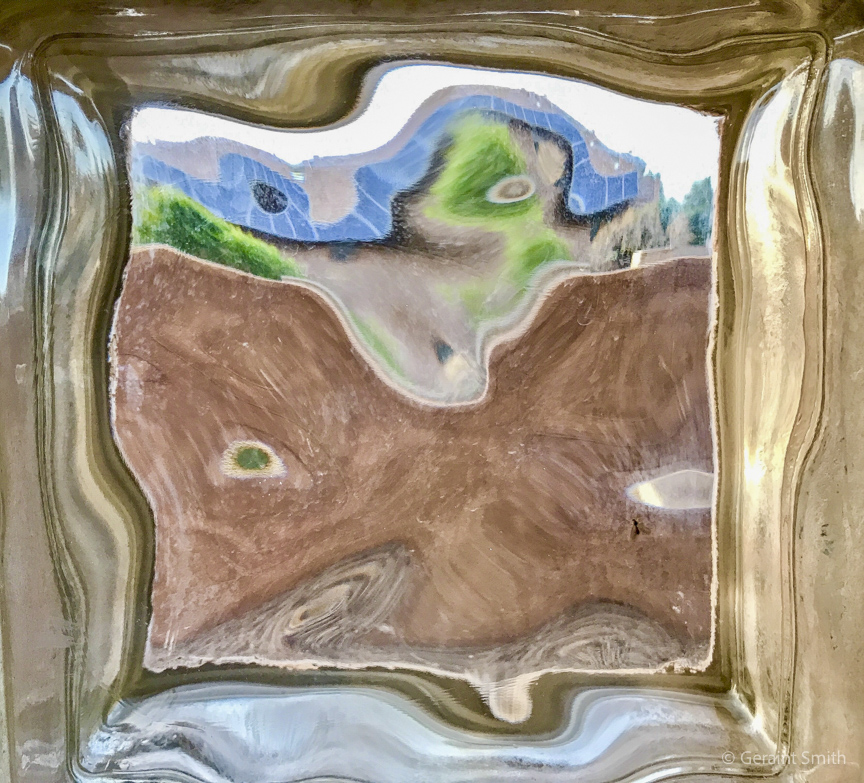
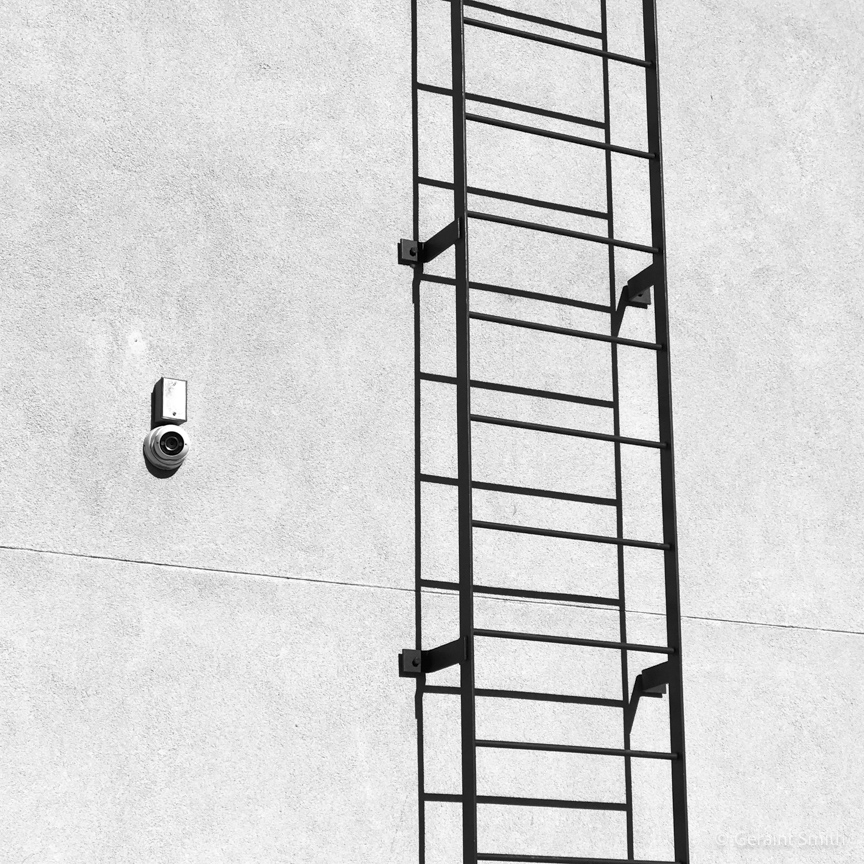
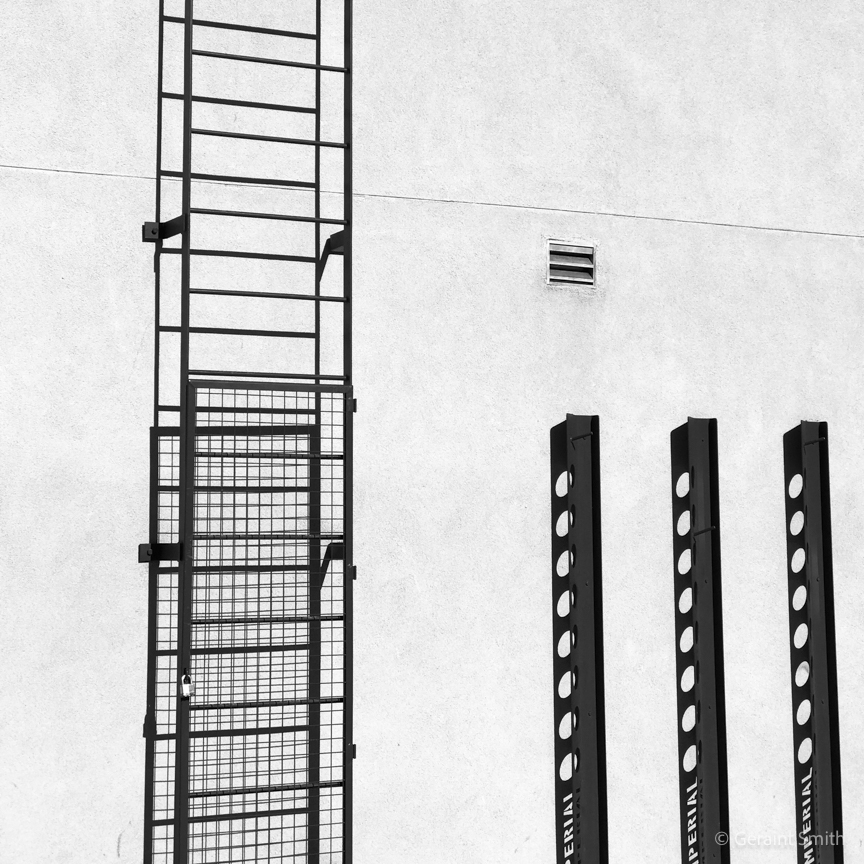
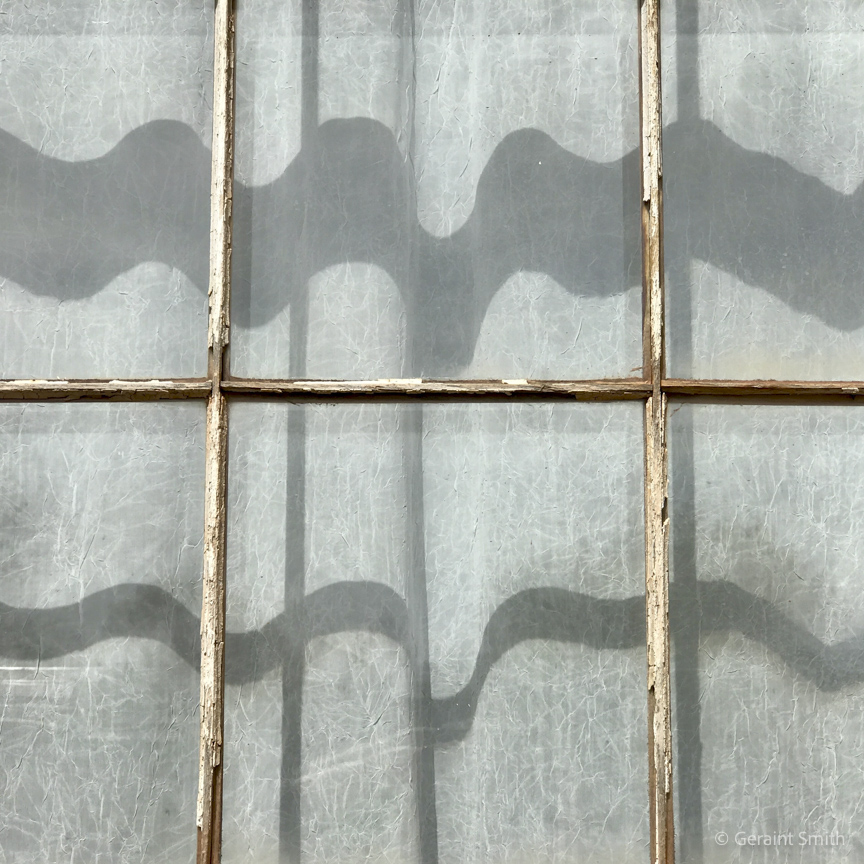
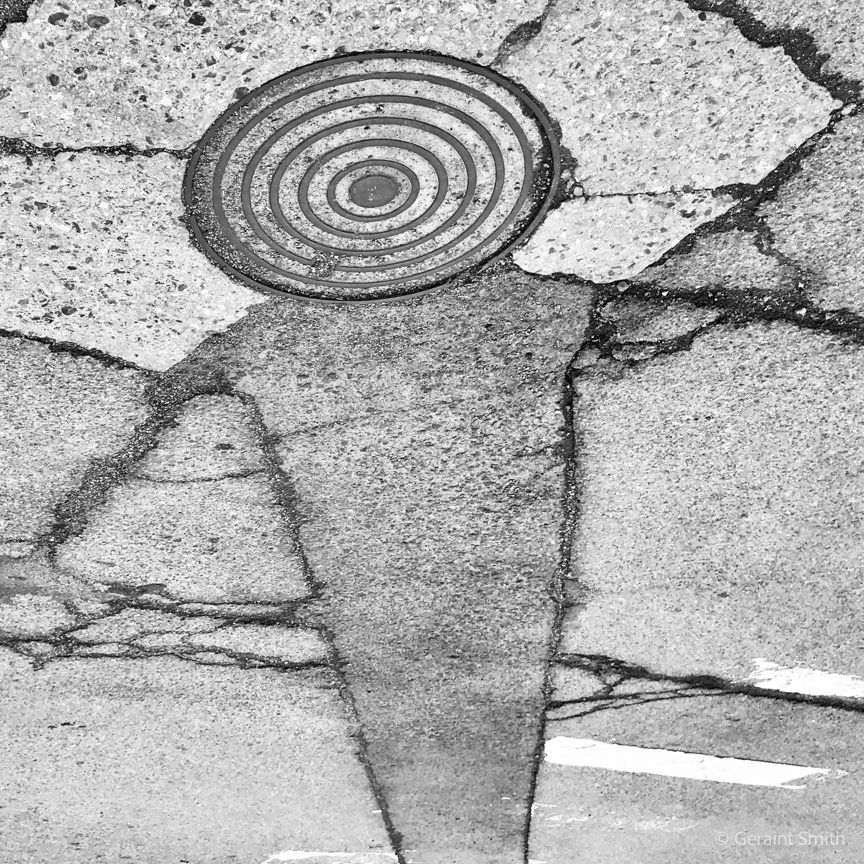
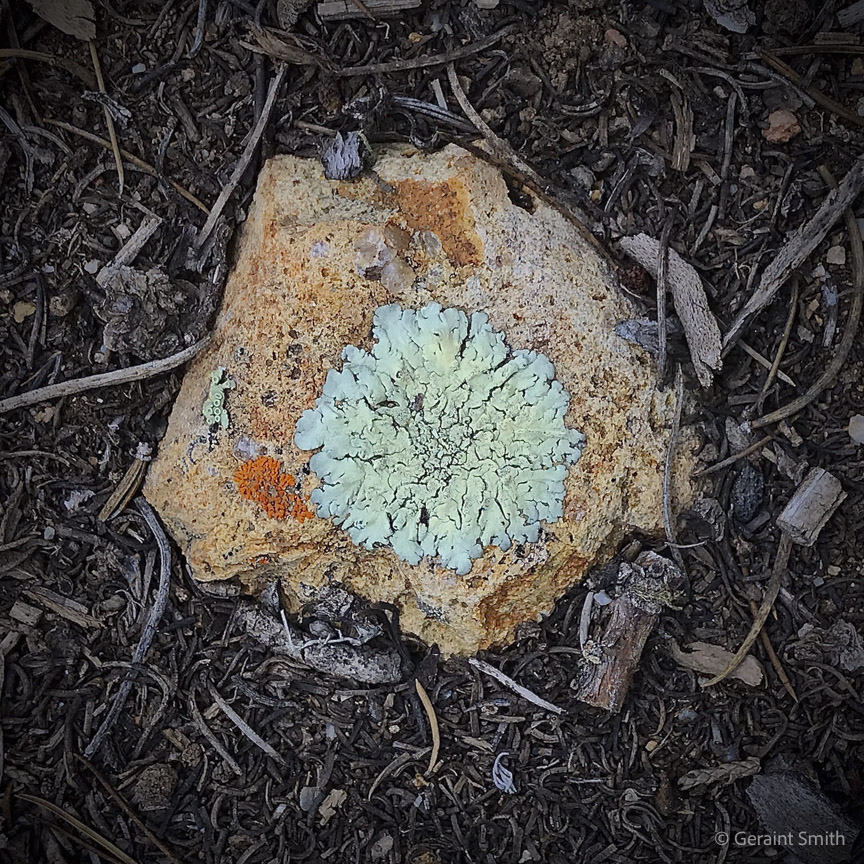
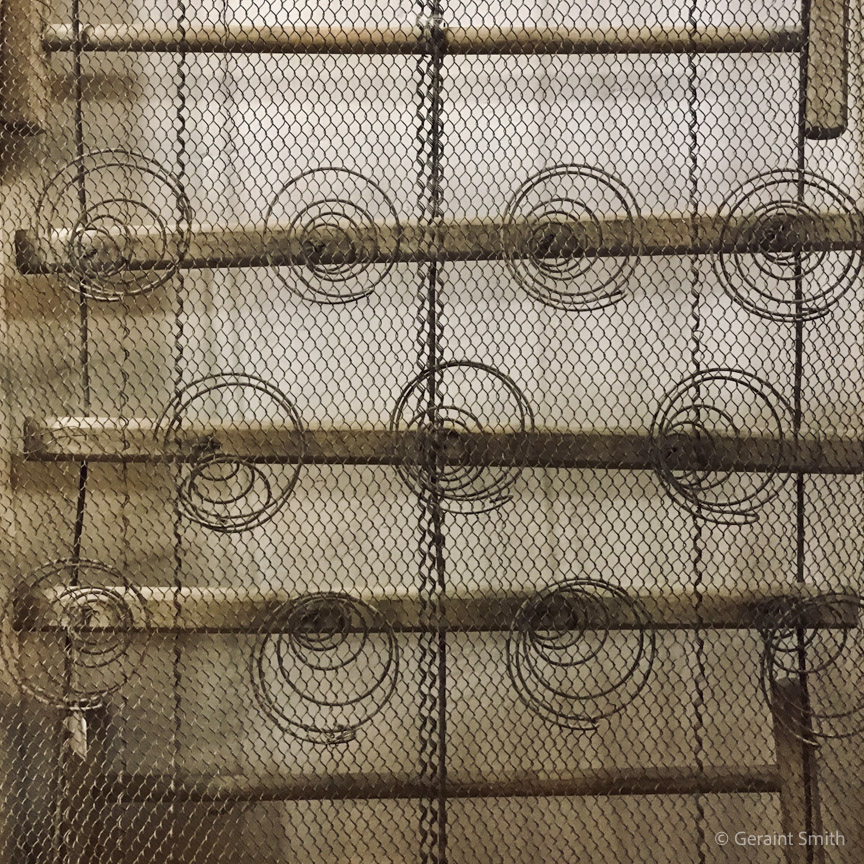
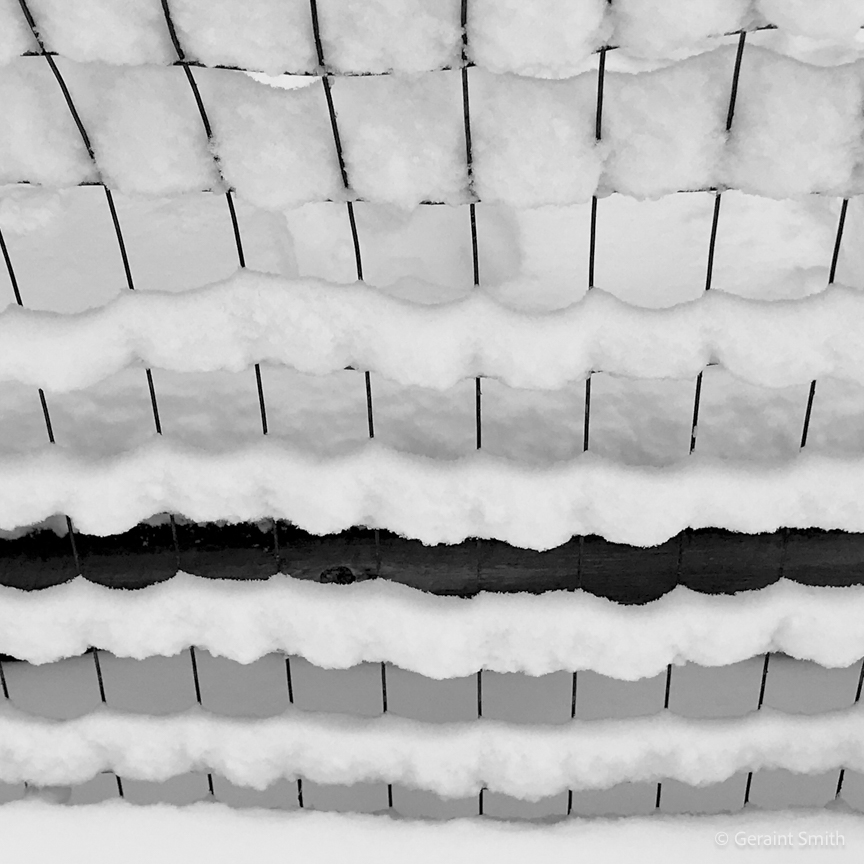
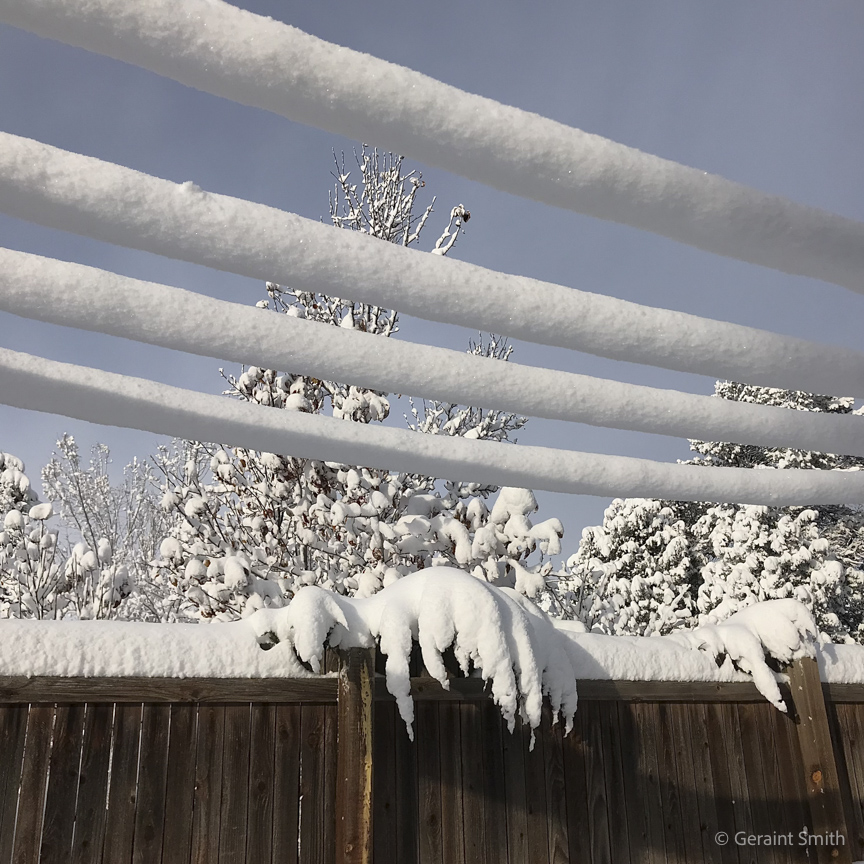
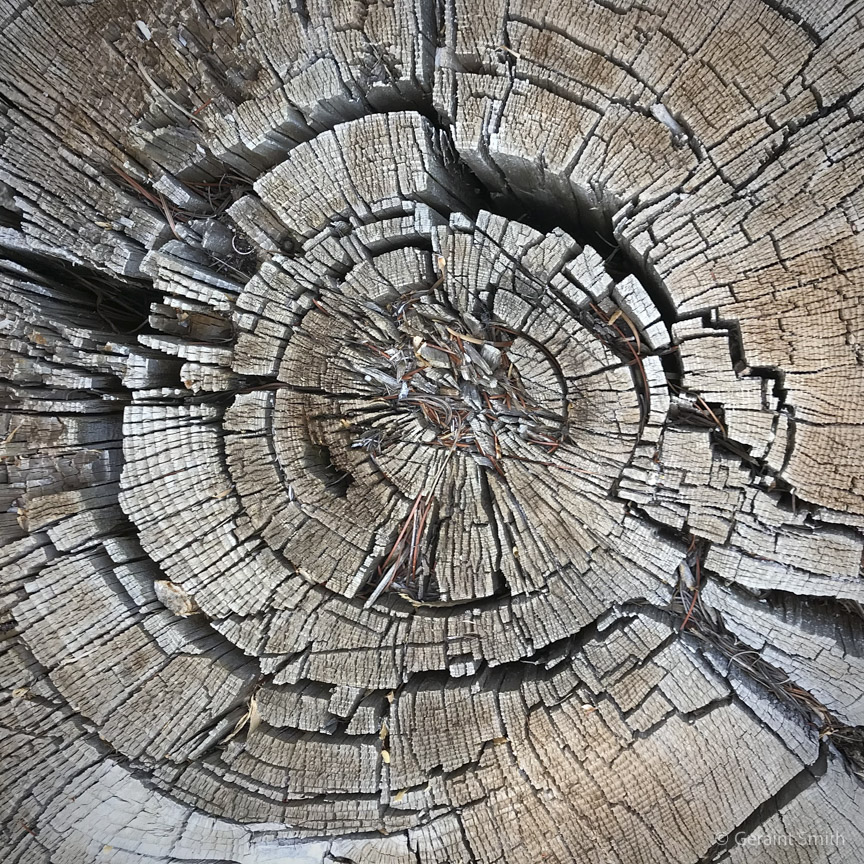
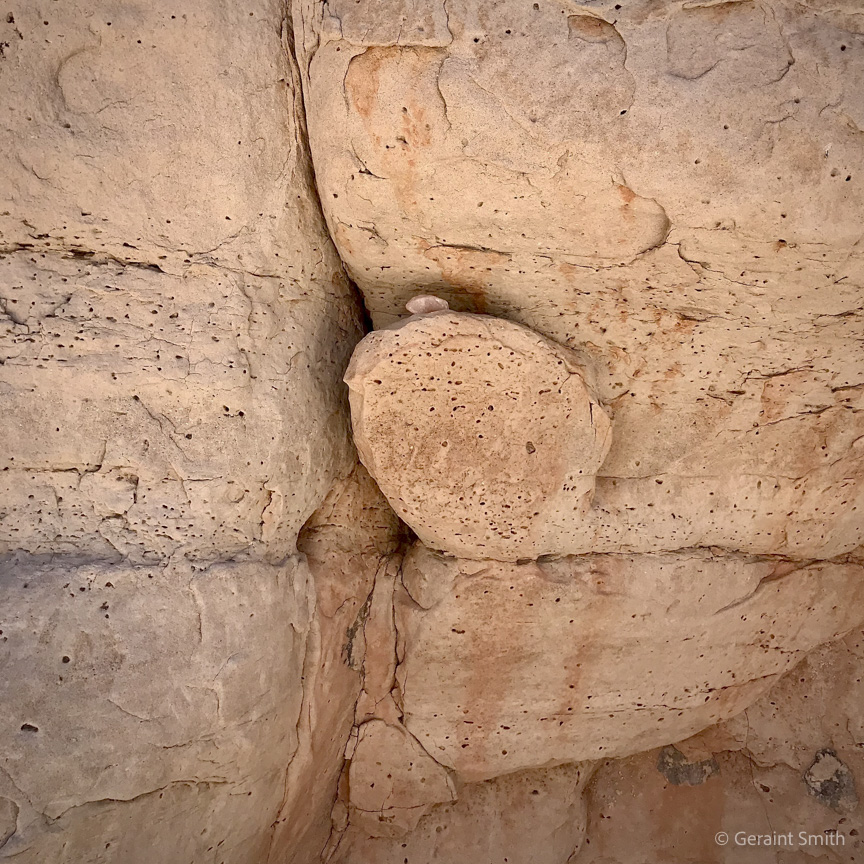
Greetings from San Cristobal, NM. This week, minimalist abstract art in a square format.

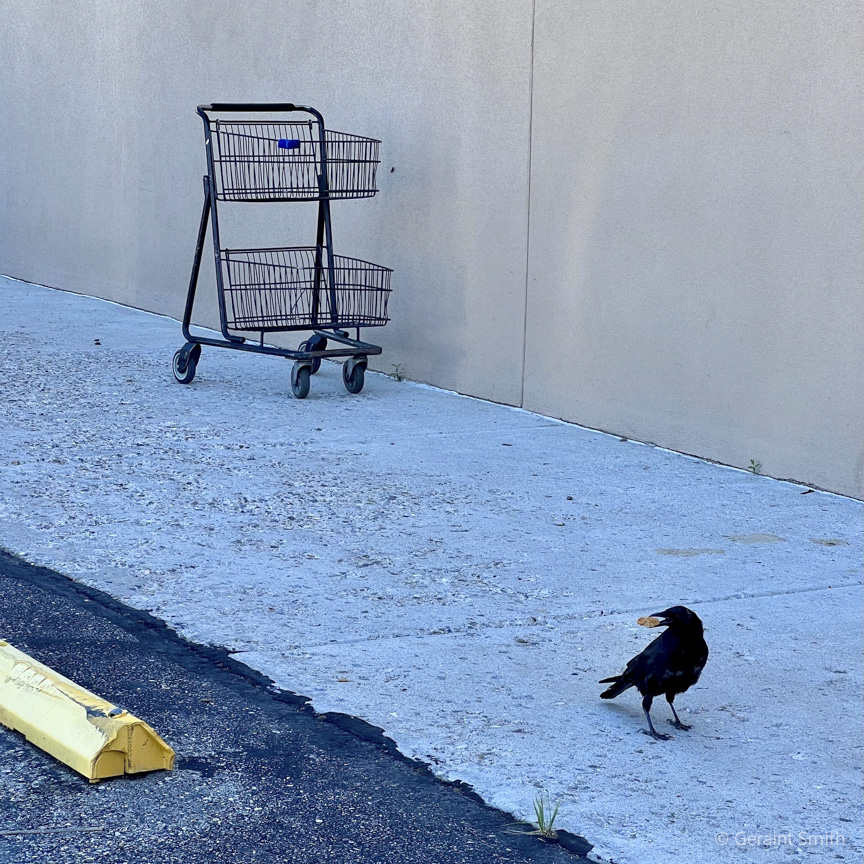
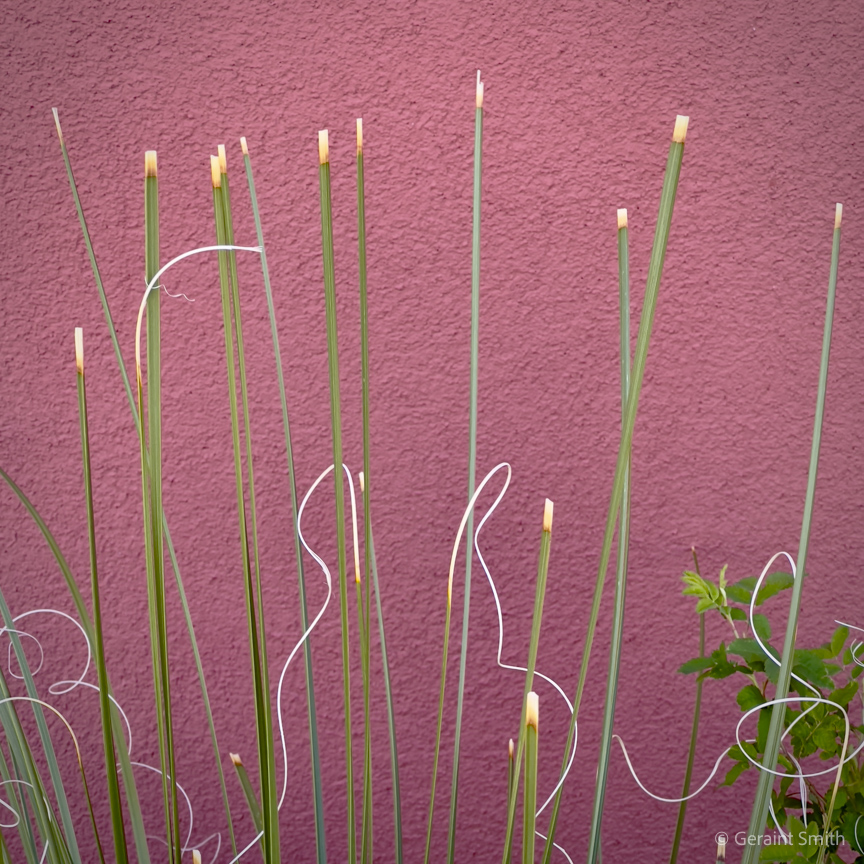
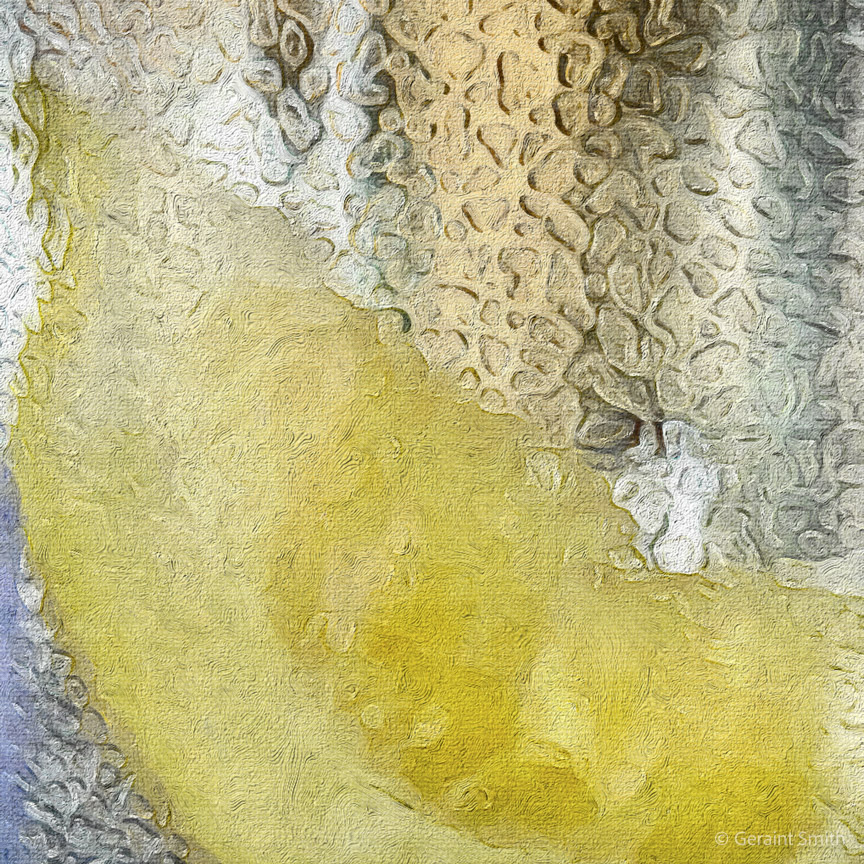
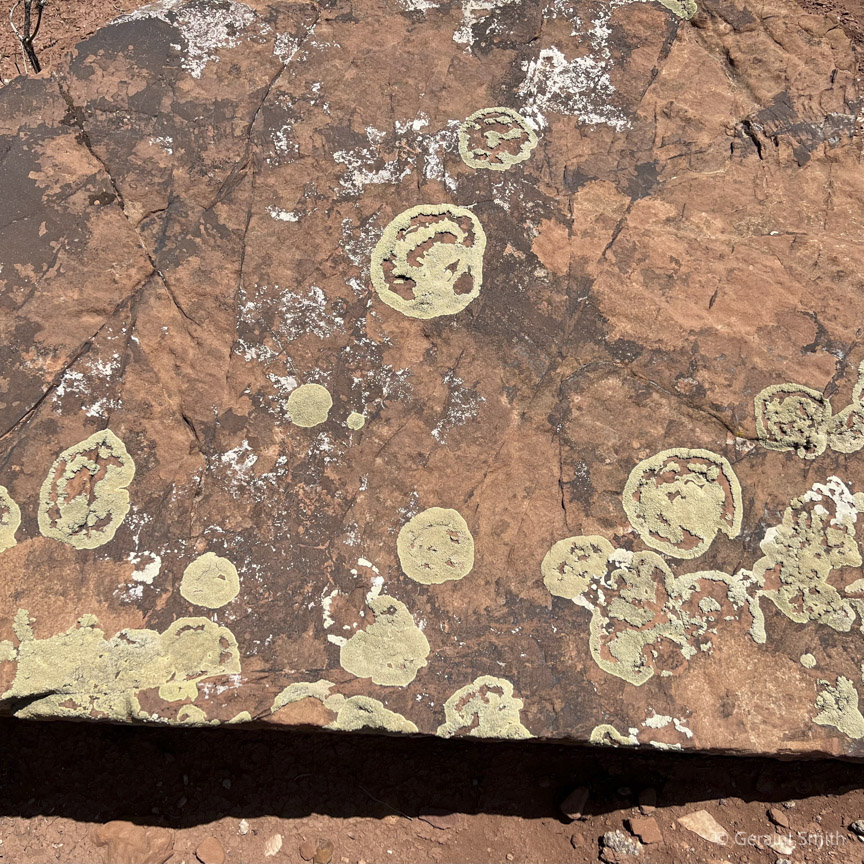
In June 2024, I said there might be another post of random abstraction, and as I have so many of this type of image, mostly shot on an iPhone, here goes.

Click on an image to expand and click off it to go back. Enjoy!

I wrote some sentences and put them as prompts into Grammarly and ChatGPT. This is what they came up with, modified further by me. Let me know your thoughts.

The Allure of Minimalist Abstract Art in Square Format

In a world saturated with noise and complexity, minimalist abstract art offers a visual breath of fresh air—clean lines, subtle textures, and intentional simplicity. When paired with the symmetry of a square format, this genre takes on a uniquely balanced and meditative quality that resonates deeply in modern spaces.

Why Square?
The square canvas provides perfect equilibrium. Unlike rectangles, which inherently suggest direction, the square is neutral—neither vertical nor horizontal. This neutrality invites the viewer to experience the artwork without predetermined movement, making it an ideal playground for minimalist expression.

Less is Powerful
Minimalist abstract art thrives on reduction. It strips away the nonessential, leaving only what truly matters: form, color, space, and emotion. A single brushstroke, a subtle shift in tone, or a geometric repetition can evoke calm, curiosity, or contemplation.

Harmony in Design
Whether hanging solo or as part of a grid, square-format minimalist pieces create rhythm and order. Their visual harmony complements contemporary interiors, bringing structure to eclectic rooms or serenity to stark spaces. They don’t shout—they whisper, and in that quietness, they speak volumes.

Final Thoughts
Minimalist abstract art in a square format isn’t about what you see—it’s about what you feel. It’s not minimal for the sake of aesthetics but to create space: for thought, stillness, and connection. In its quiet, it offers a rare and refreshing clarity.

Explore the balance. Embrace the square. Let less say more.

As always, Thanks for looking. Have a great week. G

The Nature of March. 03-19-2025

Greetings from San Cristobal, NM. This week’s images depict the nature of March.
The wind-swept madness of March came in like a lamb, and never mind the analogy of a lion, it morphed into a rhinoceros in an English tearoom. Haboob-like dust storms occurred earlier in the month, and again yesterday, they delayed flights and closed interstates with winds fanning the flames of wildfires.

The pictures of the Lunar Eclipse I’d planned to post this week didn’t occur due to the crazy March weather here. Thick clouds, freezing rain, and snow made sure of that.

That said, here are some images of the gentler side of March.

Here’s another short PDF I created in March a few years ago, with images from the San Luis Valley.

As always, thanks for looking. Have a great week. G