Hello from San Cristobal, NM. I hope everyone had a great week.
This week, I’m revisiting a trip to Shiprock and beyond, including Chaco Canyon, and the High Road to Taos.
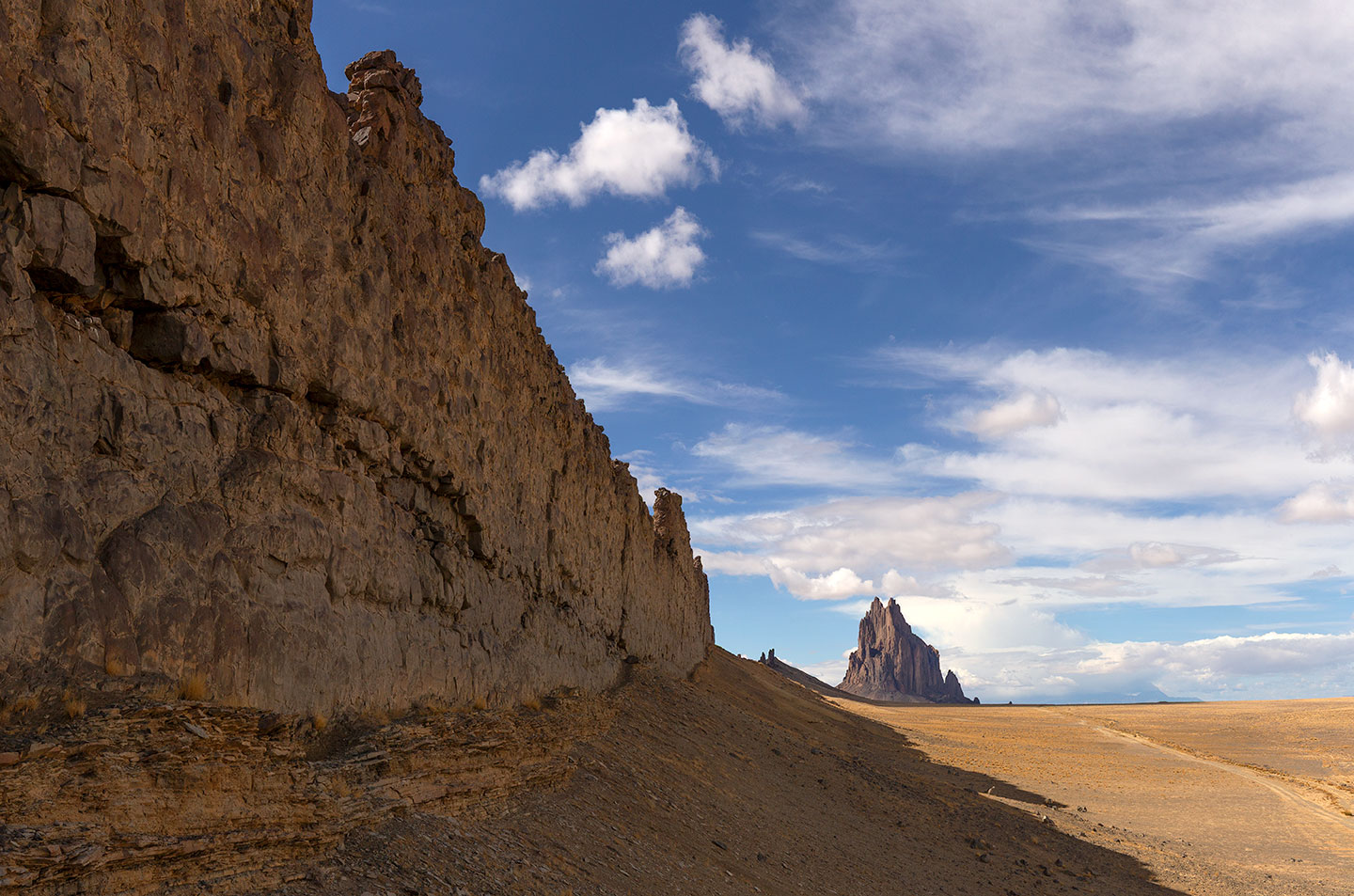
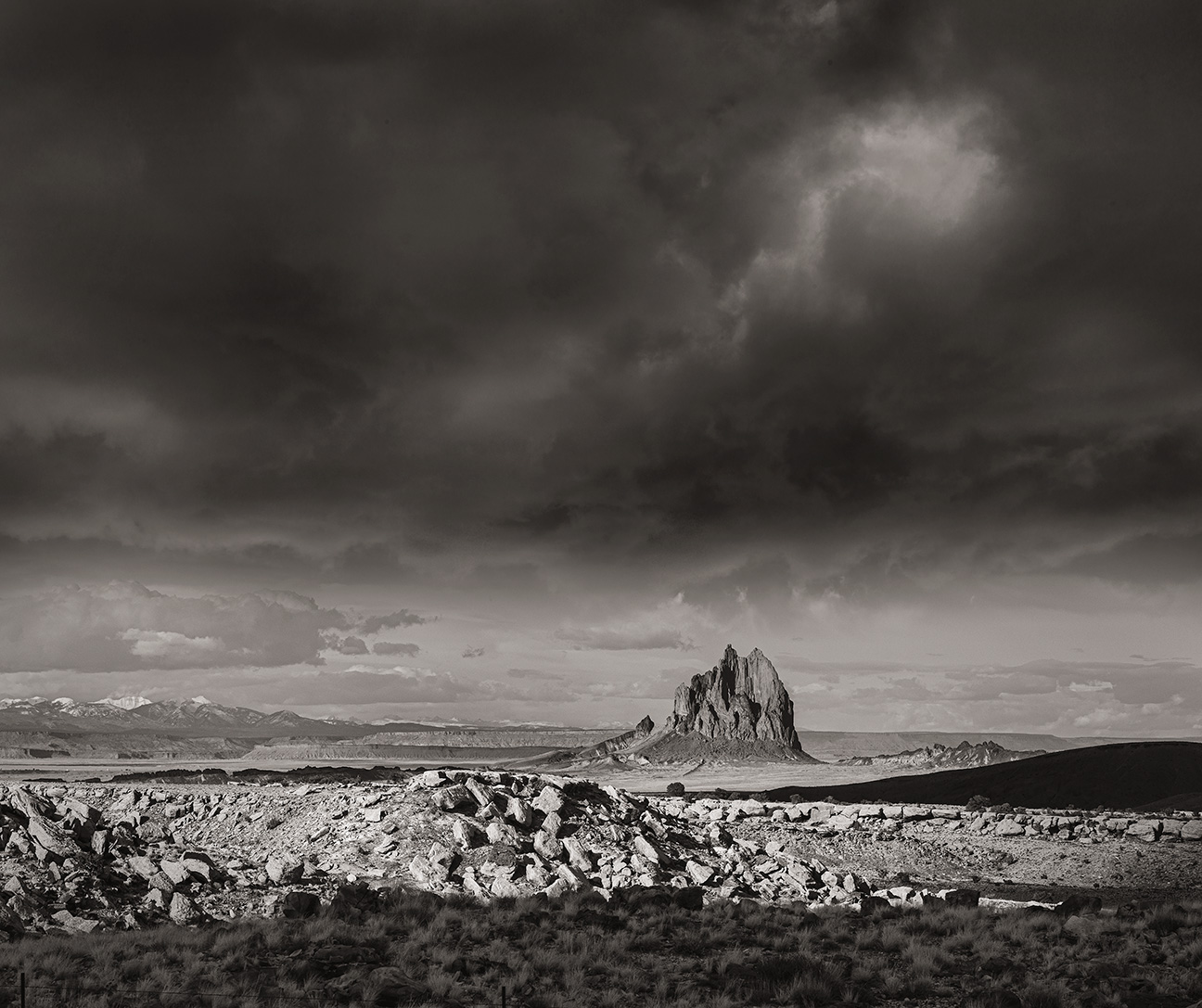
Shiprock.
“The Shiprock formation, located in northwestern New Mexico, is a dramatic and iconic geological feature that rises prominently from the desert landscape. This towering rock formation is the eroded remnant of a volcanic neck, formed around 27 million years ago during the Oligocene epoch. It consists primarily of minette, a type of volcanic rock, and stands at approximately 1,583 feet above the surrounding terrain. Shiprock is the central core of what was once a much larger volcano, with its distinctive shape resulting from millions of years of erosion that stripped away the softer outer layers, leaving the harder volcanic core exposed. Radiating from the central spire are dikes, long walls of volcanic rock that were formed as magma intruded into cracks and solidified. Shiprock’s striking appearance and geological significance make it a subject of interest for geologists and a symbol of natural beauty in the region.”
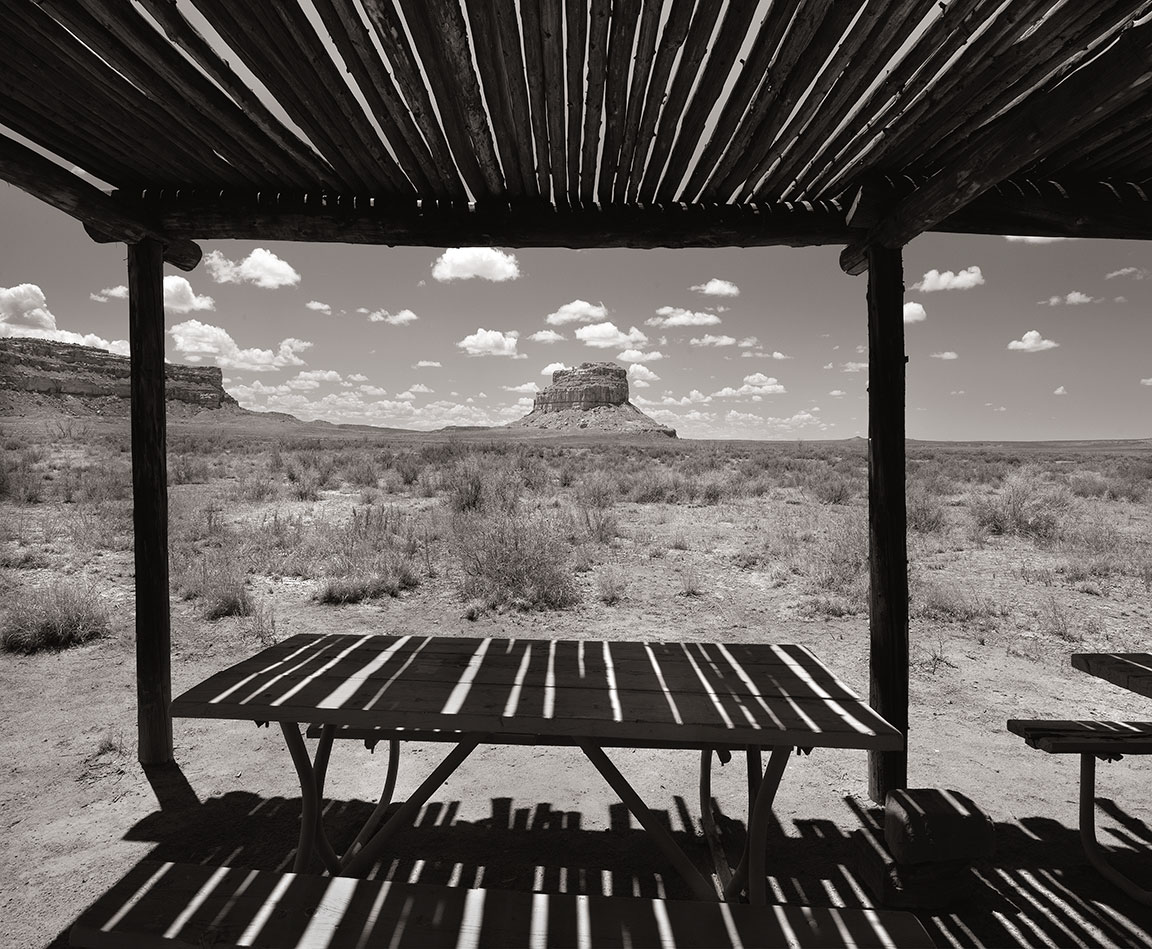
Chaco Canyon.
“Chaco Culture National Historical Park, located in northwestern New Mexico, is a significant archaeological site that preserves the remnants of an ancient Puebloan civilization. This UNESCO World Heritage Site is renowned for its monumental public and ceremonial buildings, distinctive architecture, and complex road systems, which were constructed between AD 850 and 1250. The Chacoans developed sophisticated astronomical knowledge, as evidenced by the alignment of their structures with solar and lunar cycles. The park encompasses a vast area of canyons and mesas, offering insights into the social, economic, and spiritual life of the Chacoan people. Today, it serves as a vital link to understanding the cultural heritage of the indigenous peoples of the American Southwest.”
Fajada Butte in the shade and shadows of a ramada picnic shelter. Chaco Culture National Historical Park.
Birds (Pigeons), waiting for the man who feeds them in Ranchos de Taos.

Magpie, because she/he was there.

High Road to Taos.
“The High Road to Taos is a scenic byway in northern New Mexico that stretches approximately 56 miles, connecting the city of Santa Fe to the town of Taos. This picturesque route winds through the Sangre de Cristo Mountains, offering breathtaking views of rugged landscapes, lush forests, and charming, historic villages. Along the way, travelers can explore traditional adobe architecture, visit centuries-old Spanish colonial churches, and experience the rich cultural heritage of the region’s Hispanic and Native American communities. Notable stops include the artistic enclave of Chimayó, known for its renowned Santuario de Chimayó, and the village of Truchas, which offers stunning vistas of the surrounding mountains. The High Road to Taos is celebrated for its vibrant arts scene, local crafts, and the opportunity to immerse oneself in the unique blend of cultures that define northern New Mexico.”

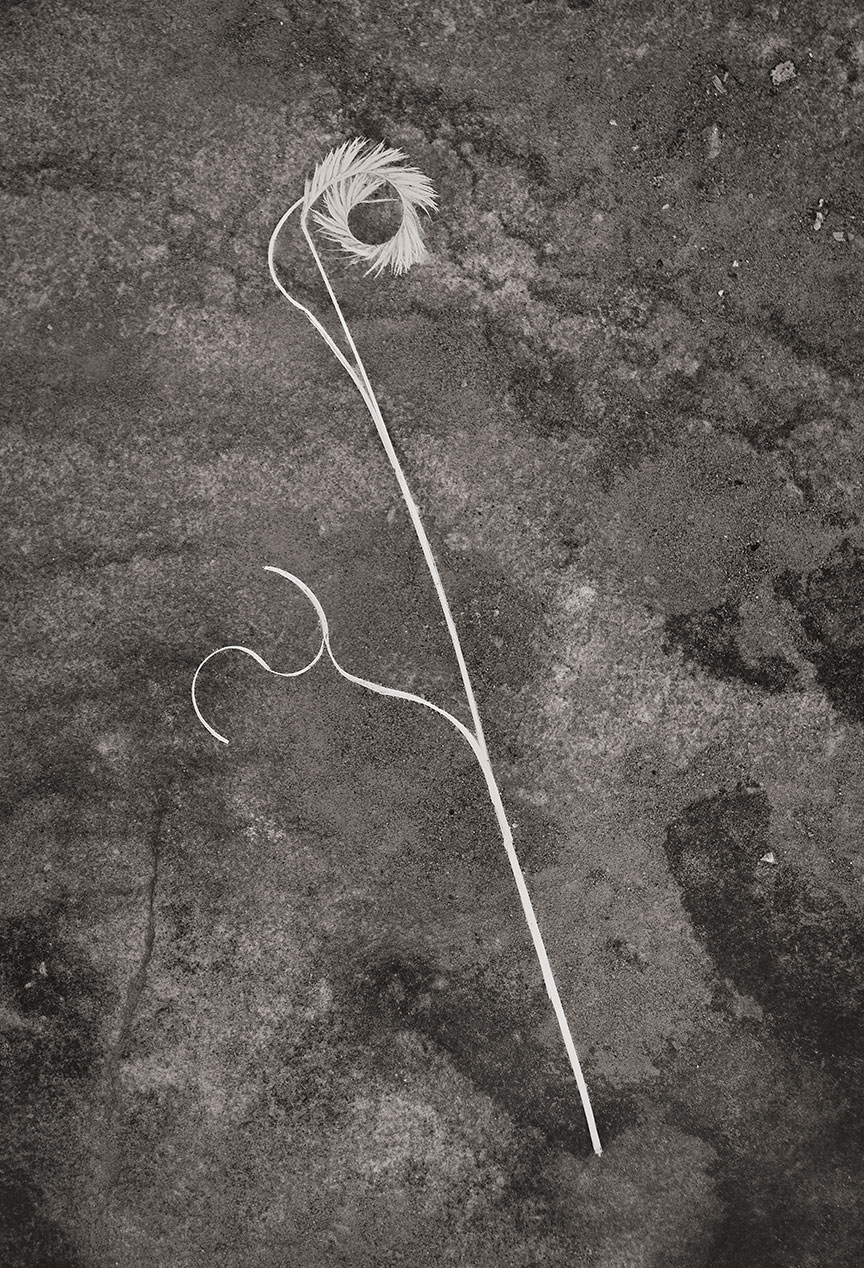
Gramma grass.
“Gramma grass refers to a group of grasses in the genus Bouteloua, which are native to the Americas. These grasses are particularly common in the prairies and plains of North America. The most well-known species is blue grama (Bouteloua gracilis), which is a dominant grass in the shortgrass prairie ecosystem.”
As always, thanks for looking. Have a great week. G